Citicoline — also called CDP-choline or cytidine 5′-diphosphocholine — is a naturally occurring compound present in every cell of the body and widely available as a cognitive supplement. Interest in citicoline for memory support has grown considerably, but separating marketing language from clinical evidence requires a close look at what randomized controlled trials actually measured and found.
This article reviews the RCT literature on citicoline and memory, explains the proposed biological mechanisms in plain terms, and honestly addresses the limits of the existing evidence base. Citicoline is a dietary supplement and has not been approved by the FDA to diagnose, treat, cure, or prevent any disease. Nothing here constitutes medical advice.
Key Takeaways
- RCTs in healthy older adults have found that citicoline may support verbal and episodic memory, with the most rigorous evidence in people over 50 [1][2].
- Multiple Cochrane systematic reviews identified positive signals for CDP-choline on memory in elderly patients with chronic cerebral disorders, while flagging methodological limitations in many underlying trials [3].
- Evidence in younger, cognitively healthy adults is limited; most available RCTs focused on older or clinically diagnosed populations, and effect sizes are generally modest.
- Citicoline at 250–500 mg/day is well-tolerated in trials; mild GI discomfort or transient headache may occur, especially at higher doses.
- Citicoline is a dietary supplement, not an FDA-approved treatment for any cognitive condition; a healthcare provider should be consulted before use.
How Citicoline Is Proposed to Support Memory
When citicoline is taken orally, the body breaks it down into two components: choline and cytidine. Choline is a precursor to acetylcholine — the neurotransmitter most closely associated with attention and memory encoding — and also to phosphatidylcholine, a key structural phospholipid embedded in neuronal membranes. Cytidine converts in the body to uridine, a nucleotide involved in membrane synthesis and synaptic plasticity.
Proposed mechanisms behind citicoline’s cognitive effects include enhanced neuronal membrane integrity, increased activity of choline acetyltransferase (the enzyme that synthesizes acetylcholine), and upregulation of dopamine receptor density in the striatum. These pathways are biologically plausible, but establishing that a supplement produces meaningful benefits in living humans requires well-designed clinical trials rather than mechanism alone [4].
RCT Evidence in Healthy Older Adults
The most directly relevant study for people considering citicoline for everyday memory is a randomized, double-blind, placebo-controlled trial published in The Journal of Nutrition in 2021 [1]. The trial enrolled healthy older adults and examined whether citicoline supplementation improved memory function compared to placebo — the gold-standard design for distinguishing real effects from expectation.
An earlier double-blind, placebo-controlled trial published in Archives of Neurology specifically reported that citicoline improved verbal memory in aging [2]. Verbal memory — the ability to recall words and language-based information — is among the cognitive functions most sensitive to age-related decline, making it a clinically meaningful outcome. These two RCTs represent the most direct evidence that citicoline may support memory in older adults within a healthy-aging context.

It is worth stating plainly that ‘healthy older adult’ trials differ from trials in people with diagnosed cognitive impairment or dementia. Results in one population may not translate to another, and conclusions should always be read in the context of who was studied.
What the Cochrane Reviews Found
Four editions of a Cochrane systematic review have examined CDP-choline for cognitive and behavioral disturbances associated with chronic cerebral disorders in the elderly [5][6][7][3]. Cochrane reviews pool data from multiple trials and apply standardized quality criteria — a more rigorous lens than any single study can provide.

Across editions spanning 2000 to 2005, these reviews assessed outcomes including memory, attention, and behavioral symptoms in elderly patients with conditions such as stroke sequelae and age-associated cognitive decline. The reviews generally identified positive signals on some memory and behavioral measures. At the same time, the Cochrane authors consistently noted methodological limitations in many of the included trials — including small sample sizes, short follow-up periods, and variable outcome reporting — and called for higher-quality, larger studies before definitive conclusions could be drawn [3].
This body of evidence is most applicable to people who already have cerebrovascular disease or established cognitive impairment. It should not be automatically extrapolated to healthy adults seeking memory enhancement in the absence of clinical decline.
Citicoline in Clinical and Psychiatric Populations
Several RCTs have studied citicoline as an adjunctive therapy in psychiatric conditions where cognitive difficulties — including memory problems — are common features. A randomized, double-blind, placebo-controlled trial examined citicoline add-on therapy in outpatients with bipolar disorder and cocaine dependence [8]. A separate RCT evaluated citicoline in individuals with bipolar or unipolar depression and methamphetamine dependence [9]. These trials were primarily designed to assess mood and substance-use outcomes, with cognitive measures as secondary endpoints, which complicates the interpretation of memory-specific findings.
A 2025 systematic review of lifestyle-based interventions targeting neurocognition in bipolar disorders incorporated randomized controlled trial data relevant to this clinical context [10]. A 2024 pilot study explored citicoline use in attention-deficit/hyperactivity disorder, a condition characterized in part by working-memory difficulties [11]. Pilot studies are small by design and are intended to establish feasibility and generate hypotheses; their results require replication in adequately powered trials before clinical conclusions are warranted.
Across psychiatric and addiction contexts, citicoline has been studied as an add-on alongside primary medications. This makes it difficult to isolate citicoline’s specific contribution to any observed cognitive changes, and findings from these populations should not be applied to healthy adults without cognitive complaints.
Honest Limitations of the Evidence Base
A candid appraisal of the citicoline-memory literature must acknowledge several recurring limitations. The Cochrane reviews noted that older trials used variable doses, different outcome instruments, and inconsistent follow-up durations — factors that complicate cross-trial synthesis [3]. A review examining brain-specific nutrients including citicoline concluded that while memory benefits had been reported in clinical populations, the evidence for cognitively healthy adults was more limited at the time of publication [4].
The strongest RCT evidence for memory benefits in non-clinical subjects comes from older adults — typically people over 50 whose baseline cognition may already be declining — rather than from younger healthy individuals. Whether citicoline produces meaningful memory improvement in a 30-year-old with no cognitive complaints is a largely unanswered question. Effect sizes observed across trials are generally modest, and statistical significance does not always translate to noticeable real-world differences.

Dosing also varies considerably across studies. Amounts in the cited RCTs range from 250 mg to 1,000 mg per day, administered over periods spanning weeks to months. There is no established consensus dose for memory support in healthy adults, and longer-term safety data beyond the trial windows are limited.
Dosage and Tolerability: What Clinical Trials Report
Clinical trials at 250–500 mg per day consistently report an excellent tolerability profile for citicoline. Mild gastrointestinal discomfort and transient headache are the most commonly noted adverse events, particularly at higher doses or in individuals sensitive to cholinergic stimulation. Cholinergic side effects — which can include nausea or digestive upset — tend to be mild and self-limiting based on reported trial data.
The absence of serious adverse events across studied dose ranges is a reasonable reassurance, but it does not mean citicoline is appropriate for everyone. People taking medications that affect acetylcholine signaling, those managing neurological or psychiatric conditions, and individuals who are pregnant or breastfeeding should consult a qualified healthcare provider before adding any new supplement to their routine.
🛒 Where to Buy Citicoline
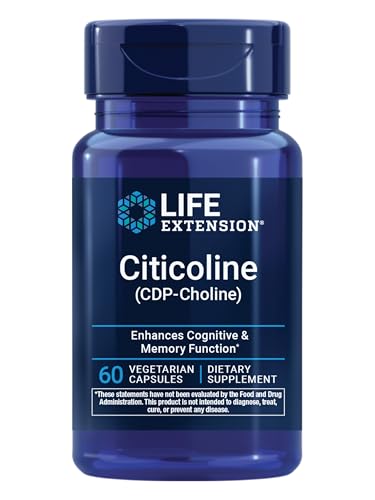
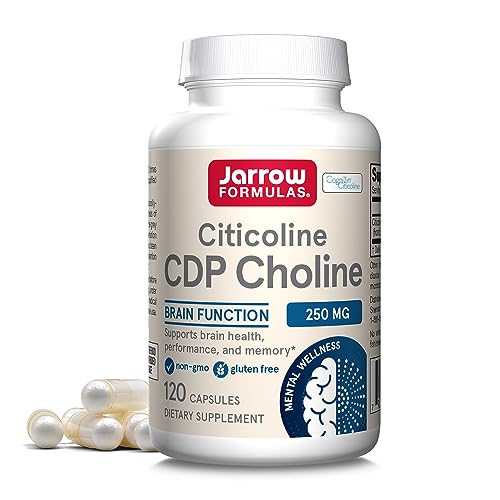
- Jarrow Formulas Cognizin CDP-Choline 250mgLab-tested / studied
capsules, 250 mg citicoline (Cognizin) per capsule, 60 capsules — The benchmark Cognizin-branded product; widely stocked, non-GMO, third-party tested; the go-to reference for price comparisons across the category. - NOW Foods CDP-Choline 300mg
capsules, 300 mg CDP-choline per vegetarian capsule, 60 capsules — 300mg per capsule at a competitive price; GMP-certified, non-GMO; consistently passes independent lab tests; ideal entry point for first-time buyers. - Nutricost Citicoline (CDP-Choline) 500mg
capsules, 500 mg citicoline per capsule, 60 capsules — High-dose option suited to experienced users; GMP-certified facility; budget-friendly; third-party tested; allows easy split-dose regimen at 250mg twice daily. - Double Wood Supplements Citicoline (CDP-Choline) 300mg
capsules, 300 mg CDP-choline per capsule, 60 capsules — Certificates of analysis available; US-manufactured; well-regarded in nootropics forums for consistent potency and transparent testing practices.
As an Amazon Associate we earn from qualifying purchases. Citicoline quality comes down to label accuracy and independent verification. Choose a product that states the exact milligrams of citicoline per serving rather than hiding it inside a proprietary blend, and prefer finished-product certification from NSF, USP or Informed Sport — Cognizin is the branded form named in most published trials, but an independently certified generic carries the same active molecule.
A Note on the Evidence
The RCT evidence for citicoline and memory is most robust in older or clinically impaired populations; evidence in younger, cognitively healthy adults remains limited, and effect sizes across available trials are generally modest. Citicoline is a dietary supplement — not an FDA-approved treatment for any cognitive condition — and individuals who are pregnant, breastfeeding, taking prescription medications, or managing neurological or psychiatric conditions should consult a qualified healthcare provider before use.
Frequently Asked Questions
What does the strongest RCT evidence say about citicoline and memory?
A randomized, double-blind, placebo-controlled trial in healthy older adults found that citicoline supplementation improved memory function compared to placebo [1]. An earlier double-blind trial specifically reported improved verbal memory in aging participants [2]. These are among the most methodologically rigorous studies available for a non-clinical population.
Do Cochrane reviews support citicoline for memory?
Multiple Cochrane review editions examining CDP-choline in elderly patients with chronic cerebral disorders found positive signals on memory and behavioral outcomes [3][6][5][7]. However, the reviewers consistently noted methodological limitations in the underlying trials and called for larger, higher-quality research before firm conclusions could be drawn.
Can citicoline help memory in younger or cognitively healthy adults?
Current RCT evidence is concentrated in older adults (typically 50+) and in patients with neurological or psychiatric conditions. A review of brain-specific nutrients noted that evidence for memory benefits in cognitively healthy, younger individuals was more limited [4]. Extrapolating results from aging or impaired populations to healthy younger adults is not straightforward.

Has citicoline been studied in ADHD or other conditions affecting memory?
A 2024 pilot study explored citicoline in attention-deficit/hyperactivity disorder, a condition that commonly involves working-memory difficulties [11]. Because pilot studies are small and designed to test feasibility rather than confirm efficacy, these results should be considered preliminary until replicated in larger trials.
What dose of citicoline is used in memory-related clinical trials?
Doses across the cited RCTs range broadly, but 250–500 mg per day is the range most consistently associated with a favorable tolerability profile. There is no single consensus dose established for memory support in healthy adults; individual study protocols varied in both dose and treatment duration.
Is citicoline safe, and are there any side effects to know about?
Clinical trials at 250–500 mg per day report an excellent overall tolerability profile. The most commonly noted adverse effects are mild gastrointestinal discomfort and transient headache, particularly at higher doses or in people sensitive to cholinergic stimulation. Citicoline is a dietary supplement, not a drug, and anyone with existing health conditions or taking prescription medications should discuss its use with a healthcare provider before starting.
References
- Nakazaki E et al. Citicoline and Memory Function in Healthy Older Adults: A Randomized, Double-Blind, Placebo-Controlled Clinical Trial. The Journal of nutrition (2021). PMID 33978188
- Spiers PA et al. Citicoline improves verbal memory in aging. Archives of neurology (1996). PMID 8624220
- Fioravanti M et al. Cytidinediphosphocholine (CDP-choline) for cognitive and behavioural disturbances associated with chronic cerebral disorders in the elderly. The Cochrane database of systematic reviews (2005). PMID 15846601
- McDaniel MA et al. "Brain-specific" nutrients: a memory cure?. Nutrition (Burbank, Los Angeles County, Calif.) (2003). PMID 14624946
- Fioravanti M et al. Cytidinediphosphocholine (CDP choline) for cognitive and behavioural disturbances associated with chronic cerebral disorders in the elderly. The Cochrane database of systematic reviews (2000). PMID 10796523
- Fioravanti M et al. Cytidinediphosphocholine (CDP choline) for cognitive and behavioural disturbances associated with chronic cerebral disorders in the elderly. The Cochrane database of systematic reviews (2000). PMID 11034681
- Fioravanti M et al. Cytidinediphosphocholine (CDP choline) for cognitive and behavioural disturbances associated with chronic cerebral disorders in the elderly. The Cochrane database of systematic reviews (2004). PMID 15106147
- Brown ES et al. A randomized, placebo-controlled trial of citicoline add-on therapy in outpatients with bipolar disorder and cocaine dependence. Journal of clinical psychopharmacology (2007). PMID 17873684
- Brown ES et al. A randomized, double-blind, placebo-controlled trial of citicoline for bipolar and unipolar depression and methamphetamine dependence. Journal of affective disorders (2012). PMID 22974472
- Balanzá-Martínez V et al. Lifestyle-based interventions targeting neurocognition in bipolar disorders – a systematic review of randomized controlled trials. Psychiatry research (2025). PMID 40639301
- Hübner IB et al. Use of Citicoline in Attention-Deficit/Hyperactivity Disorder: A Pilot Study. Clinical neuropharmacology (2024). PMID 38976279
These statements have not been evaluated by the Food and Drug Administration. This information is not intended to diagnose, treat, cure, or prevent any disease. Content is for informational purposes only and is not medical advice; consult a qualified healthcare provider before starting any supplement. As an Amazon Associate we earn from qualifying purchases.
