Citicoline — also called CDP-choline, or cytidine 5′-diphosphocholine — is a naturally occurring compound found in every cell of the human body. When ingested, it is metabolized into two active components: choline and cytidine. The choline is used to synthesize acetylcholine, a neurotransmitter central to attention, learning, and memory, and to produce phosphatidylcholine, a structural phospholipid essential to neuronal membrane integrity. The cytidine converts to uridine, which participates in membrane phospholipid synthesis and may influence neurotrophic signaling. These converging biological pathways underlie the scientific rationale for studying citicoline as a compound that may support cognitive performance.
Interest in citicoline for focus has grown considerably in the supplement market, and it is widely included in nootropic stacks and energy formulations marketed for mental clarity and sustained attention. This article reviews the published clinical evidence honestly — what trials measured, what they found, and where important limitations remain. Citicoline is a dietary supplement and has not been approved by the FDA to diagnose, treat, cure, or prevent any disease. Nothing in this article constitutes medical advice.
Key Takeaways
- Citicoline is metabolized into choline and cytidine, with proposed mechanisms including acetylcholine synthesis support, neuronal membrane maintenance via phosphatidylcholine, and possible upregulation of striatal dopamine receptors.
- A study using quantitative EEG found brain-wave changes consistent with increased attentiveness after consumption of a citicoline-enhanced beverage, though the formulation contained additional ingredients [1].
- A double-blind placebo-controlled trial found improvements in concentration, working memory, and sustained attention from a citicoline-caffeine beverage — though the caffeine component limits conclusions about citicoline alone [2].
- A crossover RCT in adult gamers found cognitive function and mood benefits from a citicoline-containing energy drink, with no adverse cardiovascular signals [3].
- At 250–500 mg/day, citicoline has a favorable tolerability profile in clinical trials; the overall evidence base in healthy adults is preliminary and largely derived from multi-ingredient beverage studies rather than isolated citicoline trials.
Proposed Mechanisms: How Citicoline May Support Attention
The most discussed mechanism linking citicoline to attentional function involves the cholinergic system. After oral ingestion, citicoline supplies choline that the brain uses to synthesize acetylcholine via the enzyme choline acetyltransferase. Acetylcholine is a key neurotransmitter in the prefrontal cortical circuits that govern sustained attention and executive control. Research also suggests that citicoline may increase choline acetyltransferase activity itself, potentially amplifying cholinergic signaling beyond what choline supplementation alone would achieve.
A second proposed mechanism involves neuronal membrane maintenance. Phosphatidylcholine, built from the choline released during citicoline metabolism, is a major structural component of neuronal cell membranes. Supporting membrane integrity is thought to facilitate efficient signal transduction and synaptic plasticity. A third pathway involves the uridine arm: cytidine converts to uridine, which feeds back into the Kennedy pathway for phospholipid synthesis and may modulate neurotrophic processes. Additionally, preclinical research has suggested that citicoline can upregulate dopamine receptor density in the striatum, which could theoretically influence motivational drive and attentional engagement. These mechanisms are biologically plausible, though they have been characterized more thoroughly in animal and in vitro work than in controlled human trials.
Brain-Wave Evidence: Quantitative EEG After Citicoline Consumption
One objective method for assessing attentional state is quantitative electroencephalography (qEEG), which maps electrical activity patterns across the scalp. Changes in specific frequency bands — notably increases in alpha and beta power — are associated with alert, focused cognitive states. A published study examined whether consumption of a citicoline-enhanced beverage altered qEEG patterns in healthy adults [1]. The researchers observed statistically significant improvements in qEEG measures following beverage consumption, consistent with a shift toward a more attentive neurological state.

The use of an objective, neurophysiological outcome measure rather than subjective self-report alone is a methodological strength. A key limitation, however, is that the test beverage contained citicoline alongside other ingredients, making it difficult to attribute the observed EEG changes specifically to citicoline rather than to the full formulation.

Concentration, Working Memory, and Sustained Attention: Cognitive Performance Trials
A double-blind, placebo-controlled trial evaluated the effects of a natural citicoline-caffeine beverage on several cognitive domains directly relevant to everyday focus, including concentration, working memory, and sustained attention [2]. Participants consuming the active beverage showed meaningful improvements across these measures compared to a placebo condition. Sustained attention — the capacity to maintain focused engagement over an extended period — is one of the most practically significant dimensions of cognitive performance, and the improvements observed in this domain are among the more clinically relevant findings in this area of research.
A central limitation of this study is the co-administration of citicoline with caffeine. Caffeine is a well-characterized stimulant that independently enhances alertness and sustained attention through adenosine receptor antagonism. Without a citicoline-only arm or a caffeine-only control condition, it is not possible to determine how much of the observed cognitive benefit is attributable to citicoline versus caffeine, or whether the two compounds interact synergistically. Consumers should keep this distinction in mind when evaluating the applicability of these findings to standalone citicoline supplements.
Cognitive Function and Mood in an Active Population: Evidence from a Gamer Trial
A randomized, double-blind, placebo-controlled crossover trial published in 2024 evaluated a multi-ingredient energy drink containing citicoline for its effects on cognitive function, mood, and cardiovascular safety markers in adult gamers [3]. Competitive and recreational gamers place sustained and rapid attentional demands on themselves during extended sessions, making this population a relevant real-world context for testing focus-supporting formulations. The study found improvements in cognitive function and mood in the active condition relative to placebo, without unfavorable changes in myocardial oxygen demand or ventricular repolarization.
The crossover design — in which participants served as their own controls across both active and placebo conditions — is a notable methodological strength, as it reduces variability introduced by differences between individuals. The cardiovascular safety data are reassuring for the specific product tested. As with the earlier beverage studies, the multi-ingredient formulation limits the ability to attribute cognitive improvements to citicoline specifically, since other components of the energy drink may have contributed to or moderated the observed effects [3].
Dosing and Tolerability
Clinical trials examining citicoline for cognitive outcomes have commonly used formulations providing doses in the range of 250 to 500 mg per day. At these doses, citicoline demonstrates an excellent tolerability profile in published research. Mild adverse effects that may occur include transient GI discomfort, nausea, or headache — the latter potentially related to increased cholinergic activity in individuals with heightened sensitivity to cholinergic stimulation. These effects appear to be more common at higher doses.

A 2024 crossover trial found no adverse signals on myocardial oxygen demand or cardiac repolarization from a citicoline-containing formulation, which is relevant for consumers concerned about cardiovascular effects of stimulant-adjacent supplements [3]. Individuals taking medications that affect cholinergic or dopaminergic systems — particularly cholinesterase inhibitors — or those with relevant medical histories should consult a healthcare provider before adding citicoline to their routine.

An Honest Assessment: What the Evidence Does and Does Not Establish
The published clinical evidence on citicoline for attention and focus in healthy adults is promising in direction but limited in scope. The available trials on this specific application are few in number, involve relatively small sample sizes, and consistently test citicoline in combination with other active compounds — most commonly caffeine — rather than in isolation. These design choices make it genuinely difficult to attribute observed cognitive improvements to citicoline specifically. The studies reviewed here provide useful preliminary signals but do not constitute a settled or robust evidentiary foundation.
The mechanistic rationale for citicoline supporting attentional function is scientifically grounded: the cholinergic, membrane-structural, and dopaminergic pathways described above are real biological systems, and citicoline interacts with them in documented ways. What the current literature does not yet provide is a collection of adequately powered, citicoline-isolating, placebo-controlled trials in healthy adults that definitively establish dose-response relationships for attentional outcomes. Consumers evaluating citicoline supplements should understand the meaningful difference between a plausible and coherent mechanism, preliminary positive signals from combination-product trials, and confirmed independent efficacy. The first two exist; the third remains an area of active and incomplete research.
🛒 Where to Buy Citicoline
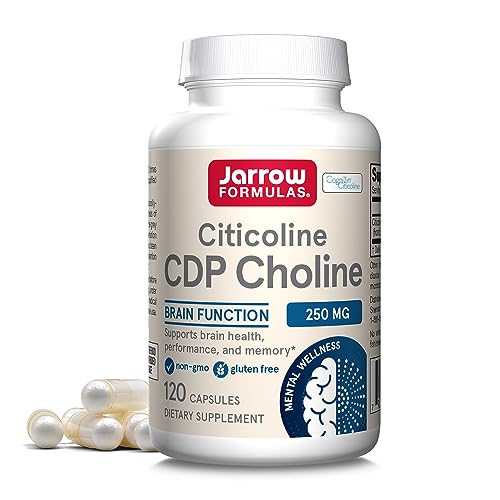
- Jarrow Formulas Cognizin CDP-Choline 250mgLab-tested / studied
capsules, 250 mg citicoline (Cognizin) per capsule, 60 capsules — The benchmark Cognizin-branded product; widely stocked, non-GMO, third-party tested; the go-to reference for price comparisons across the category. - NOW Foods CDP-Choline 300mg
capsules, 300 mg CDP-choline per vegetarian capsule, 60 capsules — 300mg per capsule at a competitive price; GMP-certified, non-GMO; consistently passes independent lab tests; ideal entry point for first-time buyers. - Nutricost Citicoline (CDP-Choline) 500mg
capsules, 500 mg citicoline per capsule, 60 capsules — High-dose option suited to experienced users; GMP-certified facility; budget-friendly; third-party tested; allows easy split-dose regimen at 250mg twice daily. - Double Wood Supplements Citicoline (CDP-Choline) 300mg
capsules, 300 mg CDP-choline per capsule, 60 capsules — Certificates of analysis available; US-manufactured; well-regarded in nootropics forums for consistent potency and transparent testing practices.
As an Amazon Associate we earn from qualifying purchases. Citicoline quality comes down to label accuracy and independent verification. Choose a product that states the exact milligrams of citicoline per serving rather than hiding it inside a proprietary blend, and prefer finished-product certification from NSF, USP or Informed Sport — Cognizin is the branded form named in most published trials, but an independently certified generic carries the same active molecule.
A Note on the Evidence
The clinical evidence on citicoline for focus and attention in healthy adults is preliminary, and most available trials test citicoline alongside caffeine or other active ingredients rather than in isolation, making it difficult to confirm independent efficacy. Individuals who are pregnant or breastfeeding, taking medications affecting the cholinergic or dopaminergic systems (including cholinesterase inhibitors), or managing any medical condition should consult a qualified healthcare provider before using citicoline supplements.
Frequently Asked Questions
Does citicoline actually improve focus?
Published trials report improvements in concentration, working memory, and sustained attention following consumption of citicoline-containing beverages compared to placebo [2]. Quantitative EEG data also show brain-wave shifts consistent with heightened attentiveness [1]. However, most available trials combine citicoline with caffeine or other compounds, so the independent contribution of citicoline to these effects cannot be precisely determined from current evidence.

How does citicoline support attention at a biological level?
Citicoline is metabolized into choline, which the brain uses to synthesize acetylcholine — a neurotransmitter central to sustained attention and executive function. It also supplies material for phosphatidylcholine, a structural component of neuronal membranes, and its cytidine arm converts to uridine, which participates in phospholipid synthesis. Preclinical research additionally suggests citicoline may increase choline acetyltransferase activity and upregulate dopamine receptor density in the striatum, though these effects require further characterization in controlled human studies.
What dose of citicoline is typically used in cognitive performance trials?
The cognitive performance studies reviewed here used citicoline in beverage formulations generally falling in the 250–500 mg per day range. This dosing window is associated with a favorable tolerability profile in published research. Higher doses have been explored in neurological research contexts, but the cognitive performance trials in healthy adults have focused on this lower range.
Are there side effects from citicoline supplementation?
At commonly studied doses of 250–500 mg/day, citicoline has an excellent tolerability profile. The most frequently noted mild effects are transient GI discomfort, nausea, or headache, which may be more pronounced at higher doses or in individuals sensitive to cholinergic stimulation. A 2024 crossover trial found no unfavorable effects on myocardial oxygen demand or cardiac repolarization from a citicoline-containing energy drink [3], though that finding applies to the full formulation tested, not to citicoline in isolation.
Is there evidence for citicoline in gaming or esports contexts?
Yes. A randomized, double-blind, placebo-controlled crossover trial specifically in adult gamers found improvements in cognitive function and mood with a citicoline-containing energy drink compared to placebo, without adverse cardiovascular signals [3]. The crossover design — where participants served as their own controls — is a methodological strength. The multi-ingredient formulation, however, means the observed benefits cannot be attributed solely to citicoline.
Is citicoline the same as CDP-choline?
Yes. Citicoline and CDP-choline are names for the same compound: cytidine 5′-diphosphocholine. They are used interchangeably in scientific literature and on supplement labels. The compound occurs naturally in the body and is also produced synthetically for dietary supplement use. As a supplement, citicoline has not been approved by the FDA to diagnose, treat, cure, or prevent any disease.
References
- Bruce SE et al. Improvements in quantitative EEG following consumption of a natural citicoline-enhanced beverage. International journal of food sciences and nutrition (2012). PMID 22578105
- Bruce SE et al. Improvements in concentration, working memory and sustained attention following consumption of a natural citicoline-caffeine beverage. International journal of food sciences and nutrition (2014). PMID 25046515
- Schwager LE et al. Novel Energy Drink Improves Cognitive Function and Mood, without Influencing Myocardial Oxygen Demand or Ventricular Repolarization in Adult Gamers: A Randomized, Double-Blind, Placebo-Controlled, Crossover Trial. Journal of the American Nutrition Association (2024). PMID 37186677
These statements have not been evaluated by the Food and Drug Administration. This information is not intended to diagnose, treat, cure, or prevent any disease. Content is for informational purposes only and is not medical advice; consult a qualified healthcare provider before starting any supplement. As an Amazon Associate we earn from qualifying purchases.
