As the brain ages, acetylcholine signaling weakens, neuronal membrane integrity erodes, and the structural phospholipids that keep neurons communicating efficiently begin to decline. Citicoline—known chemically as cytidine 5′-diphosphocholine, or CDP-choline—is a naturally occurring intermediate in the biosynthesis of phosphatidylcholine, a primary structural component of neuronal membranes. Because it sits at the intersection of membrane repair and neurotransmitter production, researchers have investigated whether supplemental citicoline can help offset some of these age-related changes.
This article summarizes the published research on citicoline and cognitive aging, from proposed biological mechanisms to randomized controlled trials in older adults. Citicoline is sold as a dietary supplement and has not been approved by the FDA to diagnose, treat, cure, or prevent any disease. The information below is educational and does not constitute medical advice.
Key Takeaways
- Citicoline is metabolized into choline (for acetylcholine and membrane phospholipids) and cytidine (converted to uridine), with proposed mechanisms including neuronal membrane repair, acetylcholine support, and dopamine receptor upregulation [1].
- A randomized, double-blind, placebo-controlled trial found citicoline supplementation was associated with memory improvements in healthy older adults over 28 weeks [2].
- The strongest clinical evidence base is in vascular cognitive impairment, where multiple studies report cognitive stabilization or improvement—including the IDEALE study and post-stroke trials [3] [4].
- At 250–500 mg per day, citicoline has a well-documented tolerability profile; mild GI discomfort or headache are the most commonly reported adverse events.
- Evidence is promising but not definitive for healthy aging populations; larger and longer trials are needed, and citicoline is not approved to treat any form of dementia or cognitive disease.
Proposed Mechanisms: How Citicoline May Support the Aging Brain
When consumed, citicoline is rapidly hydrolyzed in the gut and intestinal wall into choline and cytidine. These two components cross the blood-brain barrier independently, where they are resynthesized into citicoline and incorporated into ongoing metabolic processes. Choline serves two critical roles: it is a direct precursor to the neurotransmitter acetylcholine—central to learning, attention, and memory—and to phosphatidylcholine, the dominant phospholipid in neuronal membranes. Cytidine converts to uridine, which participates in membrane phospholipid biosynthesis and synaptic signaling.
Proposed mechanisms of action, as described in pharmacological reviews, include enhanced neuronal membrane integrity through increased phosphatidylcholine synthesis, upregulation of choline acetyltransferase activity (the enzyme responsible for producing acetylcholine), and increased dopamine receptor density in the striatum [1]. A 2006 update to that review further characterized citicoline’s neuroprotective and neurorestorative properties based on accumulated preclinical and clinical data [5]. These are proposed mechanisms supported largely by preclinical evidence; the degree to which each mechanism drives cognitive outcomes in aging humans continues to be studied.
Preclinical Evidence: Animal Studies
Before human trials, researchers tested citicoline in rodent models of memory impairment. One study examined the effects of CDP-choline on rats with experimentally induced memory deficits and found improvements in memory task performance compared to controls [6]. While animal data can help identify plausible mechanisms and inform dosing hypotheses, it does not predict human outcomes with certainty, and rodent models of cognitive aging are imperfect analogues for the complex neurobiology of human memory decline.
These early findings nonetheless provided a biological rationale for advancing citicoline into human clinical studies, particularly in older populations experiencing age-associated memory changes.

Clinical Trials in Older Adults: Memory and Cognitive Outcomes
A key early human trial reported that citicoline improved verbal memory in aging adults, published in the Archives of Neurology [7]. This helped establish initial clinical interest in the compound as a cognitive support nutrient.

More recently, a rigorous randomized, double-blind, placebo-controlled trial enrolled healthy older adults and administered citicoline for 28 weeks, measuring memory and cognitive function at multiple timepoints. The trial reported that supplementation was associated with improvements in memory performance compared to placebo [2]. This study design—considered the gold standard in clinical research—adds meaningful weight to the evidence base, though it is a single trial in a healthy population and results should not be overgeneralized.
A 2023 review in Aging and Disease examined the cumulative evidence for citicoline in supporting memory in aging humans, noting consistency of findings across multiple studies while acknowledging the need for larger, longer-duration trials to fully characterize the magnitude and durability of effects [8]. A broader critical review of so-called ‘brain-specific’ nutrients in Nutrition raised the important point that positive signals in smaller trials do not always replicate at scale, and that evidence quality in cognitive supplement research varies widely [9]—a useful caution when interpreting any individual citicoline study in isolation.
Citicoline and Vascular Cognitive Impairment
A substantial portion of citicoline’s clinical research has focused on vascular cognitive impairment (VCI)—cognitive decline linked to reduced cerebral blood flow, often following stroke or in the context of ongoing cerebrovascular disease. A 2011 analysis published in Stroke reviewed the evidence for citicoline in vascular cognitive impairment and vascular dementia following stroke, identifying a pattern of cognitive benefit across the reviewed studies [10].
The IDEALE study, a prospective observational study conducted in Italy, examined citicoline in older patients with mild vascular cognitive impairment and found that treatment was associated with stabilization or improvement in cognitive scores over the follow-up period, alongside a favorable safety profile [3]. A separate study found that long-term citicoline treatment may improve post-stroke vascular cognitive impairment specifically [4].
A 2023 clinical review concluded that citicoline may help prevent cognitive decline in patients with established cerebrovascular disease, based on the accumulated trial data in this population [11]. The VCI evidence base is currently more developed than that for purely age-related cognitive decline in otherwise healthy individuals, though these populations are clinically distinct and findings from one should not be freely extrapolated to the other.
Interpreting the Evidence: Strengths and Honest Limitations
The citicoline evidence base spans several decades and includes both observational work and randomized controlled trials across multiple populations. Pharmacological reviews have characterized a reasonably consistent picture of neurobiological activity and clinical signal [1] [5]. The 2021 RCT in healthy older adults [2] and the IDEALE observational study [3] are among the more methodologically rigorous human studies available.

That said, limitations are real and worth stating plainly. Many trials are small, vary considerably in the populations studied (healthy aging vs. diagnosed VCI vs. post-stroke), and use different cognitive assessments, making direct comparisons difficult. The broader field of cognitive supplement research has a mixed replication record [9], and citicoline—while appearing to have a more developed evidence base than many compounds in this category—has not been shown to prevent or reverse any diagnosed neurodegenerative condition. Randomized controlled trial evidence specifically in Alzheimer’s disease or non-vascular dementia is not among the cited evidence here.
Safety, Tolerability, and Dosing
Across clinical trials at doses of 250–500 mg per day, citicoline has demonstrated an excellent tolerability profile, with most studies reporting adverse event rates comparable to placebo. Mild gastrointestinal discomfort or transient headache may occur, particularly at higher doses or in individuals sensitive to cholinergic stimulation. The IDEALE study specifically noted a favorable safety profile in an older adult population [3], consistent with findings from the broader pharmacological literature [1].
The doses used in trials most commonly range from 250 mg to 1000 mg per day, with 500 mg per day used in the 2021 placebo-controlled RCT [2]. No single optimal dose for age-related cognitive support has been formally established. Individuals on medications that affect cholinergic pathways, or those with cardiovascular or neurological conditions, should consult a healthcare provider before adding citicoline to their regimen.
🛒 Where to Buy Citicoline
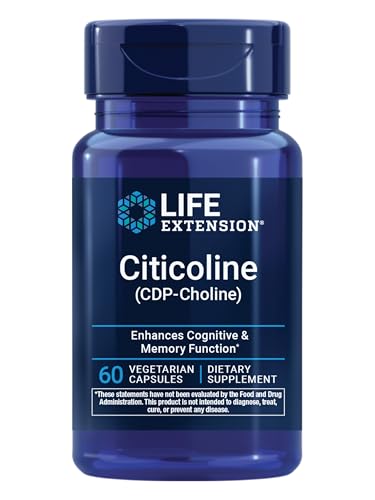
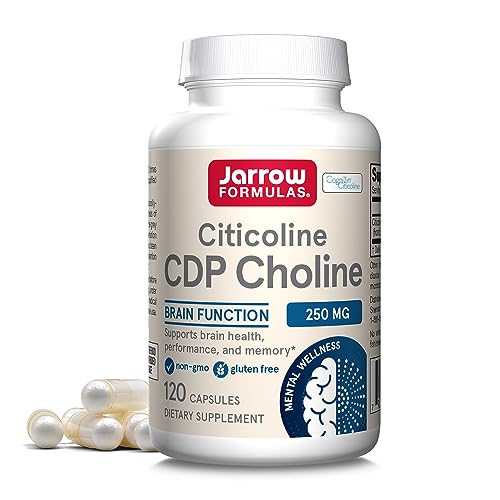
- Jarrow Formulas Cognizin CDP-Choline 250mgLab-tested / studied
capsules, 250 mg citicoline (Cognizin) per capsule, 60 capsules — The benchmark Cognizin-branded product; widely stocked, non-GMO, third-party tested; the go-to reference for price comparisons across the category. - NOW Foods CDP-Choline 300mg
capsules, 300 mg CDP-choline per vegetarian capsule, 60 capsules — 300mg per capsule at a competitive price; GMP-certified, non-GMO; consistently passes independent lab tests; ideal entry point for first-time buyers. - Nutricost Citicoline (CDP-Choline) 500mg
capsules, 500 mg citicoline per capsule, 60 capsules — High-dose option suited to experienced users; GMP-certified facility; budget-friendly; third-party tested; allows easy split-dose regimen at 250mg twice daily. - Double Wood Supplements Citicoline (CDP-Choline) 300mg
capsules, 300 mg CDP-choline per capsule, 60 capsules — Certificates of analysis available; US-manufactured; well-regarded in nootropics forums for consistent potency and transparent testing practices.
As an Amazon Associate we earn from qualifying purchases. Citicoline quality comes down to label accuracy and independent verification. Choose a product that states the exact milligrams of citicoline per serving rather than hiding it inside a proprietary blend, and prefer finished-product certification from NSF, USP or Informed Sport — Cognizin is the branded form named in most published trials, but an independently certified generic carries the same active molecule.
A Note on the Evidence
The evidence for citicoline in healthy aging populations, while encouraging, is based on a limited number of trials that vary in size, population, and duration; results may not apply universally, and no single study is sufficient to draw firm conclusions. Individuals with diagnosed neurological or cardiovascular conditions, those taking cholinergic or dopaminergic medications, and those who are pregnant or breastfeeding should consult a physician before use. This content is informational and does not constitute medical advice.
Frequently Asked Questions
What does citicoline do in the brain?
After ingestion, citicoline is broken down into choline and cytidine, which cross the blood-brain barrier and support two overlapping processes: choline contributes to acetylcholine synthesis and to phosphatidylcholine, the primary structural phospholipid of neuronal membranes, while cytidine converts to uridine for further membrane biosynthesis. Proposed mechanisms also include upregulation of dopamine receptor density in the striatum [1]. These are mechanistic hypotheses supported by preclinical research; not all have been directly confirmed in human imaging studies.

Is there clinical trial evidence for citicoline improving memory in older adults?
Yes, from more than one study. A 2021 randomized, double-blind, placebo-controlled trial in healthy older adults found that citicoline was associated with improved memory performance compared to placebo over 28 weeks [2]. An earlier trial also reported improvements in verbal memory in aging individuals [7]. These are individual trials, however, and the field would benefit from larger, multi-site replication studies.
Does citicoline help with vascular cognitive impairment specifically?
Several studies targeting vascular cognitive impairment—cognitive decline linked to reduced cerebral blood flow—have found favorable results. The IDEALE study observed cognitive stabilization in older patients with mild VCI [3], long-term citicoline use has been associated with improvement in post-stroke VCI [4], and a 2023 review concluded that citicoline may help prevent cognitive decline in patients with cerebrovascular disease [11]. The VCI evidence base is more developed than that in healthy aging populations.
What dose of citicoline is typically used in research?
Clinical trials have used doses ranging from 250 mg to 1000 mg per day. The 2021 placebo-controlled RCT in healthy older adults used 500 mg per day [2], which is a commonly cited dose that appears well tolerated. There is no formally established optimal dose for cognitive support in aging, and dosing should be discussed with a healthcare provider, particularly for individuals on other medications.
Is citicoline safe to take?
In clinical trials at 250–500 mg per day, citicoline has demonstrated an excellent tolerability profile, with adverse events generally comparable to placebo. Mild gastrointestinal discomfort or transient headache may occur, particularly at higher doses or in individuals sensitive to cholinergic stimulation. The IDEALE study noted a favorable safety profile in an older adult cohort [3]. Individuals taking medications that affect cholinergic or dopaminergic pathways should consult their physician before supplementing.
Can citicoline prevent or treat Alzheimer's disease?
No. Citicoline is a dietary supplement and has not been approved by the FDA to diagnose, treat, cure, or prevent Alzheimer’s disease, dementia, or any other medical condition. The available trials have primarily studied healthy older adults with age-associated memory concerns or patients with vascular cognitive impairment—not Alzheimer’s disease. A critical review of brain-specific nutrients cautioned against overgeneralizing findings from small or narrowly defined trials [9], and that caution applies here.
References
- Secades JJ et al. CDP-choline: pharmacological and clinical review. Methods and findings in experimental and clinical pharmacology (1995). PMID 8709678
- Nakazaki E et al. Citicoline and Memory Function in Healthy Older Adults: A Randomized, Double-Blind, Placebo-Controlled Clinical Trial. The Journal of nutrition (2021). PMID 33978188
- Cotroneo AM et al. Effectiveness and safety of citicoline in mild vascular cognitive impairment: the IDEALE study. Clinical interventions in aging (2013). PMID 23403474
- Alvarez-Sabín J et al. Long-term treatment with citicoline may improve poststroke vascular cognitive impairment. Cerebrovascular diseases (Basel, Switzerland) (2013). PMID 23406981
- Secades JJ et al. Citicoline: pharmacological and clinical review, 2006 update. Methods and findings in experimental and clinical pharmacology (2006). PMID 17171187
- Petkov VD et al. Effects of cytidine diphosphate choline on rats with memory deficits. Arzneimittel-Forschung (1993). PMID 8216435
- Spiers PA et al. Citicoline improves verbal memory in aging. Archives of neurology (1996). PMID 8624220
- Świątkiewicz M et al. Citicoline for Supporting Memory in Aging Humans. Aging and disease (2023). PMID 37196134
- McDaniel MA et al. "Brain-specific" nutrients: a memory cure?. Nutrition (Burbank, Los Angeles County, Calif.) (2003). PMID 14624946
- Alvarez-Sabín J et al. Citicoline in vascular cognitive impairment and vascular dementia after stroke. Stroke (2011). PMID 21164117
- Almeria M et al. Citicoline May Prevent Cognitive Decline in Patients with Cerebrovascular Disease. Clinical interventions in aging (2023). PMID 37489128
These statements have not been evaluated by the Food and Drug Administration. This information is not intended to diagnose, treat, cure, or prevent any disease. Content is for informational purposes only and is not medical advice; consult a qualified healthcare provider before starting any supplement. As an Amazon Associate we earn from qualifying purchases.
