Citicoline (cytidine 5′-diphosphocholine, or CDP-choline) is a naturally occurring compound found in every cell of the human body and available as a dietary supplement. When you take it orally, the body rapidly breaks it down into two components: choline and cytidine. Choline is a precursor to the neurotransmitter acetylcholine and to phosphatidylcholine, a structural fat that makes up neuronal membranes. Cytidine converts to uridine, a nucleotide involved in membrane synthesis. Together, these metabolites are thought to support brain cell integrity and neurotransmitter activity through several proposed pathways.
If you have started taking citicoline and are wondering when you might notice a difference, the honest answer is that it depends on what you are looking for and how your body responds. Some changes — such as a modest lift in mental clarity or alertness — may be perceptible within the first few days for sensitive individuals, while the structural neurological benefits that researchers are most interested in appear to accumulate over weeks to months of consistent use. This article breaks down the expected timeline, the mechanisms behind it, and the factors that influence how quickly citicoline works for any given person.
Key Takeaways
- Choline levels rise within hours of a dose, so some users notice mild alertness in the first one to three days, but this is not the primary benefit.
- Meaningful cognitive effects — better attention, memory, and mental endurance — are most likely to emerge after six to twelve weeks of consistent daily use.
- Doses of 250–500 mg per day are the range most studied and best tolerated; individual response depends on baseline choline status, age, and consistency.[1]
- Citicoline’s benefits are typically subtle improvements in thinking quality, not a stimulant-like effect, so setting specific, measurable goals before starting helps with evaluation.
- If no benefit is apparent after three months at an adequate dose, the supplement may not be the right tool for your particular situation — consulting a healthcare provider is worthwhile.
What Citicoline Does in the Brain: The Proposed Mechanisms
Understanding the timeline for citicoline starts with understanding what it is trying to accomplish. The compound is proposed to work through at least three overlapping pathways. First, choline derived from citicoline serves as a raw material for the synthesis of acetylcholine, the neurotransmitter central to memory encoding, attention, and voluntary movement. Higher choline availability can support choline acetyltransferase activity — the enzyme that produces acetylcholine — which may help maintain signaling in cholinergic circuits.
Second, both choline and uridine (from cytidine) contribute to the CDP-choline pathway that cells use to synthesize phosphatidylcholine, the dominant phospholipid in neuronal membranes.[2] Healthy, intact membranes are essential for signal transduction, receptor function, and the overall structural resilience of neurons. The idea is that supplementing citicoline gives the brain more raw material to repair and maintain these membranes, particularly under conditions of stress, aging, or injury.
Third, animal and early human research has pointed to a possible effect on dopaminergic systems, including upregulation of dopamine receptor density in the striatum. Dopamine signaling governs motivation, reward processing, and aspects of executive function, so changes here could account for some of the subjective benefits users report around focus and motivation. These mechanisms are plausible and supported by laboratory evidence, but it is worth being clear that much of the mechanistic detail comes from preclinical work and that human trials vary considerably in design and outcome measures.

The First 24–72 Hours: Early Signals
Because oral citicoline is rapidly absorbed and broken down, choline levels in the blood rise within an hour or two of a dose. For people who were previously choline-deficient — a common state given that many diets fall short of adequate choline intake — this increase may translate into a perceptible sense of mental clarity or alertness fairly quickly. Some users describe a mild, clean-feeling alertness that starts on the first or second day, while others notice nothing at all initially.
This early response, when it occurs, is likely a reflection of increased acetylcholine synthesis rather than any structural change in the brain. It is real but also somewhat variable and not the primary benefit citicoline is studied for. If you do not feel anything in the first few days, that does not mean the supplement is not working; the more meaningful changes operate on a longer timescale and are not always directly perceptible as a distinct feeling. Mild side effects such as transient headache or light GI discomfort are most likely to appear in this early window, especially at higher doses or in those who are sensitive to cholinergic stimulation.
Weeks 2–4: Building a Foundation
By the second and third week of consistent daily use, choline and uridine are being delivered to the brain on a sustained basis. This is when phosphatidylcholine synthesis is thought to ramp up meaningfully. Neuronal membranes do not remodel overnight; the turnover of membrane phospholipids is a gradual biochemical process. Supplying the necessary substrates consistently over two to four weeks gives cells enough time to incorporate them in a way that may influence membrane fluidity and receptor presentation.
Some clinical studies on citicoline for cognitive outcomes have used four-week intervention windows as a minimum, suggesting that researchers consider this a reasonable lower bound for detecting early effects. Subjectively, users who did not notice much in the first week sometimes report that focus and mental endurance feel more stable around the three- to four-week mark — less a dramatic shift and more a quiet reduction in cognitive fatigue. This is consistent with the gradual, substrate-driven nature of the mechanism rather than a fast-acting stimulant effect.
Weeks 6–12: When Research Finds the Clearest Signals
The preponderance of citicoline clinical trials run for 6 to 12 weeks, and this range reflects where the evidence for cognitive benefit is most consistent. Studies examining attention, memory, and information processing in healthy adults and in populations with mild cognitive impairment have generally used this duration. The reasoning is straightforward from a mechanistic standpoint: meaningful changes in membrane composition, sustained shifts in neurotransmitter synthesis capacity, and any reorganization of receptor density all require extended, consistent supplementation.

At doses of 250–500 mg per day — the range most commonly studied and generally associated with a good tolerability profile — this is the window in which the clearest improvements in measures like working memory, verbal memory, and sustained attention have been reported in controlled trials. It is important to note that ‘clearest’ does not mean dramatic or universal; effect sizes in healthy young adults tend to be modest, while effects in older adults or those with some cognitive decline may be more pronounced.
If you are taking citicoline for a specific cognitive goal and have not noticed any change by the end of week 12 at an adequate dose, the honest assessment is that you may be a non-responder, or the intervention may not be appropriate for your particular situation. Individual variation in choline metabolism, baseline choline status, diet, and the underlying reason for cognitive concerns all affect outcomes.[3]
Factors That Influence Your Personal Timeline
Several variables determine whether someone experiences citicoline’s effects quickly or slowly. Baseline choline status is probably the most important: individuals eating low-choline diets (common in those who avoid eggs and meat) or who carry genetic variants that reduce choline synthesis endogenously stand to gain more from supplementation and may respond more noticeably. Those who already consume ample dietary choline are closer to saturation and may experience less of a subjective difference.
Age and brain health are also relevant. Older adults and those experiencing early memory changes may show more measurable improvement than healthy young adults, because their neuronal membranes may be more compromised and their cholinergic systems more depleted — giving citicoline more room to work. Dose consistency matters as well; skipping doses interrupts the steady-state delivery of choline and uridine that the proposed mechanisms depend on. Taking citicoline erratically is unlikely to replicate the effects seen in trials where participants took it daily without interruption.

Finally, the form of citicoline matters. Branded stabilized forms (such as Cognizin) have published bioavailability data and are used in most clinical trials. Generic CDP-choline supplements vary in quality and actual CDP-choline content. If you are not using a well-characterized form, the effective dose you are receiving may be lower than the label suggests.
How to Set Realistic Expectations
Citicoline is not a stimulant, and it does not produce the rapid, unmistakable effects of caffeine or other fast-acting compounds. Its benefits, when present, tend to be described as improvements in the quality of thinking — clearer recall, better ability to sustain attention, less mental fog — rather than an obvious jolt of energy or mood elevation. This subtlety means many people underestimate whether the supplement is doing anything, particularly in the first month.

A practical approach is to define what you are hoping to notice before you start — for example, better word recall during conversations, faster problem-solving at work, or fewer mid-afternoon attention lapses — and then assess those specific targets at four weeks, eight weeks, and twelve weeks. Self-assessments are inherently subjective, but having a target prevents you from expecting a dramatic transformation that the evidence does not support and helps you recognize genuine but modest improvements when they occur.
It is also worth separating citicoline’s realistic role from other factors. Sleep quality, physical exercise, stress load, and overall diet have large and well-established effects on cognitive function. Citicoline, at best, is a supporting tool in a broader lifestyle context — not a replacement for the fundamentals.
🛒 Where to Buy Citicoline
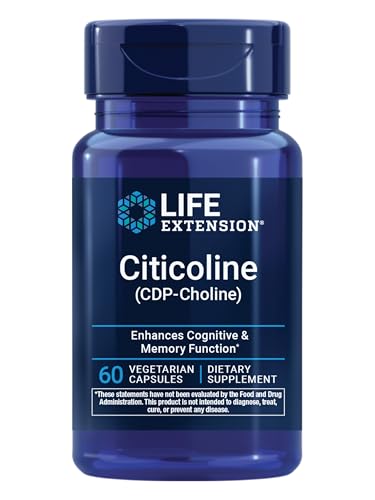
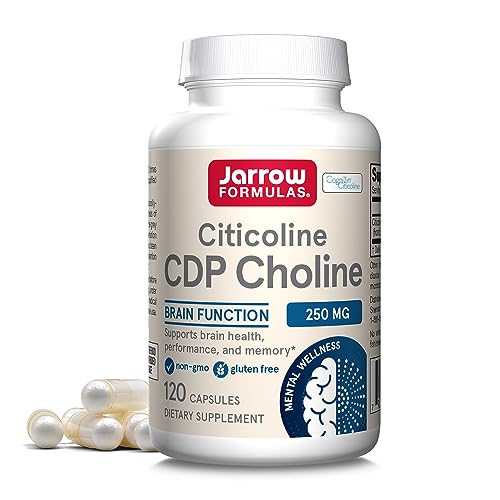
- Jarrow Formulas Cognizin CDP-Choline 250mgLab-tested / studied
capsules, 250 mg citicoline (Cognizin) per capsule, 60 capsules — The benchmark Cognizin-branded product; widely stocked, non-GMO, third-party tested; the go-to reference for price comparisons across the category. - NOW Foods CDP-Choline 300mg
capsules, 300 mg CDP-choline per vegetarian capsule, 60 capsules — 300mg per capsule at a competitive price; GMP-certified, non-GMO; consistently passes independent lab tests; ideal entry point for first-time buyers. - Nutricost Citicoline (CDP-Choline) 500mg
capsules, 500 mg citicoline per capsule, 60 capsules — High-dose option suited to experienced users; GMP-certified facility; budget-friendly; third-party tested; allows easy split-dose regimen at 250mg twice daily. - Double Wood Supplements Citicoline (CDP-Choline) 300mg
capsules, 300 mg CDP-choline per capsule, 60 capsules — Certificates of analysis available; US-manufactured; well-regarded in nootropics forums for consistent potency and transparent testing practices.
As an Amazon Associate we earn from qualifying purchases. Citicoline quality comes down to label accuracy and independent verification. Choose a product that states the exact milligrams of citicoline per serving rather than hiding it inside a proprietary blend, and prefer finished-product certification from NSF, USP or Informed Sport — Cognizin is the branded form named in most published trials, but an independently certified generic carries the same active molecule.
A Note on the Evidence
The evidence base for citicoline, while more robust than for many supplements, is still maturing — many trials are small, short, and conducted in specific populations that may not reflect your situation. Citicoline has not been approved by the FDA to diagnose, treat, cure, or prevent any disease. If you are pregnant, nursing, taking medications that affect the cholinergic or dopaminergic systems, or managing a neurological condition, consult a qualified healthcare provider before starting citicoline.
Frequently Asked Questions
Can I feel citicoline working on the first day?
Some people do report a mild sense of mental clarity or alertness within the first day or two, likely reflecting increased acetylcholine synthesis as choline levels rise in the blood. However, this early response is variable and not experienced by everyone. The structural neuronal benefits that citicoline is primarily studied for take much longer to develop.
What is the minimum time I should give citicoline before deciding if it works?
Most clinical researchers use six to twelve weeks as their minimum study window, which reflects how long it takes for sustained membrane phospholipid synthesis and neurotransmitter changes to accumulate. Giving it less than four weeks before concluding it does not work is likely too short a trial period.
Does taking a higher dose make citicoline work faster?
Not necessarily, and higher doses increase the risk of mild side effects like GI discomfort or headache, particularly for those sensitive to cholinergic stimulation. The 250–500 mg per day range studied in clinical trials is associated with a good tolerability profile; going above this is not supported by stronger evidence of faster or better outcomes.
Does citicoline have to be taken every day to work?
Consistency appears important. The mechanisms rely on sustained delivery of choline and uridine to the brain, and skipping doses disrupts the steady supply that ongoing membrane synthesis and neurotransmitter production depend on. Occasional misses are unlikely to be catastrophic, but irregular use is unlikely to replicate trial results where participants dosed daily.

Is citicoline the same as choline supplements like alpha-GPC?
They are related but not identical. Citicoline delivers both choline and cytidine (which becomes uridine), giving it the dual action on acetylcholine synthesis and membrane phospholipid production. Alpha-GPC is a highly bioavailable choline source but does not provide the uridine component. The two compounds have overlapping but not identical proposed mechanisms.
Can citicoline be used long-term?
Clinical trials have run safely for up to twelve weeks in most published research, with some longer-duration studies in stroke recovery and age-related cognitive decline populations. The tolerability profile at 250–500 mg/day is generally described as excellent, but long-term safety data beyond several months in healthy adults is limited. Anyone considering extended use should discuss it with a healthcare provider.
References
- Unveiling citicoline's mechanisms and clinical relevance in the treatment of neuroinflammatory disorders. The FASEB Journal (2024). PMID 39221499
- Phosphatidylcholine and the CDP-choline cycle. Biochimica et Biophysica Acta (2013). PMID 23010477
- Choline supplements: An update. Frontiers in Endocrinology (2023). PMID 36950691
These statements have not been evaluated by the Food and Drug Administration. This information is not intended to diagnose, treat, cure, or prevent any disease. Content is for informational purposes only and is not medical advice; consult a qualified healthcare provider before starting any supplement. As an Amazon Associate we earn from qualifying purchases.
