Citicoline — also known as CDP-choline or cytidine 5′-diphosphocholine — has attracted considerable interest as a nootropic supplement and neuroprotective agent. As more people reach for it to support memory, focus, and brain health, a reasonable first question is: is citicoline actually safe? The short answer, based on available clinical research, is that it carries a well-documented tolerability record across multiple patient populations. That answer, however, deserves a careful, evidence-grounded look rather than a blanket reassurance.
This review draws on systematic reviews, meta-analyses, and pharmacological overviews to assess what the research actually shows about citicoline’s safety — covering reported side effects, dose considerations, specific clinical populations, and the limits of the current evidence base. This content is informational only and is not a substitute for advice from a qualified healthcare professional. Citicoline is sold in the United States as a dietary supplement and has not been approved by the FDA to diagnose, treat, cure, or prevent any disease.
Key Takeaways
- Multiple systematic reviews and meta-analyses report that citicoline has a favorable tolerability profile, with adverse event rates generally comparable to placebo across stroke, TBI, and cognitive decline populations.
- The most common side effects are mild GI discomfort and transient headache, more likely at higher doses or in those sensitive to cholinergic stimulation.
- Doses of 250–500 mg per day represent the most studied and best-tolerated supplemental range; escalating dose without guidance is not recommended.
- Combining citicoline with other cholinergic compounds or medications can amplify side effects — consult a physician if you are on neurological prescriptions.
- Citicoline is a dietary supplement, not an FDA-approved drug; long-term safety data in healthy, non-clinical adults is more limited than therapeutic trial data.
What Is Citicoline and How Does It Work?
Citicoline is a naturally occurring compound present in every cell in the body. When ingested, it is hydrolyzed into two components: choline and cytidine. Choline is a direct precursor to the neurotransmitter acetylcholine, which plays a central role in attention and memory consolidation; it is also incorporated into phosphatidylcholine, a structural phospholipid that makes up neuronal cell membranes. Cytidine converts to uridine in the bloodstream, which feeds back into the CDP-choline pathway to support ongoing phospholipid synthesis.
The proposed mechanisms through which citicoline may support brain function include enhanced neuronal membrane integrity, increased activity of choline acetyltransferase (the enzyme responsible for synthesizing acetylcholine), and upregulation of dopamine receptor density in the striatum [1]. These mechanisms are relevant to safety in an important way: citicoline is not a foreign xenobiotic but a molecule the body already produces and metabolizes through established biochemical pathways. That endogenous status partly explains the favorable tolerability observed in clinical research. It does not, however, mean that quantity or interactions are irrelevant — more is not always better when it comes to cholinergic compounds.
What the Clinical Research Says About Safety
Citicoline has been studied in clinical settings for several decades, including in large randomized controlled trials and multiple independent systematic reviews. A comprehensive pharmacological and clinical review found that citicoline has an excellent safety and tolerability profile, with adverse event rates across studies generally comparable to placebo [1]. That same body of work noted that the compound does not appear to accumulate to toxic levels and demonstrates a wide therapeutic window across the dose ranges studied.

The most rigorous data come from neurological populations. A Cochrane systematic review of citicoline for acute ischemic stroke — synthesizing data across numerous randomized controlled trials — found that the rate of adverse events did not differ significantly between citicoline-treated patients and controls [2]. A 2024 network meta-analysis of neuroprotective agents in acute ischemic stroke similarly reported an acceptable safety signal for citicoline relative to other agents in the class [3]. An umbrella review of therapies for post-stroke cognitive impairment cited tolerability as a characteristic supporting citicoline’s continued evaluation [4].
In the context of traumatic brain injury, a 2023 systematic review and meta-analysis found no significant safety concerns associated with citicoline during the acute treatment phase, with tolerability supporting its candidacy for further research [5]. A systematic review examining citicoline as an adjunct treatment in Alzheimer’s disease reported that serious adverse events were rare and that discontinuation due to side effects was uncommon across included trials [6].
Known Side Effects and Tolerability in Practice
The side effects reported with citicoline are generally mild and transient. The most commonly documented are gastrointestinal in nature — nausea, stomach discomfort, or loose stools — and tend to be more pronounced at higher doses or in individuals who are particularly sensitive to increases in cholinergic activity. Transient headache is the other effect noted in some reports, typically at the onset of supplementation or when doses are escalated.
An early review of citicoline’s clinical profile noted the absence of serious drug-related adverse events across the study populations examined and highlighted that tolerability was maintained even over extended treatment periods [7]. A review of citicoline use specifically in vascular and degenerative cognitive decline found the compound well-tolerated across age groups, including older adults who might be expected to be more sensitive to neurologically active compounds [8].
One important tolerability consideration is the potential for cholinergic excess when citicoline is combined with other choline-boosting supplements or cholinergic drugs. Because citicoline raises choline availability and supports acetylcholine synthesis, stacking it with alpha-GPC, huperzine A, or prescription acetylcholinesterase inhibitors can amplify cholinergic effects beyond what any single compound would produce. Symptoms of cholinergic overload — headache, mental fatigue, low mood, nausea, or dizziness — are not inherent to citicoline at normal doses but can emerge from additive load.
Citicoline Safety in Stroke, Brain Injury, and Eye Disease Populations
The bulk of long-term safety data on citicoline comes from clinical populations rather than healthy adults supplementing for cognitive optimization. This is meaningful context: if a compound is well-tolerated in patients recovering from ischemic stroke or traumatic brain injury — who are often older, medically complex, and managing multiple medications simultaneously — that represents a relatively strong tolerability signal for lower-risk supplement users.

Stroke management reviews have discussed citicoline in the neuroprotection context, with its tolerability profile cited as a factor supporting continued research [9] [10]. The Cochrane analysis in acute ischemic stroke reinforced this picture, finding no statistically significant excess of adverse events in citicoline arms compared to control [2].
Citicoline has also been evaluated for neurotrophic keratopathy, a corneal nerve damage condition, representing an entirely different organ system. A Cochrane review of interventions for this condition included citicoline among treatments examined [11]. The breadth of clinical contexts in which citicoline has been studied — stroke, TBI, Alzheimer’s, and ocular nerve disease — provides safety data across diverse patient profiles, lending additional confidence to the compound’s general tolerability.
How Dose Affects Safety
Clinical trials have employed a wide dose range, from 250 mg to 2,000 mg per day, with supplemental use most commonly concentrated in the 250–500 mg range. The pharmacological literature suggests that lower doses in this window are associated with the fewest side effects, while doses at the higher end are more likely to produce transient GI discomfort or headache, particularly in the initial weeks of use [1].

No formally established maximum tolerated dose exists for healthy adults supplementing over the long term, and no serious toxicity has been attributed to citicoline at typical supplemental doses in the literature reviewed here. That said, escalating dose arbitrarily — particularly without understanding one’s individual cholinergic sensitivity or concurrent supplement use — is not advisable. Starting at the lower end of the studied range and assessing tolerance before increasing is a pragmatic approach consistent with the available evidence.
Who Should Use Extra Caution?
While citicoline’s overall safety profile is favorable, certain individuals warrant closer consideration. People already taking prescription medications that modulate the cholinergic system — particularly acetylcholinesterase inhibitors prescribed for Alzheimer’s disease or myasthenia gravis — should consult their prescribing physician before adding citicoline, as the combination may amplify cholinergic tone beyond the intended therapeutic range. The same caution applies to those already taking multiple choline-boosting supplements in combination.
Pregnant and breastfeeding individuals fall outside the scope of the existing clinical literature reviewed here, and citicoline should not be assumed safe for these groups in the absence of professional guidance. Those with epilepsy, a history of hypotension, or complex polypharmacy should likewise seek medical input before supplementing. It is also worth being explicit about an evidence gap: most long-term safety data comes from clinical populations treated for defined conditions, not from healthy adults using citicoline indefinitely as a cognitive supplement. The signal is encouraging, but that particular scenario has not been studied with the same rigor.

🛒 Where to Buy Citicoline
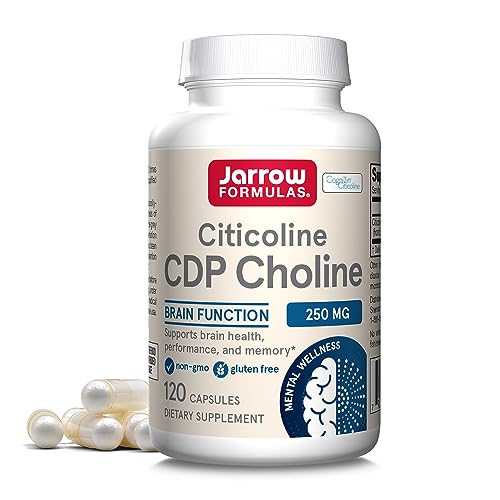
- Jarrow Formulas Cognizin CDP-Choline 250mgLab-tested / studied
capsules, 250 mg citicoline (Cognizin) per capsule, 60 capsules — The benchmark Cognizin-branded product; widely stocked, non-GMO, third-party tested; the go-to reference for price comparisons across the category. - NOW Foods CDP-Choline 300mg
capsules, 300 mg CDP-choline per vegetarian capsule, 60 capsules — 300mg per capsule at a competitive price; GMP-certified, non-GMO; consistently passes independent lab tests; ideal entry point for first-time buyers. - Nutricost Citicoline (CDP-Choline) 500mg
capsules, 500 mg citicoline per capsule, 60 capsules — High-dose option suited to experienced users; GMP-certified facility; budget-friendly; third-party tested; allows easy split-dose regimen at 250mg twice daily. - Double Wood Supplements Citicoline (CDP-Choline) 300mg
capsules, 300 mg CDP-choline per capsule, 60 capsules — Certificates of analysis available; US-manufactured; well-regarded in nootropics forums for consistent potency and transparent testing practices.
As an Amazon Associate we earn from qualifying purchases. Citicoline quality comes down to label accuracy and independent verification. Choose a product that states the exact milligrams of citicoline per serving rather than hiding it inside a proprietary blend, and prefer finished-product certification from NSF, USP or Informed Sport — Cognizin is the branded form named in most published trials, but an independently certified generic carries the same active molecule.
A Note on the Evidence
The safety evidence reviewed here comes primarily from clinical populations studied over weeks to months in controlled settings — not from indefinite supplementation in healthy adults — leaving meaningful evidence gaps around pregnancy, pediatric use, and long-term polypharmacy scenarios; anyone with a pre-existing neurological or systemic health condition, those taking prescription medications affecting the cholinergic or dopaminergic system, and pregnant or breastfeeding individuals should consult a qualified healthcare provider before using citicoline.

Frequently Asked Questions
Is citicoline safe to take every day?
Clinical trial data shows citicoline is generally well-tolerated with daily use across the durations studied, which in some trials extended to many months [1]. No pattern of serious adverse events attributable to daily citicoline has been consistently identified in the reviewed literature. That said, indefinite long-term use in healthy adults has not been studied as rigorously as shorter-term therapeutic use, so periodic check-ins with a healthcare provider remain reasonable.
What are the most common side effects of citicoline?
The most commonly reported effects are mild gastrointestinal symptoms — nausea, stomach discomfort, or loose stools — and occasional transient headache, more likely at higher doses or at the start of supplementation. Cochrane-level evidence found that adverse event rates in citicoline groups were not significantly higher than in control groups [2], suggesting these effects are not dramatically more common than in non-users.
Can citicoline interact with medications?
Citicoline supports acetylcholine synthesis, so combining it with acetylcholinesterase inhibitors or other cholinergic drugs could amplify cholinergic effects and increase the risk of symptoms like headache, nausea, or cognitive fog. There are also theoretical interactions with dopaminergic medications given citicoline’s proposed effect on dopamine receptor density [1]. If you take any prescription neurological medication, consult your physician before adding citicoline.
Is citicoline safe for older adults?
Most clinical research on citicoline has been conducted in older adult populations, including those with stroke, vascular cognitive impairment, and Alzheimer’s disease, and reviews in these groups have consistently reported favorable tolerability [8] [6]. Older adults are not uniquely at higher risk based on current evidence, but those managing multiple medications should seek professional guidance to avoid interaction risks.
Does citicoline cause liver damage or organ toxicity?
No evidence of hepatic or renal toxicity has been reported in the clinical literature reviewed here. Citicoline is metabolized through endogenous biochemical pathways, and serious organ-level adverse events have not been identified in available trial data spanning multiple decades of clinical use [7] [1]. This does not rule out idiosyncratic reactions, but such events have not appeared as a systematic signal.

Is citicoline FDA-approved?
In the United States, citicoline is sold as a dietary supplement and has not been approved by the FDA to diagnose, treat, cure, or prevent any disease. In some other countries, it is available as a regulated prescription medication for neurological indications. This regulatory distinction matters: it means quality control and post-market safety surveillance in the supplement context operate differently than for approved pharmaceuticals, making sourcing from reputable manufacturers an important practical consideration.
References
- Secades JJ et al. Citicoline: pharmacological and clinical review, 2010 update. Revista de neurologia (2011). PMID 21432836
- Martí-Carvajal AJ et al. Citicoline for treating people with acute ischemic stroke. The Cochrane database of systematic reviews (2020). PMID 32860632
- Li M et al. Efficacy analysis of neuroprotective drugs in patients with acute ischemic stroke based on network meta-analysis. Frontiers in pharmacology (2024). PMID 39575393
- Li Y et al. The efficacy and safety of post-stroke cognitive impairment therapies: an umbrella review. Frontiers in pharmacology (2023). PMID 37693907
- Secades JJ et al. Citicoline for the Management of Patients with Traumatic Brain Injury in the Acute Phase: A Systematic Review and Meta-Analysis. Life (Basel, Switzerland) (2023). PMID 36836726
- Piamonte BLC et al. Effects of Citicoline as an Adjunct Treatment for Alzheimer's Disease: A Systematic Review. Journal of Alzheimer's disease : JAD (2020). PMID 32538854
- Alexandrov AV et al. Citicoline. Ferrer Internacional. Current opinion in investigational drugs (London, England : 2000) (2001). PMID 11892942
- García-Cobos R et al. Citicoline, use in cognitive decline: vascular and degenerative. Journal of the neurological sciences (2010). PMID 20875651
- Warburton E et al. Stroke management. BMJ clinical evidence (2008). PMID 19445805
- Warburton E et al. Stroke management. BMJ clinical evidence (2011). PMID 21658301
- Kruoch Z et al. Medical and surgical interventions for neurotrophic keratopathy. The Cochrane database of systematic reviews (2025). PMID 41347649
These statements have not been evaluated by the Food and Drug Administration. This information is not intended to diagnose, treat, cure, or prevent any disease. Content is for informational purposes only and is not medical advice; consult a qualified healthcare provider before starting any supplement. As an Amazon Associate we earn from qualifying purchases.
