If you have spent any time reading supplement labels or nootropics forums, you have almost certainly seen both ‘citicoline’ and ‘CDP-choline’ listed as ingredients, sometimes side by side as if they were different things. The confusion is understandable, but the short answer is straightforward: citicoline and CDP-choline are two names for the exact same molecule, cytidine 5′-diphosphocholine.
CDP-choline is the biochemical and pharmacological name describing the molecule’s structure, while citicoline is the International Nonproprietary Name (INN) assigned for clinical and commercial use. Understanding why one compound carries two names, and what that compound actually does once you swallow it, is worth a closer look before spending money on either.
Key Takeaways
- Citicoline and CDP-choline are different names for the exact same molecule, cytidine 5′-diphosphocholine; there is no chemical distinction between them.
- After ingestion, the compound splits into choline and cytidine, which support acetylcholine synthesis, neuronal membrane phospholipid production, and uridine availability through separate pathways.[2]
- Proposed mechanisms include enhanced membrane integrity, increased choline acetyltransferase activity, and modulation of dopamine receptor density, though clinical significance in healthy adults is still being studied.
- Doses of 250–500 mg/day have shown a good tolerability profile; mild GI upset or headache can occur, especially in those sensitive to cholinergic compounds.
- When choosing a product, prioritize verified dosing, third-party testing, and manufacturer quality standards over whether the label says ‘citicoline’ or ‘CDP-choline’.
The Naming Confusion Explained
In biochemistry, CDP-choline stands for cytidine 5′-diphosphocholine, a nucleotide derivative that occurs naturally in every cell of the human body. It sits at a metabolic crossroads in the Kennedy pathway, the main route cells use to synthesize phosphatidylcholine for membrane construction. The name ‘CDP-choline’ describes its chemical identity precisely: a cytidine nucleotide linked via two phosphate groups to a choline molecule.
Citicoline is simply the INN that regulatory and clinical bodies adopted to refer to the same structure in pharmaceutical and supplement contexts. Think of it the way ‘acetaminophen’ and ‘paracetamol’ describe the same pain reliever in different regions. When a product label lists ‘citicoline (CDP-choline)’ or vice versa, the parenthetical is a transparency note, not a distinction. There is no chemical difference between them.
What Happens to It Inside the Body
Once ingested, citicoline (CDP-choline) is rapidly hydrolyzed in the intestinal wall and liver into its two component parts: choline and cytidine. These travel through the bloodstream separately and cross the blood-brain barrier, where they are reassembled and put to work through distinct but complementary pathways.
Choline is used in two important ways in the brain. First, it serves as a direct precursor for acetylcholine, the neurotransmitter central to attention, memory encoding, and the cholinergic system broadly. Second, choline re-enters the Kennedy pathway and is incorporated into phosphatidylcholine, a phospholipid that forms a critical structural component of neuronal cell membranes. Maintaining adequate membrane phosphatidylcholine is thought to support membrane fluidity and receptor function.

Cytidine converts in the body to uridine, a nucleoside with its own proposed neurological roles. Uridine is thought to support synaptic plasticity and, alongside the choline-derived phosphatidylcholine synthesis, may contribute to overall membrane integrity. Researchers have also proposed that increased availability of choline in the brain can upregulate choline acetyltransferase activity, the enzyme responsible for synthesizing acetylcholine, and may influence dopamine receptor density in the striatum, though the clinical significance of these effects in healthy adults remains under active study.

Are There Any Differences Between Products Labeled One Way or the Other?
Because citicoline and CDP-choline are identical molecules, the naming on a label tells you nothing about potency, purity, or efficacy. What does matter is the actual dose per serving, the form (free-acid versus a salt such as citicoline sodium), and the manufacturer’s quality standards. Some branded forms of citicoline, such as Cognizin, have been the subject of clinical research and come with third-party testing certificates; an unbranded product labeled ‘CDP-choline’ may or may not carry equivalent documentation.
When comparing products, focus on the milligrams of citicoline or CDP-choline per serving, the certificate of analysis from an independent lab, and whether the manufacturer adheres to Good Manufacturing Practices. The name on the label is not the differentiator.
Dosing and Tolerability
Clinical trials have most commonly studied doses in the range of 250 to 500 mg per day, and at these levels the tolerability profile has generally been reported as excellent.[1] Mild gastrointestinal discomfort, such as nausea or loose stools, and transient headache are the most frequently noted side effects, particularly at higher doses or in individuals who are sensitive to cholinergic stimulation.
Because citicoline increases choline availability, people who already have high dietary choline intake or who stack it with other choline-boosting supplements should be mindful of the additive cholinergic load. Headaches in particular are sometimes a sign of excess cholinergic tone. Splitting the daily dose between morning and early afternoon rather than taking it all at once may help minimize these effects for sensitive individuals.
How Citicoline Compares to Other Choline Sources
Citicoline is not the only way to raise brain choline levels. Alpha-GPC (alpha-glycerylphosphorylcholine) is another popular supplement that also delivers choline efficiently and is hydrolyzed to free choline and glycerol-3-phosphocholine after absorption. Choline bitartrate and choline chloride are less expensive options but are considered less bioavailable for central nervous system purposes.
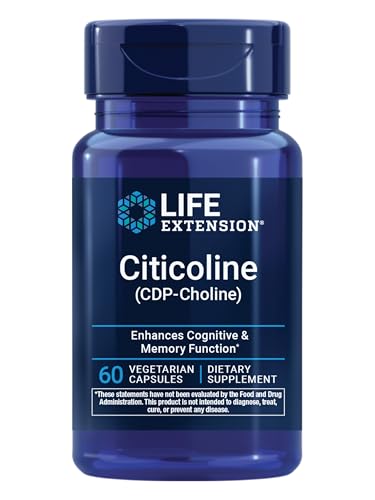
The key distinction with citicoline is the cytidine component. No other common choline supplement provides cytidine alongside the choline, which means citicoline’s proposed effects on membrane phospholipid synthesis and uridine availability are considered specific to this compound. Whether that distinction translates into meaningfully different real-world outcomes is a question the research has not yet definitively settled, and direct head-to-head trials are limited.
What the Research Does and Does Not Show
Research into citicoline spans several decades and a wide range of populations, including older adults with age-related cognitive concerns, people recovering from stroke or head injury, and healthy younger adults. The compound was investigated in pharmaceutical contexts in Europe for years before becoming widely available as a dietary supplement in the United States.

It is important to be clear about the regulatory and evidentiary status: citicoline is sold as a dietary supplement in the United States and has not been approved by the FDA to diagnose, treat, cure, or prevent any disease. Much of the supportive research was conducted in clinical or injured populations, and translating those findings to healthy individuals requires caution. The mechanistic rationale for cognitive support is plausible and grounded in well-understood biochemistry, but ‘plausible mechanism’ and ‘proven effect in healthy adults’ are different things. Prospective buyers should weigh the evidence honestly rather than relying on marketing language.
🛒 Where to Buy Citicoline
- Jarrow Formulas Cognizin CDP-Choline 250mgLab-tested / studied
capsules, 250 mg citicoline (Cognizin) per capsule, 60 capsules — The benchmark Cognizin-branded product; widely stocked, non-GMO, third-party tested; the go-to reference for price comparisons across the category. - NOW Foods CDP-Choline 300mg
capsules, 300 mg CDP-choline per vegetarian capsule, 60 capsules — 300mg per capsule at a competitive price; GMP-certified, non-GMO; consistently passes independent lab tests; ideal entry point for first-time buyers. - Nutricost Citicoline (CDP-Choline) 500mg
capsules, 500 mg citicoline per capsule, 60 capsules — High-dose option suited to experienced users; GMP-certified facility; budget-friendly; third-party tested; allows easy split-dose regimen at 250mg twice daily. - Double Wood Supplements Citicoline (CDP-Choline) 300mg
capsules, 300 mg CDP-choline per capsule, 60 capsules — Certificates of analysis available; US-manufactured; well-regarded in nootropics forums for consistent potency and transparent testing practices.
As an Amazon Associate we earn from qualifying purchases. Citicoline quality comes down to label accuracy and independent verification. Choose a product that states the exact milligrams of citicoline per serving rather than hiding it inside a proprietary blend, and prefer finished-product certification from NSF, USP or Informed Sport — Cognizin is the branded form named in most published trials, but an independently certified generic carries the same active molecule.
A Note on the Evidence
Citicoline is a dietary supplement and has not been approved by the FDA to diagnose, treat, cure, or prevent any disease; most robust clinical research involved older adults or individuals with neurological conditions, so extrapolation to healthy adults should be made carefully. Anyone who is pregnant, breastfeeding, taking prescription medications, or managing a health condition should consult a qualified healthcare provider before adding citicoline to their routine.
Frequently Asked Questions
Is citicoline the same as CDP-choline?
Yes, completely. Citicoline is the International Nonproprietary Name assigned to the molecule whose biochemical name is cytidine 5′-diphosphocholine (CDP-choline). They are structurally and functionally identical. Any product labeling them separately or implying one is superior to the other is using marketing language, not chemistry.

Why do some labels list both names?
Manufacturers often include both names to help consumers cross-reference the ingredient with research they may have encountered under either term. It is a transparency convention, not an indication that the product contains two separate compounds. The parenthetical ‘citicoline (CDP-choline)’ simply means ‘here is the INN name and here is the biochemical name for the same ingredient.’
How does citicoline support brain health?
After absorption it breaks into choline and cytidine. Choline can be used to synthesize acetylcholine, a neurotransmitter involved in attention and memory, and to build phosphatidylcholine, a key neuronal membrane phospholipid. Cytidine converts to uridine, which is thought to support synaptic membrane maintenance. These proposed mechanisms are grounded in established biochemistry, though clinical evidence in healthy adults is still accumulating.
What is a typical dose and how long does it take to notice anything?
Clinical trials have most often used 250–500 mg per day, commonly split into two doses. Timelines for any subjective effects vary considerably between individuals, and placebo responses in cognition research are substantial. There is no established minimum time before effects should be expected, and not everyone notices a difference.

Is citicoline safe to take daily?
At doses studied in clinical trials (250–500 mg/day), tolerability has generally been reported as excellent. Mild gastrointestinal discomfort or transient headache are the most commonly noted side effects, particularly at higher doses or in individuals sensitive to cholinergic stimulation. Citicoline is a dietary supplement in the United States and has not been FDA-approved to treat any condition; anyone with a health condition or taking medications should consult a healthcare provider before use.
How does citicoline differ from alpha-GPC?
Both raise brain choline levels, but only citicoline also delivers cytidine, which converts to uridine. Alpha-GPC provides a higher proportion of choline by weight and is hydrolyzed to free choline and glycerol-3-phosphocholine. The two compounds overlap substantially in their cholinergic effects but are not identical, and head-to-head clinical trials comparing their cognitive effects in healthy adults are limited.
References
- Unveiling citicoline's mechanisms and clinical relevance in the treatment of neuroinflammatory disorders. The FASEB Journal (2024). PMID 39221499
- Phosphatidylcholine and the CDP-choline cycle. Biochimica et Biophysica Acta (2013). PMID 23010477
These statements have not been evaluated by the Food and Drug Administration. This information is not intended to diagnose, treat, cure, or prevent any disease. Content is for informational purposes only and is not medical advice; consult a qualified healthcare provider before starting any supplement. As an Amazon Associate we earn from qualifying purchases.
