Choline supplements come in several forms, and two of the most widely sold are citicoline (also called CDP-choline or cytidine 5′-diphosphocholine) and choline bitartrate. They share a common thread — both deliver choline to the body — but their chemistry, metabolic fate, and research profiles differ considerably. Citicoline routinely costs three to five times more than choline bitartrate per gram of choline delivered, which makes the comparison a practical question for anyone building a supplement stack.
This article examines what each compound actually is, what the published clinical evidence does and does not support, and how honestly to weigh the price gap. One important caveat up front: the available clinical trials have studied citicoline almost exclusively in populations with established neurological conditions such as stroke recovery or cognitive decline. Neither compound has been approved by the FDA to treat, diagnose, cure, or prevent any disease, and this article is informational rather than medical advice.
Key Takeaways
- Citicoline is metabolized into both choline and cytidine (which converts to uridine), making it a dual-component supplement; choline bitartrate delivers choline only.
- Clinical trial evidence for cognitive and neurological effects — including stroke recovery and vascular cognitive impairment — has been conducted with citicoline, not choline bitartrate [1][2].
- No published head-to-head trial directly compares citicoline to choline bitartrate in humans, so claiming one is definitively superior for healthy adults overstates what the evidence supports.
- Choline bitartrate may be adequate for individuals primarily trying to meet nutritional choline requirements at lower cost; the premium for citicoline is most justified for those specifically seeking the compound’s documented research profile.
- Both forms can cause cholinergic side effects at high doses; neither has been approved by the FDA to treat any condition.
How Each Form Is Metabolized
Choline bitartrate is a simple salt: choline bound to tartaric acid for stability. Once ingested, it dissociates in the gut and delivers free choline into circulation. The body can then use that choline to synthesize acetylcholine, the neurotransmitter central to memory and muscle control, or to build phosphatidylcholine, a structural phospholipid found in every cell membrane. Choline bitartrate is inexpensive to produce, widely available, and provides a straightforward choline load.
Citicoline is metabolized differently. After oral ingestion, it is cleaved into two distinct components: choline and cytidine. Cytidine crosses the blood-brain barrier and is converted to uridine, a pyrimidine nucleoside that plays a role in neuronal membrane synthesis and has been studied for its own effects on synaptic signaling. This means citicoline delivers not just choline but a second bioactive component that choline bitartrate does not provide. Proposed mechanisms for citicoline’s effects include enhanced phosphatidylcholine synthesis, increased choline acetyltransferase activity, and upregulation of dopamine receptor density in the striatum — none of which are attributable solely to the choline portion.
What Clinical Research Shows for Citicoline
The most robust human data for citicoline comes from stroke and vascular cognitive impairment research. A randomized efficacy trial published in 1999 investigated citicoline in patients with acute ischemic stroke and found that those receiving citicoline were more likely to achieve complete neurological recovery compared with placebo at 12 weeks [1]. The study used doses of 500 mg per day and reported that benefits were most pronounced in patients with moderate-to-severe neurological deficits.

Longer-term evidence also exists for post-stroke settings. A 2013 study examining long-term citicoline treatment suggested it may help improve vascular cognitive impairment that develops after stroke, a condition characterized by attention deficits and slowed processing [2]. In a separate line of research, a double-blind placebo-controlled study in patients with probable Alzheimer’s disease found that citicoline supplementation was associated with changes in brain bioelectrical activity and cerebral perfusion compared with placebo [3]. These findings are exploratory rather than definitive, and none of these trials were conducted in healthy adults seeking cognitive enhancement.
A 2025 systematic review and meta-analysis comparing citicoline with choline alphoscerate — a different premium choline form known as alpha-GPC — in patients with dementia disorders found that both compounds showed benefits on cognitive outcomes relative to control conditions [4]. Importantly, this meta-analysis compared citicoline to alpha-GPC, not to choline bitartrate, so it cannot be used to draw direct conclusions about the more common head-to-head question consumers actually face.
What We Know About Choline Bitartrate
Choline bitartrate is the most common form of choline in multivitamins and budget nootropic stacks, largely because it is inexpensive and reliably raises plasma choline levels. Choline itself is an essential nutrient with a well-established role in liver function, fetal neurodevelopment, and acetylcholine synthesis. Most people in Western countries do not meet the adequate intake for choline through diet alone, which gives any supplemental choline source some baseline value.
The honest limitation is that clinical trials have not established the same evidence base for choline bitartrate as exists for citicoline. Published trials in stroke, cognitive impairment, or memory enhancement have largely used citicoline, alpha-GPC, or choline alphoscerate — not choline bitartrate. This does not mean choline bitartrate is without effect, but it does mean the comparison is asymmetric: citicoline has published trial data in clinical populations; choline bitartrate largely does not. Drawing conclusions about which form is ‘better’ requires acknowledging this gap directly.
The Key Structural Difference: Uridine
Understanding the price premium requires understanding why citicoline is not simply a more expensive way to deliver choline. The cytidine component — absent from choline bitartrate — converts to uridine after citicoline is metabolized. Uridine is involved in the CDP-choline pathway for membrane phospholipid synthesis and has been proposed to support synaptic development and neurotransmitter receptor function. Some researchers theorize that the combination of choline and uridine acting together is responsible for citicoline’s observed effects, rather than the choline alone.
If this dual-component mechanism is meaningful, then comparing citicoline to choline bitartrate purely on choline content per dollar is the wrong frame — it would be more accurate to treat them as delivering different biochemical payloads. Whether the uridine contribution is large enough to matter at typical supplemental doses in healthy adults remains an open question that the current published literature does not definitively answer.

Tolerability and Dosing Considerations
Clinical trials with citicoline at doses of 250–500 mg per day report an excellent tolerability profile. Mild GI discomfort or transient headache may occur, particularly at higher doses or in individuals sensitive to cholinergic stimulation. The same cholinergic sensitivity applies to choline bitartrate: high doses can cause a fishy body odor due to elevated trimethylamine N-oxide, and some users report nausea or brain fog, which may paradoxically reflect an excess of cholinergic tone rather than a deficiency.

Because choline bitartrate provides choline at a higher percentage by weight than citicoline does, it is possible to inadvertently consume a very large choline load on a per-dose basis if comparing forms without adjusting for equivalent choline content. Anyone already consuming eggs, liver, or other high-choline foods should factor dietary intake into any supplementation decision.
Is the Price Premium Worth It?
The evidence base strongly favors citicoline if your interest is in what clinical trials have actually studied. Randomized controlled data in stroke recovery [1], post-stroke cognitive impairment [2], and Alzheimer’s disease [3] all used citicoline, not choline bitartrate. If you are seeking a form with published human trial support, citicoline is the more defensible choice. The 2025 meta-analysis comparing citicoline to alpha-GPC found both useful in dementia contexts [4], which also indirectly suggests that premium choline forms with distinct mechanisms may outperform simpler alternatives — though again, choline bitartrate was not the comparator.
For healthy adults using choline primarily to meet nutritional needs or support general cognitive function, choline bitartrate may be a reasonable and much more affordable option, especially when combined with a diet already providing moderate choline. The premium paid for citicoline buys a richer research record and the uridine co-factor — whether that translates to a meaningful functional difference in a healthy, non-clinical individual is not something the current evidence can confirm. Anyone with a specific clinical concern should discuss form selection with a qualified healthcare provider rather than basing a decision on this comparison alone.
🛒 Where to Buy Citicoline
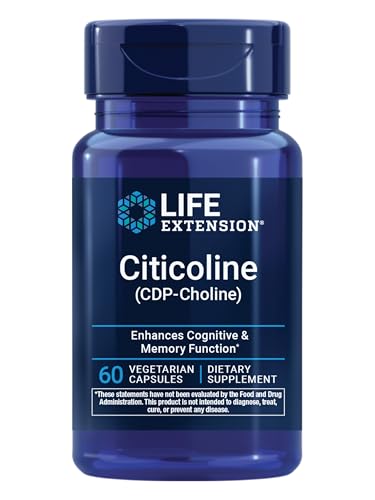
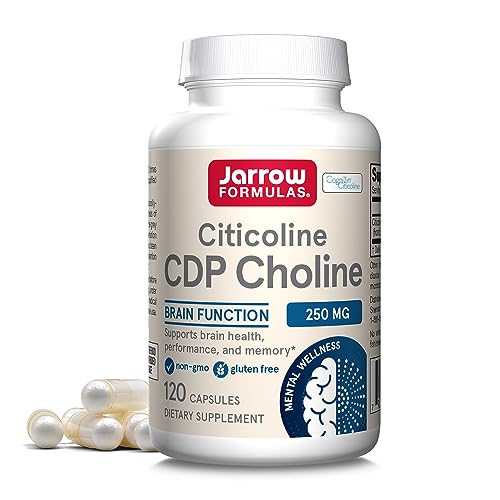
- Jarrow Formulas Cognizin CDP-Choline 250mgLab-tested / studied
capsules, 250 mg citicoline (Cognizin) per capsule, 60 capsules — The benchmark Cognizin-branded product; widely stocked, non-GMO, third-party tested; the go-to reference for price comparisons across the category. - NOW Foods CDP-Choline 300mg
capsules, 300 mg CDP-choline per vegetarian capsule, 60 capsules — 300mg per capsule at a competitive price; GMP-certified, non-GMO; consistently passes independent lab tests; ideal entry point for first-time buyers. - Nutricost Citicoline (CDP-Choline) 500mg
capsules, 500 mg citicoline per capsule, 60 capsules — High-dose option suited to experienced users; GMP-certified facility; budget-friendly; third-party tested; allows easy split-dose regimen at 250mg twice daily. - Double Wood Supplements Citicoline (CDP-Choline) 300mg
capsules, 300 mg CDP-choline per capsule, 60 capsules — Certificates of analysis available; US-manufactured; well-regarded in nootropics forums for consistent potency and transparent testing practices.
As an Amazon Associate we earn from qualifying purchases. Citicoline quality comes down to label accuracy and independent verification. Choose a product that states the exact milligrams of citicoline per serving rather than hiding it inside a proprietary blend, and prefer finished-product certification from NSF, USP or Informed Sport — Cognizin is the branded form named in most published trials, but an independently certified generic carries the same active molecule.
A Note on the Evidence
The clinical evidence for citicoline comes primarily from trials in patients with stroke, vascular cognitive impairment, or Alzheimer’s disease, and extrapolating these findings to healthy adults seeking cognitive enhancement is speculative. Neither citicoline nor choline bitartrate has been approved by the FDA to treat any condition; consult a healthcare provider before supplementing, particularly if you are pregnant, managing a neurological condition, or taking prescription medications.

Frequently Asked Questions
Is citicoline the same thing as CDP-choline?
Yes. Citicoline and CDP-choline are two names for the same molecule: cytidine 5′-diphosphocholine. The name ‘citicoline’ is more common in the supplement market, while ‘CDP-choline’ appears frequently in scientific literature. Both refer to the same compound studied in trials such as the 1999 ischemic stroke trial [1].
Did any trial directly compare citicoline to choline bitartrate?
Not in the available published evidence. The 2025 systematic review and meta-analysis [4] compared citicoline to choline alphoscerate (alpha-GPC) in dementia patients, which is a different question. We have found no randomized controlled trial that tested citicoline against choline bitartrate head-to-head, so direct superiority claims between these two specific forms are not supported by the published literature.
What doses of citicoline were used in the clinical trials?
The 1999 stroke trial [1] used 500 mg per day orally. The Alzheimer’s study [3] also used citicoline supplementation, and the post-stroke cognitive impairment study [2] involved longer-term treatment at therapeutic doses. These are clinical populations; whether these findings translate to healthy adults at the same doses is not established.
Does the uridine from citicoline actually matter?
It is proposed to matter based on mechanistic research into the CDP-choline pathway, where uridine participates in phosphatidylcholine synthesis alongside choline. However, the human clinical trials cited here were not designed to isolate the uridine contribution from the choline contribution, so the relative importance of each component in citicoline’s observed effects remains difficult to disentangle from the published evidence alone.
Can I just eat more choline-rich foods instead of supplementing?
Dietary choline from sources like eggs, liver, fish, and legumes is well-utilized by the body. If your goal is meeting general choline adequacy, a diet rich in these foods may reduce or eliminate the need for choline supplementation in any form. Supplementation has been studied most rigorously in clinical contexts — such as stroke recovery [1] — where dietary intake alone was not the intervention under investigation.
Who should be careful about choline supplementation?
Individuals who are pregnant, have liver conditions, or take medications affecting cholinergic systems should consult a physician before adding any choline supplement. People already consuming a high-choline diet may experience cholinergic side effects such as nausea, sweating, or low blood pressure at supplemental doses that would be tolerable for others. This article is informational and is not a substitute for individualized medical advice.
References
- Clark WM et al. A randomized efficacy trial of citicoline in patients with acute ischemic stroke. Stroke (1999). PMID 10582983
- Alvarez-Sabín J et al. Long-term treatment with citicoline may improve poststroke vascular cognitive impairment. Cerebrovascular diseases (Basel, Switzerland) (2013). PMID 23406981
- Alvarez XA et al. Double-blind placebo-controlled study with citicoline in APOE genotyped Alzheimer's disease patients. Effects on cognitive performance, brain bioelectrical activity and cerebral perfusion. Methods and findings in experimental and clinical pharmacology (1999). PMID 10669911
- Sagaro GG et al. Comparison of the effects of choline alphoscerate and citicoline in patients with dementia disorders: a systematic review and meta-analysis. Frontiers in neurology (2025). PMID 41426989
These statements have not been evaluated by the Food and Drug Administration. This information is not intended to diagnose, treat, cure, or prevent any disease. Content is for informational purposes only and is not medical advice; consult a qualified healthcare provider before starting any supplement. As an Amazon Associate we earn from qualifying purchases.
