Choline is an essential nutrient that most adults do not consume in adequate amounts through diet alone. The form in which you take supplemental choline matters more than many people realize: different compounds deliver choline at different efficiencies, carry different co-passengers into the body, and interact with brain chemistry in distinct ways. Citicoline — also called CDP-choline or cytidine 5′-diphosphocholine — is one of the more studied options, and understanding what sets it apart requires a closer look at both what it delivers and how the body uses it.
This article compares citicoline to the other major supplemental choline sources available today. It draws on the proposed biochemical mechanisms behind each compound and the existing research landscape to give you an honest picture of where citicoline fits — and where it may or may not offer an advantage. As with all dietary supplements, citicoline has not been approved by the FDA to diagnose, treat, cure, or prevent any disease. Everything here is informational, not medical advice.
Key Takeaways
- Citicoline delivers both choline and cytidine (a uridine precursor), making it a dual-action supplement that no other common choline form replicates.
- By raw choline content per gram, alpha-GPC and choline bitartrate both outdeliver citicoline; citicoline’s value is in the cytidine payload and proposed central bioavailability.
- Choline bitartrate is the most economical choline source for correcting dietary shortfalls but is less brain-targeted than alpha-GPC or citicoline.
- Clinical trials at 250–500 mg/day find citicoline well-tolerated[1]; mild GI upset or headache may occur, especially in those sensitive to cholinergic stimulation[2][3].
- The mechanistic case for citicoline’s neurological effects is biologically plausible, but large-scale human trials confirming cognitive benefits in healthy adults remain limited[1] — honest expectations matter.
What Citicoline Actually Is — and What It Delivers
Citicoline is a naturally occurring intermediate in the Kennedy pathway, the biochemical route the body uses to synthesize phosphatidylcholine, a phospholipid that makes up a significant portion of neuronal cell membranes. When you take citicoline orally, the body cleaves it in the gut and intestinal wall into two distinct components: choline and cytidine. Both are absorbed and travel to the brain, where cytidine is converted to uridine, a nucleoside that participates in phospholipid synthesis and other neurological processes.
This dual-delivery mechanism is the defining feature of citicoline as a choline source. You are not simply getting choline — you are getting choline bundled with a precursor to uridine. The proposed mechanism for citicoline’s neurological effects therefore involves at least two parallel pathways: the cholinergic pathway (choline → acetylcholine; choline → phosphatidylcholine) and the uridine pathway (cytidine → uridine → phospholipid synthesis support). No other widely available choline supplement provides this second component.
In terms of raw choline content by weight, citicoline is not the most choline-dense option. Roughly 18–20% of citicoline’s molecular weight is choline. This is lower than alpha-GPC (approximately 40%) and substantially lower than choline bitartrate (approximately 41%). If pure choline delivery were the only goal, citicoline would not win on a gram-for-gram basis. Its value proposition lies in the combination of moderate choline delivery plus the cytidine payload.
Choline Bitartrate: The Affordable Baseline
Choline bitartrate is the most widely available and lower-cost choline supplement. It contains a high percentage of choline by weight and raises plasma choline levels effectively. For individuals whose primary goal is correcting a dietary shortfall in choline — meeting the adequate intake of 425 mg/day for women and 550 mg/day for men[4], a target most US adults do not reach from food alone[5] — choline bitartrate is a straightforward and economical option.

The limitation of choline bitartrate is that it does not cross the blood-brain barrier efficiently on its own. Most of the choline from choline bitartrate is taken up by peripheral tissues — the liver, muscles, and other organs that have high demands for choline as a methyl donor and for phosphatidylcholine synthesis. A smaller proportion makes it to the brain to contribute to acetylcholine production or neuronal membrane support. This does not make choline bitartrate useless, but it means it behaves more as a systemic choline supplement than a brain-targeted one.
Citicoline, by contrast, is proposed to provide more centrally active choline relative to its dose, though direct head-to-head blood-brain barrier crossing data in humans is not straightforward to obtain. The mechanistic argument is that because citicoline delivers choline alongside uridine — a molecule that supports neuronal membrane phospholipid synthesis — the brain has complementary raw materials available at the same time, potentially making better use of the choline delivered.

Alpha-GPC: The High-Efficiency Choline Carrier
Alpha-glycerylphosphorylcholine, or alpha-GPC, is often described as the most bioavailable choline form for the brain. It delivers approximately 40% choline by weight and is a naturally occurring phospholipid metabolite found in small amounts in the brain itself. Research in older adults has examined alpha-GPC in the context of cognitive function[6], while the physical-performance work is separate and was conducted in young adults rather than older ones[7]; together they give it a reasonable evidence base relative to many other supplements.
The primary advantage alpha-GPC holds over citicoline is choline density and what is generally understood to be strong central nervous system penetration. Athletes and people specifically seeking to raise acetylcholine levels often favor alpha-GPC. The disadvantage is cost — alpha-GPC tends to be more expensive than both choline bitartrate and citicoline — and it lacks the cytidine component that citicoline provides.
Comparing citicoline and alpha-GPC head-to-head is difficult because they are proposed to work through overlapping but not identical mechanisms. Alpha-GPC is purely a choline delivery vehicle. Citicoline delivers less choline per gram but adds uridine precursor activity, which alpha-GPC does not. Whether that uridine component translates to meaningful additional benefit depends on the individual’s baseline uridine status, dietary intake (dairy and beer are dietary uridine sources), and the specific outcome being considered.
Phosphatidylcholine: The Dietary Form
Phosphatidylcholine is the form of choline found in lecithin and in choline-rich foods such as eggs, liver, and soybeans. As a supplement, it is typically derived from soy or sunflower lecithin. Phosphatidylcholine contains roughly 13–15% choline by weight, making it the least choline-dense of the common supplement forms on a per-gram basis.

Phosphatidylcholine has a well-established role in liver health — it is the primary phospholipid in VLDL particles and plays a central role in hepatic fat export. People supplementing for liver support rather than cognitive purposes often use phosphatidylcholine or lecithin specifically for this reason. For brain-targeted choline delivery, it is generally considered less efficient than alpha-GPC or citicoline, both of which are more concentrated forms.
Citicoline’s relationship to phosphatidylcholine is biochemically intimate: citicoline is an intermediate in the very pathway the body uses to make phosphatidylcholine. When citicoline is broken down and its choline component enters the Kennedy pathway, phosphatidylcholine is one of the downstream products. This means citicoline supports neuronal membrane phospholipid synthesis not only by providing choline but by donating a metabolite that feeds directly into membrane building — an argument for why it may do more for membrane integrity than simply raising plasma choline levels.
The Uridine Advantage: What Makes Citicoline Uniquely Dual-Action
Uridine is a pyrimidine nucleoside that, in the brain, participates in the CDP-choline pathway (the same pathway citicoline is part of) and contributes to the synthesis of phosphatidylcholine from choline. It also plays a role in synaptic membrane formation, neurite outgrowth in preclinical models, and has been examined in combination with DHA and choline as part of a nutrient cocktail intended to support neuronal connectivity. The relevance to citicoline is that when cytidine from citicoline converts to uridine, you are supplying the brain with a substrate that no other common choline supplement provides.

Some researchers and formulators argue that this uridine component makes citicoline a more complete neuronal support agent than pure choline sources, because the brain needs both choline and uridine (along with DHA) to efficiently synthesize the phospholipids that make up its membranes. Others note that dietary uridine is available from several food sources and that the marginal benefit of supplemental uridine from citicoline depends heavily on baseline status. The honest position is that the dual-action mechanism is biologically plausible and supported by biochemical logic, but translating that into confident claims about cognitive outcomes requires more large-scale human evidence than currently exists.
It is also worth noting that uridine can be taken separately as a standalone supplement (typically as uridine monophosphate). Some people stack uridine with alpha-GPC or choline bitartrate to approximate what citicoline provides in a single molecule. Whether the bundled delivery of citicoline versus a separate stack yields different results is not established by current evidence.
Dosing, Tolerability, and Practical Considerations
Clinical trials have most commonly studied citicoline in the range of 250–500 mg per day[1], with some trials using higher doses in specific clinical populations[3]. At these doses, the tolerability profile has generally been reported as excellent. Mild gastrointestinal discomfort — nausea, loose stools, or stomach upset — may occur, particularly in individuals who are sensitive to cholinergic stimulation. Transient headache has also been reported, more commonly at higher doses. These effects are typically mild and tend to resolve with dose adjustment or timing changes.

Cholinergic sensitivity is an important individual variable. People who are already high in choline from diet (heavy egg and liver consumers, for example) or who are taking other cholinergic compounds simultaneously may be more prone to side effects. Those who experience depression or low motivation on choline supplements — a phenomenon some people report anecdotally, possibly related to acetylcholine’s inhibitory effects on dopamine pathways — should monitor their response carefully.
Compared to alpha-GPC, citicoline tends to be slightly less expensive per gram, though it provides less choline per gram. Compared to choline bitartrate, citicoline is consistently more expensive but offers the cytidine/uridine component and potentially better central delivery. For someone with a straightforward dietary choline shortfall and no particular cognitive goals, choline bitartrate at a lower price point may be sufficient. For someone prioritizing brain-targeted choline delivery and willing to pay more for the uridine co-delivery, citicoline represents a reasonable choice with a solid safety profile at studied doses.
🛒 Where to Buy Citicoline
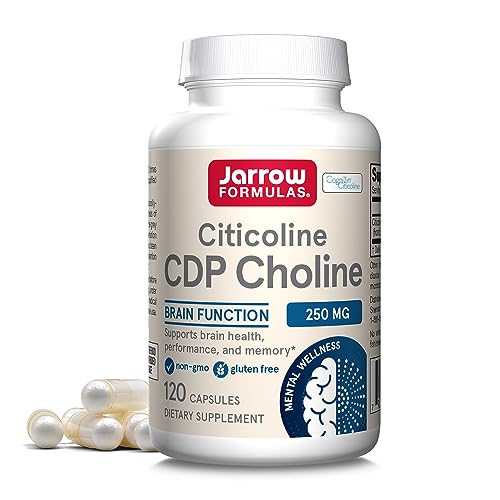
- Jarrow Formulas Cognizin CDP-Choline 250mgLab-tested / studied
capsules, 250 mg citicoline (Cognizin) per capsule, 60 capsules — The benchmark Cognizin-branded product; widely stocked, non-GMO, third-party tested; the go-to reference for price comparisons across the category. - NOW Foods CDP-Choline 300mg
capsules, 300 mg CDP-choline per vegetarian capsule, 60 capsules — 300mg per capsule at a competitive price; GMP-certified, non-GMO; consistently passes independent lab tests; ideal entry point for first-time buyers. - Nutricost Citicoline (CDP-Choline) 500mg
capsules, 500 mg citicoline per capsule, 60 capsules — High-dose option suited to experienced users; GMP-certified facility; budget-friendly; third-party tested; allows easy split-dose regimen at 250mg twice daily. - Double Wood Supplements Citicoline (CDP-Choline) 300mg
capsules, 300 mg CDP-choline per capsule, 60 capsules — Certificates of analysis available; US-manufactured; well-regarded in nootropics forums for consistent potency and transparent testing practices.
As an Amazon Associate we earn from qualifying purchases. Citicoline quality comes down to label accuracy and independent verification. Choose a product that states the exact milligrams of citicoline per serving rather than hiding it inside a proprietary blend, and prefer finished-product certification from NSF, USP or Informed Sport — Cognizin is the branded form named in most published trials, but an independently certified generic carries the same active molecule.
A Note on the Evidence
The human evidence base for citicoline as a cognitive supplement in healthy adults, while growing, still consists largely of smaller trials and populations with existing cognitive challenges; extrapolating results to healthy individuals requires caution. Anyone with a medical condition, those taking prescription medications, and pregnant or breastfeeding individuals should consult a qualified healthcare provider before adding citicoline or any choline supplement to their routine.
Frequently Asked Questions
Is citicoline the best form of choline for the brain?
Citicoline and alpha-GPC are both considered among the more brain-targeted choline forms available. Citicoline has the unique advantage of also providing cytidine, which converts to uridine in the body — a substrate involved in neuronal membrane phospholipid synthesis. Alpha-GPC delivers a higher percentage of choline per gram and has its own research base. Neither can be definitively called ‘best’ for all people and purposes; the right choice depends on your specific goals, budget, and individual response.
How much choline does citicoline actually provide?
Citicoline is approximately 18–20% choline by molecular weight. A 500 mg dose of citicoline therefore supplies roughly 90–100 mg of choline. Compare this to alpha-GPC, which is approximately 40% choline by weight (about 200 mg from a 500 mg dose), or choline bitartrate at approximately 41%. Citicoline’s choline content per gram is lower, but it also delivers cytidine, which the other forms do not.
Can citicoline replace dietary choline entirely?
At commonly studied doses of 250–500 mg/day, citicoline contributes meaningfully to daily choline intake but should not necessarily be seen as a replacement for dietary choline from eggs, meat, fish, and legumes. Dietary sources also provide phosphatidylcholine in a food matrix that includes other nutrients. Citicoline is best understood as a supplement that can help bridge gaps or provide brain-targeted choline delivery alongside a reasonably balanced diet.

Are there people who should avoid citicoline?
People with known sensitivity to cholinergic compounds — or those who notice that choline supplements worsen depression or brain fog — should be cautious. Citicoline has not been studied extensively in pregnant or breastfeeding women at supplemental doses, so those individuals should consult a healthcare provider before use. Anyone taking prescription medications affecting acetylcholine levels (such as acetylcholinesterase inhibitors) should also discuss supplementation with their doctor before starting.
What is the cytidine-to-uridine conversion and why does it matter?
After citicoline is broken down in the body, the cytidine component is taken up by tissues and converted to uridine, primarily in the liver. Uridine is a nucleoside that participates in the Kennedy pathway — the same biochemical route used to synthesize phosphatidylcholine, a major structural phospholipid in neuronal membranes. The proposed significance is that by supplying both choline and a uridine precursor simultaneously, citicoline provides complementary raw materials for neuronal membrane maintenance, something no other standard choline supplement does.
Is it safe to take citicoline alongside other choline supplements?
Combining citicoline with other choline sources increases total choline intake and cholinergic activity. For most healthy adults at standard doses this is manageable, but stacking multiple cholinergic supplements raises the risk of symptoms like headache, nausea, or an unpleasant ‘heavy’ mental feeling that some people describe as excessive acetylcholine activity. Starting with a single choline source, assessing tolerance, and only combining supplements deliberately and at appropriate doses is the sensible approach. Consulting a healthcare provider before combining supplements is always reasonable.
References
- Nakazaki E, Mah E, Sanoshy K, Citrolo D, Watanabe F. Citicoline and Memory Function in Healthy Older Adults: A Randomized, Double-Blind, Placebo-Controlled Clinical Trial. J Nutr. 2021;151(8):2153-2160. PMID 33978188
- Lozano Fernández R. Efficacy and safety of oral CDP-choline. Drug surveillance study in 2817 cases. Arzneimittelforschung. 1983;33(7A):1073-1080. PMID 6684470
- Cho HJ, Kim YJ. Efficacy and safety of oral citicoline in acute ischemic stroke: drug surveillance study in 4,191 cases. Methods Find Exp Clin Pharmacol. 2009;31(3):171-176. PMID 19536360
- Institute of Medicine (US) Standing Committee on the Scientific Evaluation of Dietary Reference Intakes. Choline. In: Dietary Reference Intakes for Thiamin, Riboflavin, Niacin, Vitamin B6, Folate, Vitamin B12, Pantothenic Acid, Biotin, and Choline. Washington (DC): National Academies Press; 1998. NCBI Bookshelf NBK114308
- Wallace TC, Fulgoni VL. Usual Choline Intakes Are Associated with Egg and Protein Food Consumption in the United States. Nutrients. 2017;9(8):839. PMID 28783055
- De Jesus Moreno Moreno M. Cognitive improvement in mild to moderate Alzheimer’s dementia after treatment with the acetylcholine precursor choline alfoscerate: a multicenter, double-blind, randomized, placebo-controlled trial. Clin Ther. 2003;25(1):178-193. PMID 12637119
- Bellar D, LeBlanc NR, Campbell B. The effect of 6 days of alpha glycerylphosphorylcholine on isometric strength. J Int Soc Sports Nutr. 2015;12:42. PMID 26582972
These statements have not been evaluated by the Food and Drug Administration. This information is not intended to diagnose, treat, cure, or prevent any disease. Content is for informational purposes only and is not medical advice; consult a qualified healthcare provider before starting any supplement. As an Amazon Associate we earn from qualifying purchases.
