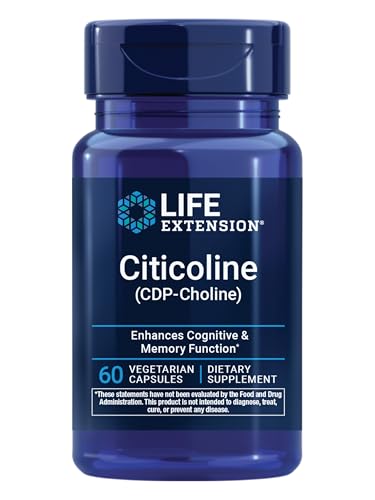
Citicoline — also called CDP-choline or cytidine 5′-diphosphocholine — has attracted growing interest as a non-stimulant supplement for people managing attention-deficit/hyperactivity disorder. It is a naturally occurring compound the body metabolizes into choline and cytidine: choline supports acetylcholine synthesis and neuronal membrane construction, while cytidine converts to uridine, which plays a role in RNA synthesis and phospholipid metabolism. Sold as a dietary supplement, citicoline has not been approved by the FDA to diagnose, treat, cure, or prevent ADHD or any other disease.
A small but accumulating body of clinical research has begun to test whether citicoline can meaningfully improve attention and executive function. The honest picture is cautiously encouraging in places but not definitive: trials are small, follow-up periods short, and direct comparisons with established ADHD medications are only starting to appear. This article examines what the available evidence shows, where the gaps are, and what anyone considering citicoline should realistically expect.
Key Takeaways
- Citicoline is metabolized into choline and cytidine, supporting acetylcholine synthesis, neuronal membrane phospholipid integrity, and possibly dopamine receptor density — all mechanisms relevant to ADHD neurobiology.
- A 2024 pilot study reported preliminary improvements in ADHD-related attention outcomes [1], and a 2026 comparative study placed citicoline alongside methylphenidate and BCI training in school-age children [2].
- The evidence base is early-stage: all ADHD-specific trials are small, short-term, and largely limited to male children and adolescents — larger randomized controlled trials are needed.
- Citicoline at 250–500 mg/day is generally well tolerated; mild GI discomfort or transient headache are the most commonly noted side effects.
- Citicoline is a dietary supplement — not FDA-approved for ADHD — and should not replace a clinician-developed treatment plan.
How Citicoline Might Affect the ADHD Brain
After absorption, citicoline is cleaved into choline and cytidine. Choline is a direct precursor to acetylcholine, the neurotransmitter centrally involved in attention, learning, and working memory. The cholinergic system plays a recognized role in regulating cortical arousal and sustained focus [3], and supporting choline availability may help maintain acetylcholine synthesis in circuits that tend to underperform in ADHD.
Choline is also incorporated into phosphatidylcholine, a phospholipid that makes up a significant portion of neuronal cell membranes. Adequate membrane phospholipid composition is thought to support receptor density and signal efficiency. Healthy neuronal membrane architecture has been associated with neural development and long-term cognitive function across the lifespan [4], giving citicoline’s membrane-support mechanism potential relevance beyond simple neurotransmitter precursor effects.
A third proposed mechanism involves the dopaminergic system. Evidence from substance-use research suggests citicoline may upregulate dopamine receptor density in the striatum [5]. Because dopamine signaling deficits in prefrontal-striatal circuits are a core neurobiological feature of ADHD, this mechanism is of particular interest — though direct confirmation of this effect specifically in ADHD populations has not yet been established.
What Clinical Research in ADHD Populations Shows
The most directly relevant evidence comes from a 2024 pilot study examining citicoline specifically in an ADHD population [1]. Pilot studies are designed primarily to assess feasibility and generate preliminary effect-size estimates rather than confirm efficacy. The results suggested potential improvements in attention-related outcomes, but the authors appropriately described findings as hypothesis-generating given the small sample size — a fair framing of what early-phase research can and cannot establish.

An earlier study tested citicoline supplementation in adolescent males without a clinical ADHD diagnosis and found improvements in both motor speed and attentional measures [6]. The use of objective cognitive assessments is a methodological strength, and the adolescent male focus is notable because this demographic is historically overrepresented in ADHD research. Limitations include the non-clinical sample and a relatively narrow scope of outcome measurement.
A 2026 quasi-experimental study offered one of the first comparative looks at citicoline alongside methylphenidate and a non-pharmacological approach — brain-computer-interface-based attention training — in school-age children, measuring both attention and executive function [2]. Quasi-experimental designs carry important caveats around randomization and confounding, but the comparative structure is a meaningful methodological step toward understanding where citicoline might realistically fit relative to more established interventions.
How Citicoline Sits Alongside Standard ADHD Medications
Methylphenidate, amphetamine formulations, and non-stimulant medications such as atomoxetine are backed by decades of randomized, controlled trial data in diverse populations across age groups. Citicoline does not yet have a comparable evidence base by any measure. The 2026 comparative study [2] begins to close this gap modestly, but a single quasi-experimental study in school-age children cannot be extrapolated into broad efficacy claims.
Where citicoline may hold practical relevance is for individuals seeking non-stimulant options — whether due to intolerance, cardiovascular contraindications, personal preference, or as an adjunct to existing care. Because its proposed mechanisms do not rely on catecholamine release, it does not carry the appetite suppression, sleep disruption, or cardiovascular considerations associated with stimulant medications. However, framing it as an equivalent substitute for proven pharmacotherapy would go well beyond what the current evidence supports.
Dosing, Forms, and Tolerability
Clinical trials examining citicoline across neurological and cognitive applications have most commonly used doses in the 250–500 mg per day range. This range is generally associated with an excellent tolerability profile. Mild gastrointestinal discomfort or transient headache has been reported, particularly at higher doses or in individuals with sensitivity to cholinergic stimulation.
The ADHD-specific trials in this literature have varied in their dosing protocols, and no single dose has been validated as optimal for attentional outcomes. As a supplement rather than a regulated pharmaceutical, citicoline products also vary in actual dose delivery and manufacturing consistency. Third-party-tested products from manufacturers with documented quality controls are preferable to unverified sources.
Important Gaps the Current Evidence Cannot Fill
All existing ADHD-specific citicoline studies share key limitations. Sample sizes are small, restricting statistical power and the ability to detect effects reliably across subgroups. Trial durations are short, so nothing is currently known about whether any attentional benefits persist, plateau, or diminish over months or years of use.

Most published work has focused on male adolescents or school-age children [6][2], leaving adult ADHD substantially understudied and female presentations almost entirely unexamined. The 2024 pilot study [1] represents forward movement on adult and clinical populations, but replication in larger, rigorously randomized, demographically diverse samples is needed before confident conclusions are possible.

Additional unresolved questions include whether citicoline provides additive benefit when used alongside stimulant medications, how it affects hyperactivity and impulsivity versus inattention, and whether effects differ meaningfully across ADHD subtypes. These are practical questions with real clinical relevance and no good answers yet.
Practical Considerations for Adults and Parents
For adults managing ADHD symptoms, citicoline is a low-risk supplement with biologically plausible mechanisms and preliminary positive signals — but not a proven, standalone intervention. Its role, if any, in a given person’s management plan is a conversation to have with a clinician who knows the full picture, not a conclusion to reach independently from supplement marketing.
For parents researching options for children, the same caution applies with additional weight. Comparative data in school-age children [2] is scientifically interesting but not sufficient to recommend citicoline as a first-line or replacement approach for a child already under professional care. Any supplementation in children should be discussed with the treating physician, who can assess fit with existing treatments and monitor for unexpected effects.
People with cholinergic sensitivities, those already taking cholinergic medications, or those with significant cardiovascular conditions should take particular care to discuss use with a qualified healthcare provider before starting citicoline.
🛒 Where to Buy Citicoline
- Jarrow Formulas Cognizin CDP-Choline 250mgLab-tested / studied
capsules, 250 mg citicoline (Cognizin) per capsule, 60 capsules — The benchmark Cognizin-branded product; widely stocked, non-GMO, third-party tested; the go-to reference for price comparisons across the category. - NOW Foods CDP-Choline 300mg
capsules, 300 mg CDP-choline per vegetarian capsule, 60 capsules — 300mg per capsule at a competitive price; GMP-certified, non-GMO; consistently passes independent lab tests; ideal entry point for first-time buyers. - Nutricost Citicoline (CDP-Choline) 500mg
capsules, 500 mg citicoline per capsule, 60 capsules — High-dose option suited to experienced users; GMP-certified facility; budget-friendly; third-party tested; allows easy split-dose regimen at 250mg twice daily. - Double Wood Supplements Citicoline (CDP-Choline) 300mg
capsules, 300 mg CDP-choline per capsule, 60 capsules — Certificates of analysis available; US-manufactured; well-regarded in nootropics forums for consistent potency and transparent testing practices.
As an Amazon Associate we earn from qualifying purchases. Citicoline quality comes down to label accuracy and independent verification. Choose a product that states the exact milligrams of citicoline per serving rather than hiding it inside a proprietary blend, and prefer finished-product certification from NSF, USP or Informed Sport — Cognizin is the branded form named in most published trials, but an independently certified generic carries the same active molecule.
A Note on the Evidence
The citicoline-and-ADHD evidence base currently consists of small, short-duration studies — several of which used non-clinical samples or quasi-experimental designs — so findings should be held tentatively until larger, rigorously randomized controlled trials are available. Citicoline is a dietary supplement, not an FDA-approved medication for ADHD, and should not replace a clinician-developed treatment plan; anyone considering it, especially for children or alongside existing medications, should consult a qualified healthcare provider first.

Frequently Asked Questions
Can citicoline be used to treat ADHD?
Citicoline has not been approved by the FDA to treat ADHD or any disease. Small pilot and quasi-experimental studies show preliminary improvements in attention-related measures [1][2], but the evidence does not yet support calling it a treatment. This content is informational only; consult a clinician for individualized guidance.

What is the proposed link between citicoline and dopamine in ADHD?
Research in substance-use contexts suggests citicoline may upregulate dopamine receptor density in the striatum [5]. Because dopamine signaling deficits in prefrontal-striatal circuits are a core feature of ADHD, this mechanism is of scientific interest — but direct evidence confirming this effect produces meaningful ADHD symptom relief in humans is not yet available.
What dose of citicoline has been studied for attention?
Clinical research across cognitive and neurological contexts most commonly uses 250–500 mg per day. No single dose has been established as optimal specifically for attentional outcomes in ADHD populations. Dosing varied across the studies reviewed here, so asking a healthcare provider about appropriate dosing for your situation is advisable.
Is citicoline safe for children with ADHD?
The 2026 comparative study included school-age children and reported acceptable tolerability [2], but this is a single early-phase study. Supplementing children involves additional considerations — including interactions with existing medications — and should always be discussed with the treating physician before starting.
How does citicoline compare to methylphenidate for attention and executive function?
A 2026 quasi-experimental study compared citicoline, methylphenidate, and BCI-based attention training on attention and executive function in school-age children [2]. While this offers a preliminary comparison, quasi-experimental designs limit what can be concluded, and citicoline does not have remotely the overall volume of controlled evidence that supports methylphenidate’s use.
What side effects should someone watch for with citicoline?
Trials at 250–500 mg/day most commonly report mild GI discomfort or transient headache, particularly at higher doses or in people sensitive to cholinergic stimulation. These effects are generally mild and self-limiting, but anyone with cholinergic sensitivity, cardiovascular concerns, or who takes other cholinergic agents should discuss citicoline with a doctor before use.
References
- Hübner IB et al. Use of Citicoline in Attention-Deficit/Hyperactivity Disorder: A Pilot Study. Clinical neuropharmacology (2024). PMID 38976279
- Turan S et al. Comparative Effects of BCI-Based Attention Training, Methylphenidate, and Citicoline on Attention and Executive Function in School-Age Children: A Quasi-Experimental Study. Medicina (Kaunas, Lithuania) (2026). PMID 41901531
- Faiq MA et al. Cholinergic nervous system and glaucoma: From basic science to clinical applications. Progress in retinal and eye research (2019). PMID 31242454
- Janssen CI et al. Long-chain polyunsaturated fatty acids (LCPUFA) from genesis to senescence: the influence of LCPUFA on neural development, aging, and neurodegeneration. Progress in lipid research (2014). PMID 24334113
- Lassi DLS et al. Pharmacological Treatments for Cocaine Craving: What Is the Way Forward? A Systematic Review. Brain sciences (2022). PMID 36421870
- McGlade E et al. The Effect of Citicoline Supplementation on Motor Speed and Attention in Adolescent Males. Journal of attention disorders (2019). PMID 26179181
These statements have not been evaluated by the Food and Drug Administration. This information is not intended to diagnose, treat, cure, or prevent any disease. Content is for informational purposes only and is not medical advice; consult a qualified healthcare provider before starting any supplement. As an Amazon Associate we earn from qualifying purchases.
