Choline is an essential nutrient the body uses to produce acetylcholine, a neurotransmitter involved in memory, attention, and muscle control, as well as phosphatidylcholine, a key structural component of neuronal membranes. Many people turn to choline-boosting supplements in hopes of supporting cognitive function, and two names dominate that conversation: citicoline (also called CDP-choline or cytidine 5′-diphosphocholine) and alpha-GPC (alpha-glycerophosphocholine).
Both compounds raise choline availability in the brain, but they are chemically distinct, work through overlapping yet different pathways, and carry different bodies of evidence. This article lays out what is currently known about each, where the science is more established, where it remains preliminary, and what practical factors might guide a choice between them. Nothing here constitutes medical advice, and neither compound has been approved by the FDA to diagnose, treat, cure, or prevent any disease.
Key Takeaways
- Citicoline and alpha-GPC both raise brain choline levels, but citicoline also supplies uridine (from cytidine), while alpha-GPC delivers choline at roughly twice the concentration by weight.
- Animal research shows that restricting dietary choline reduces hippocampal acetylcholine release [1], underscoring why adequate choline supply is considered important for neurotransmitter function.
- Alpha-GPC is more efficient for pure choline delivery per milligram; citicoline’s uridine component adds a proposed membrane-support mechanism that alpha-GPC does not share.
- Both compounds are generally well tolerated at common doses; cholinergic side effects (headache, GI discomfort) are more likely at higher doses or in sensitive individuals, and are somewhat more probable with alpha-GPC given its higher choline density.
- No large-scale head-to-head human trial has definitively established that one form is superior to the other for healthy adults, so individual goals, tolerability, and budget should guide the decision.
Why Choline Matters for the Brain
Choline is a water-soluble nutrient classified as essential, meaning the body cannot synthesize enough on its own from dietary sources alone. In the brain, choline is the direct precursor to acetylcholine, which is released at synapses to support learning and memory formation. Research in rats demonstrated that dietary restriction of choline significantly reduced hippocampal acetylcholine release as measured by in vivo microdialysis [1], illustrating how tightly choline availability can be coupled to neurotransmitter output in animal models.
Choline is also incorporated into phosphatidylcholine, one of the most abundant phospholipids in neuronal cell membranes. Adequate membrane phosphatidylcholine is thought to support membrane fluidity and the structural integrity of synaptic architecture. Both citicoline and alpha-GPC are designed to deliver choline more efficiently to the brain than basic choline salts such as choline bitartrate, but the mechanisms by which they accomplish this differ in meaningful ways.
What Is Citicoline and How Does It Work?
Citicoline is an intermediate in the body’s own biosynthetic pathway for phosphatidylcholine. When consumed as a supplement, it is rapidly hydrolyzed in the gut and liver into two components: choline and cytidine. The choline fraction can be used to synthesize acetylcholine and to rebuild phosphatidylcholine in neuronal membranes. The cytidine fraction is converted in the body to uridine, a nucleoside that participates independently in membrane phospholipid synthesis and purinergic signaling.
This dual release of choline and uridine is what distinguishes citicoline mechanistically from other choline donors. Proposed mechanisms of action include enhanced neuronal membrane integrity through uridine-supported phosphatidylcholine synthesis, increased activity of choline acetyltransferase (the enzyme that catalyzes acetylcholine production), and upregulation of dopamine receptor density in the striatum based on preclinical models. By weight, citicoline contains roughly 18 to 19 percent choline, which is relatively modest compared to alpha-GPC.

Clinical trials using citicoline at doses of 250 to 500 mg per day report an excellent tolerability profile. Mild gastrointestinal discomfort or transient headache may occur, particularly at higher doses or in individuals with sensitivity to cholinergic stimulation. Because its choline content per milligram is relatively low, citicoline is less likely to produce the trimethylamine-related body odor sometimes associated with excessive choline intake from other sources.

What Is Alpha-GPC and How Does It Work?
Alpha-glycerophosphocholine is a choline compound derived from soy or sunflower lecithin through an enzymatic purification process. It occurs naturally in small amounts in the brain as a metabolic byproduct of phosphatidylcholine breakdown. As a supplement, alpha-GPC is notable for its high choline content by weight (approximately 40 percent) and for its efficient penetration of the blood-brain barrier, which makes it a widely used choice for rapidly raising acetylcholine precursor levels.
Unlike citicoline, alpha-GPC does not supply a separate bioactive component analogous to uridine. Its proposed benefits are therefore more squarely centered on cholinergic support: supplying choline as a substrate for acetylcholine synthesis and contributing to membrane phospholipid pools. Alpha-GPC has been studied in contexts ranging from age-related cognitive concerns to athletic performance, partly because early research suggested it might modestly support growth hormone secretion, though that evidence is limited, involves small sample sizes, and has not been consistently replicated.
Alpha-GPC is typically used at doses of 300 to 600 mg per day. It is generally well tolerated, though cholinergic side effects such as headache, nausea, or dizziness can occur at the higher end of the dosing range. Because it delivers a higher proportion of choline per milligram, individuals who are already sensitive to cholinergic stimulation may find alpha-GPC more likely to produce unwanted effects than an equivalent milligram dose of citicoline.
Head-to-Head: Mechanisms, Choline Density, and Evidence
The most important mechanistic difference is that citicoline provides two bioactive fractions (choline and cytidine/uridine) while alpha-GPC provides one (choline) at a substantially higher concentration by weight. On a milligram-for-milligram basis, alpha-GPC delivers more than twice the choline, which matters when the primary goal is maximizing brain choline availability, for example when stacking with compounds believed to increase acetylcholine demand.
The uridine produced from citicoline’s cytidine fraction is proposed to independently support neuronal membrane synthesis and modulate signaling pathways in ways that choline alone does not. Whether this additional component translates into meaningfully greater real-world cognitive benefit over alpha-GPC remains unresolved. Direct head-to-head human trials comparing the two compounds are sparse, and most individual trials in each compound’s literature use populations with existing cognitive impairment rather than healthy young adults, which limits generalizability.

Citicoline has a longer clinical research history, including trials in older adults with memory concerns and use as an adjunct in stroke rehabilitation research. Alpha-GPC has also been trialed in older populations with cognitive concerns and has more evidence in athletic performance settings. Neither compound has enough large-scale, randomized, placebo-controlled trial data in healthy adults to support strong efficacy claims.
Dosing, Cost, and Tolerability in Practice
Citicoline is commonly supplemented at 250 to 500 mg per day, sometimes split into two doses to maintain steadier plasma levels. At these doses, clinical trials report an excellent tolerability profile. Higher doses or use in cholinergic-sensitive individuals may increase the likelihood of mild gastrointestinal discomfort or transient headache. Citicoline is generally the more affordable of the two compounds, and the lower choline density per milligram can be a practical advantage for those who find high-choline supplements uncomfortable.

Alpha-GPC doses of 300 to 600 mg per day are typical for cognitive support; some athletic performance protocols use acute doses up to 600 mg before exercise. Because it delivers a higher choline fraction, the risk of fishy body odor from excess trimethylamine production is more relevant than with citicoline. Alpha-GPC is also more expensive to manufacture, so per-serving costs are typically higher. Both supplements are widely available as capsules or powders from numerous manufacturers, and product quality varies, making third-party testing certification worth looking for.
Which Choline Source Should You Choose?
There is no single correct answer; the better choice depends on individual goals, budget, and tolerance. If the primary goal is maximizing raw choline delivery to the brain, alpha-GPC’s higher choline content per milligram makes it the more efficient vehicle. It is also the form more commonly studied in athletic and acute performance contexts. Users already taking moderate amounts of dietary choline or stacking with other cholinergic compounds should be mindful of total choline load.
If the goal includes broader neuroplastic or membrane-support benefits, citicoline’s dual mechanism (choline plus uridine) offers a theoretical advantage that some researchers find compelling, particularly for longer-term use. Citicoline is also gentler for choline-sensitive individuals and tends to be more cost-effective. Its deeper clinical research history in neurological contexts gives some practitioners additional confidence in recommending it.
In the absence of definitive head-to-head human trials clearly favoring one over the other for healthy adults, both can be reasonable choices. Consistency, sourcing from a reputable manufacturer with third-party quality testing, and appropriate dosing are likely to matter as much as which form is selected.

🛒 Where to Buy Citicoline
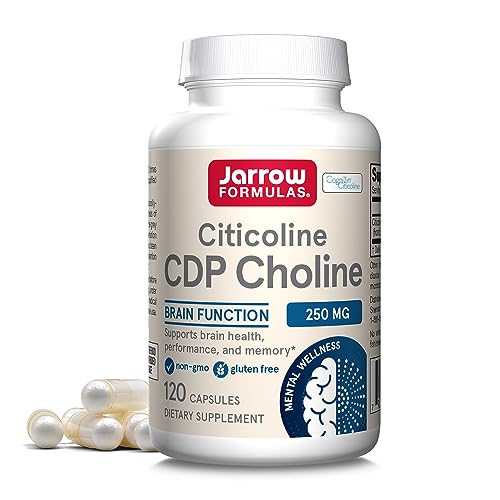
- Jarrow Formulas Cognizin CDP-Choline 250mgLab-tested / studied
capsules, 250 mg citicoline (Cognizin) per capsule, 60 capsules — The benchmark Cognizin-branded product; widely stocked, non-GMO, third-party tested; the go-to reference for price comparisons across the category. - NOW Foods CDP-Choline 300mg
capsules, 300 mg CDP-choline per vegetarian capsule, 60 capsules — 300mg per capsule at a competitive price; GMP-certified, non-GMO; consistently passes independent lab tests; ideal entry point for first-time buyers. - Nutricost Citicoline (CDP-Choline) 500mg
capsules, 500 mg citicoline per capsule, 60 capsules — High-dose option suited to experienced users; GMP-certified facility; budget-friendly; third-party tested; allows easy split-dose regimen at 250mg twice daily. - Double Wood Supplements Citicoline (CDP-Choline) 300mg
capsules, 300 mg CDP-choline per capsule, 60 capsules — Certificates of analysis available; US-manufactured; well-regarded in nootropics forums for consistent potency and transparent testing practices.
As an Amazon Associate we earn from qualifying purchases. Citicoline quality comes down to label accuracy and independent verification. Choose a product that states the exact milligrams of citicoline per serving rather than hiding it inside a proprietary blend, and prefer finished-product certification from NSF, USP or Informed Sport — Cognizin is the branded form named in most published trials, but an independently certified generic carries the same active molecule.
A Note on the Evidence
The evidence base for both citicoline and alpha-GPC in healthy adults remains limited, with many trials being small, short-term, or conducted in populations with existing cognitive impairment; findings should not be extrapolated broadly. Neither compound is approved by the FDA to treat any condition, and anyone who is pregnant, breastfeeding, managing a neurological or cardiovascular condition, or taking prescription medications that affect cholinergic or dopaminergic systems should consult a qualified healthcare provider before supplementing with either.
Frequently Asked Questions
Can I take citicoline and alpha-GPC together?
Some supplement formulations include both, since they work through overlapping but distinct pathways. Combining them increases total choline intake, which raises the risk of cholinergic side effects such as headache or nausea in sensitive individuals. There are no large controlled trials evaluating this specific combination, so starting with lower doses of each and consulting a healthcare provider is advisable.
Why does adequate choline intake matter for memory?
Choline is the direct precursor to acetylcholine, a neurotransmitter central to memory encoding and retrieval. Research in rodents showed that dietary choline restriction significantly reduced hippocampal acetylcholine release [1], demonstrating how closely brain acetylcholine output can track choline availability in animal models, though the degree to which this relationship maps directly onto human cognition requires further study.
Are citicoline and alpha-GPC FDA-approved?
No. Both are sold as dietary supplements in the United States and have not been approved by the FDA to diagnose, treat, cure, or prevent any disease. Citicoline is approved as a prescription medicine for certain neurological conditions in some European countries, but that regulatory status does not extend to the U.S. supplement market.
Which form is more appropriate for older adults concerned about cognitive aging?
Citicoline has a longer history in clinical trials involving older adults with memory concerns and has been studied as an adjunct in stroke rehabilitation. Alpha-GPC has also been trialed in similar populations. Neither compound has sufficient large, robust trial evidence to make strong efficacy claims, and older adults should discuss supplementation with a physician, particularly if they take medications that affect cholinergic or cardiovascular systems.
Does alpha-GPC actually support athletic performance or growth hormone?
Some early research explored a possible link between acute alpha-GPC dosing and growth hormone secretion or power output, but this evidence is limited, involves small sample sizes, and has not been consistently replicated. It should not be treated as a primary rationale for choosing alpha-GPC over citicoline for athletic purposes.
How quickly should I expect to notice an effect from either supplement?
Alpha-GPC, with its higher choline density and efficient blood-brain barrier penetration, may raise brain choline levels relatively quickly. Citicoline’s effects may build more gradually given its lower choline content per milligram and the time needed for cytidine-to-uridine conversion. Subjective responses vary considerably between individuals, and neither compound reliably produces dramatic or immediate effects in healthy adults.

References
- Nakamura A et al. Dietary restriction of choline reduces hippocampal acetylcholine release in rats: in vivo microdialysis study. Brain research bulletin (2001). PMID 11786247
These statements have not been evaluated by the Food and Drug Administration. This information is not intended to diagnose, treat, cure, or prevent any disease. Content is for informational purposes only and is not medical advice; consult a qualified healthcare provider before starting any supplement. As an Amazon Associate we earn from qualifying purchases.
