Citicoline (CDP-choline) is a dietary supplement the body breaks down into two components: choline and cytidine. Choline is an essential nutrient required to build cell membranes, synthesize the neurotransmitter acetylcholine, and produce the structural phospholipids that form neuronal membranes. Cytidine, in turn, converts to uridine, a nucleoside involved in RNA synthesis and membrane phospholipid production. During pregnancy, choline demand rises significantly because the developing fetal brain depends on it for rapid growth, synapse formation, and epigenetic programming.
Many people exploring citicoline during pregnancy are asking a reasonable question: if choline is so important for fetal development, does a supplement that supplies choline—like citicoline—make sense? This article walks through what the research actually shows, separates what is known about choline broadly from what is specifically known about citicoline in pregnancy, and offers an honest picture of where the evidence currently stands and where it does not.
Key Takeaways
- Choline is an essential nutrient during pregnancy with consistent evidence across human studies linking maternal choline intake to fetal brain development and offspring cognitive outcomes.
- Most prenatal vitamins contain little or no choline, and many pregnant women fall short of the 450 mg/day adequate intake; dietary sources such as egg yolks and liver are the most accessible way to close this gap.
- Citicoline delivers choline after metabolic conversion, but no clinical trials have specifically evaluated citicoline supplementation in pregnant or breastfeeding women, so its safety and efficacy in this context are not established.
- Citicoline also delivers cytidine, which converts to uridine; the effects of uridine during pregnancy specifically have not been studied in humans, meaning citicoline cannot be assumed to behave identically to choline supplementation alone.
- If choline supplementation during pregnancy is appropriate for you, a healthcare provider can help determine the most suitable form and dose based on your dietary intake and individual health history.
Why Choline Matters in the First 1,000 Days
The first 1,000 days of life—spanning pregnancy through a child’s second birthday—represent a window of exceptional neurological sensitivity. Nutritional exposures during this period shape brain architecture in ways that can persist into adulthood. A 2020 systematic review identified choline as one of the key micronutrients influencing neurological development during this critical window, emphasizing its roles in cell membrane formation, one-carbon metabolism, gene expression, and neurotransmitter synthesis [1].
Choline is the precursor to phosphatidylcholine, the dominant structural phospholipid in neuronal membranes, and to acetylcholine, the neurotransmitter most closely associated with memory and muscle control. During fetal development, both functions are in high demand as the brain’s volume expands dramatically and synaptic connections are established at a rate that will never be matched again. Maternal choline supply is therefore a meaningful determinant of fetal brain building material—not a marginal consideration.
What Research Shows About Choline and Fetal Brain Development
A 2022 systematic review and meta-analysis examined the association between maternal choline intake, fetal brain development, and child neurocognition across multiple human studies. Higher maternal choline was associated with measurable differences in fetal brain development and cognitive outcomes in offspring, though the authors noted important variability across studies and called for more rigorously controlled trials [2].
A 2017 study investigating combined choline and docosahexaenoic acid (DHA) supplementation during pregnancy found evidence of enhanced neurodevelopment in the fetal hippocampus, the brain region central to learning and memory [3]. This suggests choline may act synergistically with other key nutrients—particularly omega-3 fatty acids—to support the structural development of brain regions that underpin cognition later in life.

A 2023 study examined dietary intake of eggs, choline, lutein, zeaxanthin, and DHA during pregnancy and found associations between higher choline consumption and markers of fetal neurodevelopment [4]. Eggs are among the richest dietary sources of choline, and researchers frequently use egg intake as a proxy measure in observational studies of this kind. Taken together, these findings paint a consistent picture: maternal choline status during pregnancy is not nutritionally neutral.
Adolescent Pregnancy and Choline: A Compounded Risk
Adolescent pregnancies carry particular nutritional risks because the pregnant teenager is simultaneously meeting her own developmental needs and those of the growing fetus. A 2025 review specifically addressed choline’s role in adolescent pregnancy, examining how insufficient intake may compound risks for fetal brain development and long-term cognitive outcomes in offspring [5]. The review found that dietary choline intakes among pregnant adolescents frequently fall below recommended levels, making this subgroup one where choline status warrants particular clinical attention.
This does not translate to a recommendation for citicoline supplementation in adolescent pregnancy—supplement use in this population requires careful provider oversight—but it does illustrate how choline adequacy during pregnancy is a meaningful nutritional target regardless of maternal age and one that is often unmet by diet alone.
How Much Choline Do Pregnant and Breastfeeding Women Need?
The established adequate intake for choline during pregnancy is 450 mg per day, rising to 550 mg per day during lactation. A 2018 advocacy paper in Pediatrics emphasized adequate nutrition—including micronutrients such as choline—during the first 1,000 days as a foundation for long-term child development and adult health, calling for greater attention to these nutrients in prenatal care [6]. Despite this, surveys consistently find that many pregnant women fall short of these targets, in part because awareness of choline remains low and most standard prenatal vitamins contain little or no choline.
Dietary sources of choline include egg yolks, beef liver, poultry, salmon, dairy, and certain legumes such as soybeans. Supplemental forms include choline bitartrate, phosphatidylcholine, and CDP-choline (citicoline). These forms differ in how much choline they deliver per milligram and in how efficiently that choline reaches circulation, which matters when evaluating any specific supplement in relation to daily targets.
Citicoline Specifically: What Is and Is Not Known
Here is where a critical caveat is necessary. The evidence summarized above relates to choline as a nutrient—from dietary sources, population studies, and some controlled trials—not to citicoline as a supplement taken during pregnancy. To date, there are no published clinical trials that have specifically evaluated citicoline supplementation in pregnant or breastfeeding women. The existing citicoline clinical literature is focused primarily on cognitive health in older adults and on neurological recovery following stroke or head injury.

Citicoline does supply choline after metabolic conversion, so the reasoning that it could support maternal choline status is mechanistically plausible. However, citicoline also delivers cytidine, which converts to uridine in the body. Uridine’s effects specifically in the context of pregnancy—on fetal development, on maternal physiology, on placental function—have not been studied in humans. The two-component nature of citicoline means its effects cannot be assumed to be identical to those of choline supplementation alone.

Additionally, the mechanisms explored in adult cognitive research—including proposed upregulation of dopamine receptor density in the striatum and increased choline acetyltransferase activity—have been characterized in non-pregnant adult populations. Whether and how these mechanisms operate during pregnancy, or whether they produce different effects in a rapidly developing fetal system, is simply not established by current evidence. The gap is not a reason to assume harm, but it is a genuine reason to proceed with caution and provider guidance.
Practical Considerations for Pregnancy and Breastfeeding
Given the clear importance of adequate choline during pregnancy [1] [2] and the absence of direct safety or efficacy data for citicoline in this population, the most defensible approach is to prioritize dietary choline first and to discuss any supplementation with a qualified healthcare provider. If a provider recommends a choline supplement, choline bitartrate and phosphatidylcholine are the forms with the most established use in prenatal contexts.
For breastfeeding, breast milk choline content reflects maternal choline status, meaning that maternal intake continues to matter for infant nutrition throughout the postpartum period. The same reasoning applies: ensuring adequate choline intake is a meaningful goal, while citicoline specifically lacks the pregnancy and lactation evidence base needed to make a confident recommendation.
In the general adult population, clinical trials at 250–500 mg/day of citicoline report an excellent tolerability profile; mild GI discomfort or transient headache are the side effects most commonly noted, particularly at higher doses or in individuals sensitive to cholinergic stimulation. Whether this tolerability profile holds in pregnancy has not been studied, which is itself an important unknown when evaluating the benefit-risk balance during a period when two people—parent and developing child—are affected by any supplement taken.
🛒 Where to Buy Citicoline
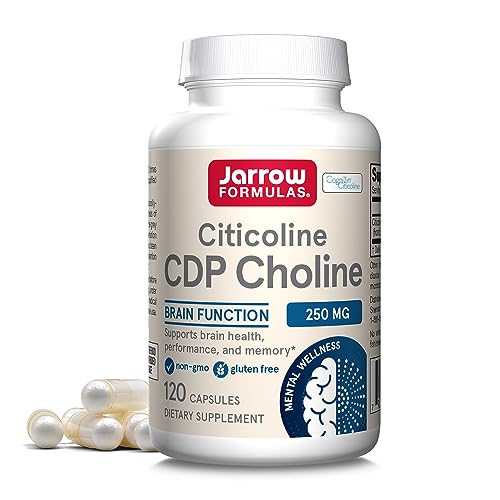
- Jarrow Formulas Cognizin CDP-Choline 250mgLab-tested / studied
capsules, 250 mg citicoline (Cognizin) per capsule, 60 capsules — The benchmark Cognizin-branded product; widely stocked, non-GMO, third-party tested; the go-to reference for price comparisons across the category. - NOW Foods CDP-Choline 300mg
capsules, 300 mg CDP-choline per vegetarian capsule, 60 capsules — 300mg per capsule at a competitive price; GMP-certified, non-GMO; consistently passes independent lab tests; ideal entry point for first-time buyers. - Nutricost Citicoline (CDP-Choline) 500mg
capsules, 500 mg citicoline per capsule, 60 capsules — High-dose option suited to experienced users; GMP-certified facility; budget-friendly; third-party tested; allows easy split-dose regimen at 250mg twice daily. - Double Wood Supplements Citicoline (CDP-Choline) 300mg
capsules, 300 mg CDP-choline per capsule, 60 capsules — Certificates of analysis available; US-manufactured; well-regarded in nootropics forums for consistent potency and transparent testing practices.
As an Amazon Associate we earn from qualifying purchases. Citicoline quality comes down to label accuracy and independent verification. Choose a product that states the exact milligrams of citicoline per serving rather than hiding it inside a proprietary blend, and prefer finished-product certification from NSF, USP or Informed Sport — Cognizin is the branded form named in most published trials, but an independently certified generic carries the same active molecule.
A Note on the Evidence
The evidence reviewed here supports the importance of choline as a nutrient during pregnancy and breastfeeding, but citicoline as a specific supplement has not been studied in pregnant or breastfeeding women, and its safety and efficacy in this population are not established. Pregnant or breastfeeding individuals should consult a qualified healthcare provider before beginning any supplement, including citicoline; this article is informational and does not constitute medical advice.


Frequently Asked Questions
Is citicoline safe to take during pregnancy?
There are no clinical trials evaluating citicoline specifically in pregnant or breastfeeding women, so its safety in pregnancy has not been established. General adult trials at 250–500 mg/day report good tolerability with mild side effects, but this data does not extend to pregnancy. Anyone considering citicoline during pregnancy should consult an obstetrician or midwife before starting.
Does citicoline provide the choline that pregnancy requires?
Citicoline is metabolized by the body into choline and cytidine, so it does supply choline. However, the research establishing choline’s benefits for fetal brain development [2] [1] was conducted using dietary choline and other supplemental choline forms, not citicoline specifically. Whether citicoline performs equivalently in a pregnancy context, particularly given its uridine-yielding cytidine component, has not been tested.
How much choline do pregnant women actually need?
The established adequate intake for choline during pregnancy is 450 mg per day, rising to 550 mg per day during breastfeeding. A 2018 paper in Pediatrics highlighted that adequate nutrition during the first 1,000 days, including the prenatal period, is foundational for healthy neurological development [6]. Many pregnant women consume less than these targets through diet alone, particularly if eggs and liver are not regular parts of their diet.
What does research say about choline and the developing fetal brain?
A 2022 systematic review and meta-analysis found associations between maternal choline intake, fetal brain development, and child neurocognitive outcomes across human studies [2]. A 2017 study found that combined choline and DHA supplementation during pregnancy was associated with enhanced neurodevelopment of the fetal hippocampus [3]. These findings consistently support adequate maternal choline as a meaningful nutritional target in pregnancy.
Is adolescent pregnancy a special concern for choline adequacy?
Yes. A 2025 review found that choline intakes in adolescent pregnancies frequently fall below recommended levels and that inadequate choline during this period may have implications for fetal brain development and long-term cognitive outcomes in offspring [5]. Because pregnant teenagers face overlapping nutritional demands from their own ongoing development and the growing fetus, choline status is particularly worth assessing in this group.
Can food alone meet choline needs during pregnancy?
Dietary choline is available from egg yolks, beef liver, poultry, salmon, and legumes such as soybeans. A 2023 study examining egg and choline intake during pregnancy found associations between higher choline consumption and markers of fetal neurodevelopment [4]. Whether diet alone meets the 450 mg/day target depends strongly on individual food choices; a registered dietitian or prenatal care provider can help assess whether a gap exists and whether supplementation is appropriate.
References
- Derbyshire E et al. Choline, Neurological Development and Brain Function: A Systematic Review Focusing on the First 1000 Days. Nutrients (2020). PMID 32531929
- Obeid R et al. Association between Maternal Choline, Fetal Brain Development, and Child Neurocognition: Systematic Review and Meta-Analysis of Human Studies. Advances in nutrition (Bethesda, Md.) (2022). PMID 36041182
- Thomas Rajarethnem H et al. Combined Supplementation of Choline and Docosahexaenoic Acid during Pregnancy Enhances Neurodevelopment of Fetal Hippocampus. Neurology research international (2017). PMID 28210506
- Christifano DN et al. Intake of eggs, choline, lutein, zeaxanthin, and DHA during pregnancy and their relationship to fetal neurodevelopment. Nutritional neuroscience (2023). PMID 35715980
- Khudor AJ et al. Choline in Adolescent Pregnancy: The Impact on Fetal Brain Development and Long-Term Cognitive Outcomes of Offspring. Medicina (Kaunas, Lithuania) (2025). PMID 41303892
- Schwarzenberg SJ et al. Advocacy for Improving Nutrition in the First 1000 Days to Support Childhood Development and Adult Health. Pediatrics (2018). PMID 29358479
These statements have not been evaluated by the Food and Drug Administration. This information is not intended to diagnose, treat, cure, or prevent any disease. Content is for informational purposes only and is not medical advice; consult a qualified healthcare provider before starting any supplement. As an Amazon Associate we earn from qualifying purchases.
