Citicoline (cytidine 5′-diphosphocholine, or CDP-choline) has attracted growing interest as a nootropic supplement and a compound studied in neurological research. Before adding any supplement to a routine, it makes sense to ask: what side effects have actually been observed, by whom, and at what doses? This article answers that question using published clinical data — not anecdote or marketing copy.
The short answer is that citicoline carries a favorable tolerability profile at the doses commonly used in research, typically 250–1000 mg per day. Most participants in controlled trials complete the full study without discontinuing due to adverse events. That does not mean side effects are impossible, however, and certain individuals benefit from starting low and paying attention to how their body responds.
Key Takeaways
- Citicoline has a well-documented favorable tolerability profile at 250–1000 mg/day based on multiple clinical trials, with adverse events generally comparable to placebo.
- The most common side effects are mild GI discomfort and headache, both of which are more likely at higher doses or in individuals sensitive to cholinergic stimulation.
- Taking citicoline with food and in the morning reduces the likelihood of GI upset and sleep disturbance.
- Stacking citicoline with other choline sources (alpha-GPC, lecithin, dietary choline) increases the risk of excess cholinergic effects — headache is the most common signal.
- Individuals with cardiovascular conditions, epilepsy, or who are pregnant, breastfeeding, or on relevant medications should consult a physician before use.
How Citicoline Works in the Body
Citicoline is metabolized into two components: choline and cytidine. Choline is a precursor to acetylcholine, the neurotransmitter involved in memory and muscle control, and to phosphatidylcholine, a phospholipid that makes up neuronal cell membranes. Cytidine converts to uridine in the body, which plays a role in RNA synthesis and has its own proposed neuroprotective properties.
Proposed mechanisms include enhanced neuronal membrane integrity through increased phosphatidylcholine synthesis, upregulation of choline acetyltransferase activity (the enzyme that produces acetylcholine), and increased dopamine receptor density in the striatum [1]. Understanding these mechanisms helps explain both the potential benefits and the types of side effects that can plausibly occur — particularly those related to excess cholinergic activity.
Because citicoline actively raises choline availability, individuals who are already sensitive to cholinergic stimulation — or who are combining citicoline with other choline-raising supplements like alpha-GPC or lecithin — may be more likely to experience cholinergic-type side effects such as headache or GI upset.
The Most Commonly Reported Side Effects
Across clinical trials in populations ranging from healthy older adults to patients with Alzheimer’s disease or stroke, the side effects reported most frequently with citicoline are mild and transient. These include gastrointestinal discomfort (nausea, stomach upset, or diarrhea), headache, low blood pressure (hypotension), and insomnia or sleep disturbance when taken late in the day.
A randomized, double-blind, placebo-controlled trial in healthy older adults using 500 mg/day for 12 weeks found that citicoline was well tolerated, with no serious adverse events attributed to the supplement [2]. This trial is particularly informative for healthy users interested in cognitive support, as it was conducted in a general community population rather than a clinical disease population.
A clinical review synthesizing decades of citicoline research similarly concluded that the compound demonstrates a favorable safety profile, noting that adverse events were generally comparable to placebo in well-designed trials [1]. This does not mean side effects never occur, but it places them in statistical context: they are infrequent and typically self-limiting.

Gastrointestinal Effects
GI discomfort is the most practically relevant side effect for everyday users. Nausea, loose stools, or mild stomach cramping can occur, particularly when citicoline is taken on an empty stomach or at the higher end of the commonly studied range (1000–2000 mg/day, doses used in some neurological studies). Taking citicoline with food appears to reduce GI sensitivity for most users, though this has not been formally studied as a mitigation strategy.
A systematic review of citicoline as an adjunct treatment in Alzheimer’s disease found that the compound was generally well tolerated across the included trials, with GI complaints mentioned in some studies but not constituting a clinically significant pattern [3]. Studies of citicoline in patients with vascular and degenerative cognitive decline similarly reported acceptable tolerability [4].
Headache and Cholinergic Sensitivity
Headache is another occasionally reported effect. Paradoxically, headache can result from either too much or too little cholinergic activity — citicoline’s choline-boosting mechanism can tip sensitive individuals into mild cholinergic excess, which may manifest as a dull frontal headache, especially early in supplementation or after dose increases.
This effect is particularly relevant for users stacking citicoline with other cholinergic compounds. If someone is already taking alpha-GPC, large amounts of eggs or liver, or other choline sources, adding citicoline may create excess choline that drives symptoms rather than benefits. Reducing the dose or eliminating duplicate choline sources typically resolves this.
A pilot clinical trial of citicoline in fragile X-associated tremor/ataxia syndrome (FXTAS) — an open-label study with a small sample — reported that the treatment was generally well tolerated, though it noted the importance of monitoring in vulnerable neurological populations [5]. The FXTAS context differs substantially from healthy users, but the tolerability finding is consistent with the broader literature.
Cardiovascular and Blood Pressure Considerations
Some users and early research flagged the possibility of blood pressure changes with citicoline. A study examining citicoline’s effects during acute cocaine intoxication found that citicoline influenced certain cardiovascular parameters, though this was investigated in the specific context of drug interactions rather than as a stand-alone side effect profile [6]. The cocaine-intoxication context is remote from typical supplement use, but it illustrates that citicoline can have measurable cardiovascular activity.
A multicenter pilot study of citicoline in patients with intracerebral haemorrhage monitored participants for adverse events including cardiovascular outcomes and found the compound was tolerated without significant cardiovascular safety signals in that clinical setting [7]. Individuals with pre-existing cardiovascular conditions or those taking antihypertensive medications should discuss citicoline use with a physician, as even modest blood pressure changes can be meaningful in those contexts.


Long-Term Tolerability and Special Populations
Several trials have run for months at a time without uncovering late-emerging safety concerns. A double-blind, placebo-controlled study in APOE-genotyped Alzheimer’s patients treated with citicoline reported that cognitive and bioelectrical outcomes were assessed over an extended period, and the compound was described as well tolerated throughout [8]. An optimization study of pharmacological treatment in dementia (the CITIMEM pilot) similarly found that citicoline was a manageable adjunct in an elderly population [9].
Elderly individuals represent one population worth noting. Kidney and liver function naturally decline with age, which can affect how compounds are processed. While no specific dose reduction is established in the literature for healthy older adults, the 12-week healthy-adults trial cited above [2] used 500 mg/day and found it safe — this is a reasonable reference dose for that demographic.
Pregnant or breastfeeding individuals should avoid citicoline supplementation in the absence of guidance from a healthcare provider, as trials have not been conducted in those populations and the biological activity on choline pathways warrants caution. Similarly, individuals with epilepsy or those taking medications with cholinergic, dopaminergic, or cardiovascular activity should seek medical advice before use.
Practical Tips for Minimizing Side Effects
Start at a lower dose, typically 250 mg/day, and assess tolerance for one to two weeks before increasing. Taking citicoline in the morning or early afternoon avoids the sleep disruption that can occur when the compound’s stimulating effects on acetylcholine interact with the evening wind-down. Taking it with a meal reduces the likelihood of GI discomfort.
Avoid stacking high-dose citicoline with other choline-rich supplements unless you have a specific reason and know your individual response. If headache occurs within the first days of use, reducing the dose often resolves it. Persistent, worsening, or unusual symptoms are a signal to stop and consult a physician rather than push through.
🛒 Where to Buy Citicoline
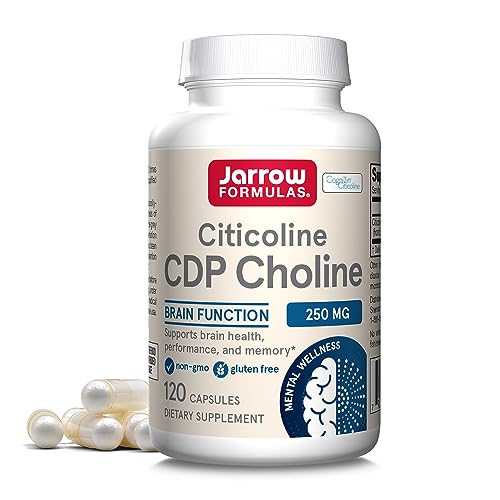
- Jarrow Formulas Cognizin CDP-Choline 250mgLab-tested / studied
capsules, 250 mg citicoline (Cognizin) per capsule, 60 capsules — The benchmark Cognizin-branded product; widely stocked, non-GMO, third-party tested; the go-to reference for price comparisons across the category. - NOW Foods CDP-Choline 300mg
capsules, 300 mg CDP-choline per vegetarian capsule, 60 capsules — 300mg per capsule at a competitive price; GMP-certified, non-GMO; consistently passes independent lab tests; ideal entry point for first-time buyers. - Nutricost Citicoline (CDP-Choline) 500mg
capsules, 500 mg citicoline per capsule, 60 capsules — High-dose option suited to experienced users; GMP-certified facility; budget-friendly; third-party tested; allows easy split-dose regimen at 250mg twice daily. - Double Wood Supplements Citicoline (CDP-Choline) 300mg
capsules, 300 mg CDP-choline per capsule, 60 capsules — Certificates of analysis available; US-manufactured; well-regarded in nootropics forums for consistent potency and transparent testing practices.
As an Amazon Associate we earn from qualifying purchases. Citicoline quality comes down to label accuracy and independent verification. Choose a product that states the exact milligrams of citicoline per serving rather than hiding it inside a proprietary blend, and prefer finished-product certification from NSF, USP or Informed Sport — Cognizin is the branded form named in most published trials, but an independently certified generic carries the same active molecule.

A Note on the Evidence
The evidence base for citicoline is largely drawn from studies in elderly or neurologically compromised populations, and direct extrapolation to healthy younger adults should be made cautiously. Citicoline is sold as a dietary supplement and has not been approved by the FDA to diagnose, treat, cure, or prevent any disease; this article is informational only and does not substitute for advice from a qualified healthcare provider.
Frequently Asked Questions
Is citicoline safe for long-term use?
Available trial data spanning months of use suggest citicoline is well tolerated over extended periods in both healthy and clinical populations [1] [2]. However, very long-term data beyond a year are limited, and the compound has not been approved by the FDA for any medical use. Periodic reassessment with a healthcare provider is sensible for anyone using it continuously.

Can citicoline cause headaches?
Yes, headache is an occasionally reported side effect, most often linked to excess cholinergic activity, which can result from high doses or combining citicoline with other choline sources. Reducing the dose typically resolves it. The broader clinical literature finds that headache rates are not dramatically higher than placebo at typical study doses [1].
Does citicoline affect blood pressure?
Some evidence suggests citicoline has measurable cardiovascular activity [6], though clinical studies in patient populations have not identified it as a significant blood pressure risk [7]. People taking antihypertensive medications or with known cardiovascular conditions should consult a physician before adding citicoline.
What dose of citicoline is considered safe?
Clinical trials have used a range of 250 mg to 2000 mg/day. A randomized controlled trial in healthy older adults found 500 mg/day over 12 weeks to be safe and well tolerated with no serious adverse events [2]. Most researchers and clinicians recommend starting at the lower end of this range to gauge individual response.
Who should avoid citicoline?
Pregnant or breastfeeding individuals should avoid citicoline due to absence of safety data in those populations. People with epilepsy, those taking cholinergic or dopaminergic medications, and those with cardiovascular conditions warrant medical review before use. Citicoline is not FDA-approved to treat any disease, and these populations carry additional risk that a physician is better positioned to evaluate.
Can citicoline cause insomnia?
Some users report difficulty sleeping when citicoline is taken in the afternoon or evening, likely related to its stimulating effect on acetylcholine pathways. Clinical trials do not consistently flag insomnia as a major adverse event [3], but anecdotal reports and the proposed mechanism both support taking citicoline earlier in the day as a precaution.
References
- Secades JJ et al. Citicoline: pharmacological and clinical review, 2006 update. Methods and findings in experimental and clinical pharmacology (2006). PMID 17171187
- Nakazaki E et al. Citicoline and Memory Function in Healthy Older Adults: A Randomized, Double-Blind, Placebo-Controlled Clinical Trial. The Journal of nutrition (2021). PMID 33978188
- Piamonte BLC et al. Effects of Citicoline as an Adjunct Treatment for Alzheimer's Disease: A Systematic Review. Journal of Alzheimer's disease : JAD (2020). PMID 32538854
- García-Cobos R et al. Citicoline, use in cognitive decline: vascular and degenerative. Journal of the neurological sciences (2010). PMID 20875651
- Hall DA et al. Open-label pilot clinical trial of citicoline for fragile X-associated tremor/ataxia syndrome (FXTAS). PloS one (2020). PMID 32053612
- Lukas SE et al. Effects of short-term citicoline treatment on acute cocaine intoxication and cardiovascular effects. Psychopharmacology (2001). PMID 11594440
- Secades JJ et al. Citicoline in intracerebral haemorrhage: a double-blind, randomized, placebo-controlled, multi-centre pilot study. Cerebrovascular diseases (Basel, Switzerland) (2006). PMID 16490951
- Alvarez XA et al. Double-blind placebo-controlled study with citicoline in APOE genotyped Alzheimer's disease patients. Effects on cognitive performance, brain bioelectrical activity and cerebral perfusion. Methods and findings in experimental and clinical pharmacology (1999). PMID 10669911
- Gareri P et al. The CITIMEM study: A pilot study. Optimizing pharmacological treatment in dementia. Archives of gerontology and geriatrics (2020). PMID 32447126
These statements have not been evaluated by the Food and Drug Administration. This information is not intended to diagnose, treat, cure, or prevent any disease. Content is for informational purposes only and is not medical advice; consult a qualified healthcare provider before starting any supplement. As an Amazon Associate we earn from qualifying purchases.
