In an increasingly demanding world, maintaining peak cognitive function and supporting long-term brain health has become a priority for many. From students preparing for exams to professionals navigating complex tasks and older adults seeking to preserve mental acuity, the search for effective, evidence-based tools is constant. One compound frequently highlighted in discussions about cognitive enhancement and brain health is citicoline, also known as CDP-choline.
But what exactly is citicoline, and what does the scientific literature say about its purported benefits? This comprehensive guide will explore the mechanisms, research, and safety profile of citicoline, helping you understand its role as a nootropic and a choline source for brain health.
FTC Disclosure: This article may contain affiliate links. We may earn a commission from purchases made through these links, at no additional cost to you. This helps support our research and content creation.
What is Citicoline (CDP-Choline)? A Biochemical Overview
Citicoline, or cytidine 5′-diphosphocholine (CDP-choline), is a naturally occurring compound found in the human body. It plays a crucial role in cell membrane synthesis and repair, particularly within brain cells. When taken as a supplement, citicoline breaks down into two primary components: cytidine and choline.
These two components then readily cross the blood-brain barrier. Inside the brain, cytidine is converted into uridine, an important nucleotide involved in RNA synthesis and cell signaling. Choline is utilized to synthesize acetylcholine, a neurotransmitter vital for memory, learning, and attention, and also incorporated into phosphatidylcholine, a key structural component of neuronal membranes.
How Citicoline Supports Brain Health and Cognition
The dual action of citicoline, providing both choline and cytidine, underpins its potential cognitive benefits. By supplying precursors for both neurotransmitter production and membrane repair, citicoline supports multiple aspects of brain function.
Enhancing Acetylcholine Production
Choline is a direct precursor to acetylcholine, a neurotransmitter critical for cognitive processes. Adequate acetylcholine levels are associated with better memory recall, learning capacity, and sustained attention. Citicoline effectively increases choline availability in the brain, which can then be used for acetylcholine synthesis.
Studies have shown that citicoline can help replenish choline stores, particularly when they are depleted. This mechanism is thought to contribute to its observed effects on cognitive function in various populations.
Supporting Neuronal Membrane Integrity
Brain cells are encased in lipid membranes, primarily composed of phospholipids like phosphatidylcholine. These membranes are essential for neuronal signaling, structural integrity, and overall brain health. Citicoline provides the building blocks for phosphatidylcholine synthesis.
By promoting the repair and regeneration of neuronal membranes, citicoline may help maintain the structural integrity and functional efficiency of brain cells. This is particularly relevant in conditions involving brain injury or age-related decline.

Increasing Cerebral Blood Flow and Energy Metabolism
Some research suggests citicoline may positively influence cerebral blood flow and glucose metabolism in the brain. Enhanced blood flow ensures a steady supply of oxygen and nutrients to brain cells, while efficient glucose metabolism provides the energy required for optimal neuronal activity.
While the exact mechanisms are still being investigated, improved cerebral circulation and energy utilization could contribute to overall cognitive performance and resilience.
Evidence-Based Research on Citicoline’s Cognitive Benefits
Numerous clinical trials have investigated the effects of citicoline across different populations and cognitive domains. It is important to review these findings with an honest assessment of their strengths and limitations.
Memory and Attention in Healthy Adults
Several studies have explored citicoline’s impact on memory and attention in healthy individuals, including young adults and adolescents. The adolescent trial was published in the Journal of Attention Disorders in 2019, having appeared online in 2015, and it ran for 28 days rather than six weeks.[1] Seventy-five healthy adolescent males received 250 mg or 500 mg of citicoline, or placebo; the citicoline groups showed improved attention (p = 0.02) and increased psychomotor speed (p = 0.03) compared with placebo. Two of the authors were employed by Kyowa Hakko, which manufactures the Cognizin brand discussed below.
A 2012 study in Food and Nutrition Sciences tested 250 mg or 500 mg daily for 28 days in 60 women aged 40 to 60.[2] Its outcome measure was the Continuous Performance Test II, so what it demonstrated was improved attention and cognitive inhibition, specifically fewer omission and commission errors, rather than improved memory. That journal is not indexed in PubMed, and Kyowa Hakko personnel were co-authors. The episodic-memory evidence comes from a different trial entirely: 100 healthy adults aged 50 to 85 with age-associated memory impairment took 500 mg daily for 12 weeks and showed greater improvement in episodic memory than placebo (P = 0.0025), though episodic memory was a secondary outcome of that study.[3] Effect sizes across this literature are modest, indicating subtle rather than dramatic improvement.
Cognitive Function in Older Adults
Citicoline has also been studied for its potential to support cognitive function in older adults experiencing age-related cognitive decline. A review in Clinical Interventions in Aging, published in 2006 rather than 2009, reported that citicoline could improve memory, behaviour and global clinical impression in individuals with mild to moderate cognitive impairment, at doses typically ranging from 500 mg to 2,000 mg daily.[4]
While these studies suggest a beneficial role in mitigating some aspects of age-related decline, citicoline is not a cure for neurodegenerative diseases. Its primary utility appears to be in supporting general brain health and potentially slowing the progression of mild cognitive changes.
Recovery from Brain Injury and Stroke
A significant body of research, particularly in Europe and Asia, has investigated citicoline’s role in recovery following acute ischemic stroke and traumatic brain injury. The most rigorous synthesis is a Cochrane review published in 2020, and its conclusion runs the other way: pooling 10 randomised trials and 4,281 participants, it found there may be little to no difference between citicoline and control in all-cause mortality, in disability or dependence, in functional recovery, or in neurological function.[5] The certainty of that evidence was rated low, not moderate, with every included trial judged to be at high risk of bias and six of the ten sponsored by drug companies.
The traumatic brain injury picture is similar. The largest trial, COBRIT, was published in JAMA in 2012 and randomised 1,213 patients to 2,000 mg of citicoline daily or placebo for 90 days. It found no improvement in functional or cognitive status at 90 days (global odds ratio 0.98, 95% CI 0.83 to 1.15), nor at 180 days.[6] A 2023 meta-analysis of 11 studies, authored in part by employees of a company that markets citicoline, did report a modest increase in the proportion of patients reaching independence, but it also found no significant effect on mortality.[7] Claims that citicoline reduces deaths after brain injury are not supported by either analysis. The membrane-repair mechanism remains biologically plausible; the clinical benefit in acute brain injury has not been demonstrated.

Citicoline vs. Other Choline Sources
Choline is an essential nutrient, and several forms are available as supplements. Understanding the differences between them is crucial.

| Choline Source | Key Characteristics | Primary Benefits | Bioavailability & Brain Penetration |
|---|---|---|---|
| Citicoline (CDP-choline) | Contains both choline and cytidine. Naturally occurring. | Enhances acetylcholine, supports membrane repair, provides uridine. | Excellent. Cytidine and choline readily cross the blood-brain barrier. |
| Alpha-GPC (Alpha-glycerophosphocholine) | Contains choline bound to a glycerophosphate molecule. | Directly increases acetylcholine, supports cell membrane integrity. | Excellent. Crosses the blood-brain barrier efficiently. |
| Choline Bitartrate | Choline bound to tartaric acid. A common, inexpensive form. | General choline supplementation, supports liver health. | Good for systemic choline, but less efficient at brain penetration compared to citicoline or Alpha-GPC. |
| Choline L-Bitartrate | Similar to choline bitartrate, often marketed for better absorption. | General choline supplementation. | Similar to choline bitartrate. |
| Phosphatidylcholine | A phospholipid containing choline. Found in lecithin. | Dietary source of choline, supports cell membranes. | Requires digestion to release choline; less direct brain impact than citicoline or Alpha-GPC. |
Citicoline stands out due to its unique ability to provide both choline and uridine precursors, offering a dual mechanism of action that supports both neurotransmitter synthesis and structural brain health. Brands like Cognizin are specific, high-quality forms of citicoline that have been used in many of the research studies discussed.
Safety Profile and Potential Side Effects
Citicoline is generally considered safe and well-tolerated at commonly recommended dosages. Clinical trials have reported a low incidence of side effects, which are typically mild and transient.
Reported side effects may include mild gastrointestinal discomfort (nausea, diarrhea), headache, and insomnia. These effects are rare and often resolve with continued use or a reduction in dosage. Serious adverse events are extremely uncommon.
As with any supplement, it is advisable to consult with a healthcare professional before starting citicoline, especially if you have pre-existing medical conditions or are taking other medications. Pregnant or nursing women should also seek medical advice.
Finding Quality Citicoline Supplements
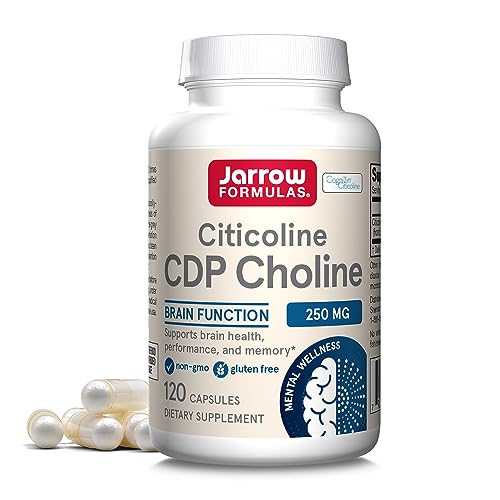
When searching for a citicoline supplement, quality and purity are paramount. Look for products that clearly state the dosage and use reputable forms of citicoline, such as Cognizin.
On Amazon, you can find various citicoline products. Search for “Cognizin Citicoline capsules” for a standardized and research-backed form. You might also look for “CDP Choline powder” if you prefer to measure your own dosage or mix it into beverages. For combination products, search for “nootropic stack with citicoline” to find formulas that combine citicoline with other cognitive support ingredients.
Conclusion
Citicoline (CDP-choline) is a fascinating compound with a robust body of research supporting its role in brain health and cognitive function. Its unique mechanism of action, providing precursors for both acetylcholine synthesis and neuronal membrane repair, offers a comprehensive approach to supporting the brain.
While the benefits for healthy individuals may be subtle, particularly in areas of attention and memory, its potential in supporting recovery from brain injury and mitigating age-related cognitive decline is more pronounced. As a well-tolerated and safe supplement, citicoline represents a valuable option for those seeking to proactively support their cognitive longevity and overall brain health.

Frequently Asked Questions About Citicoline
What is the difference between citicoline and choline?
Choline is an essential nutrient. Citicoline is a specific form of choline (cytidine 5′-diphosphocholine) that breaks down into choline and cytidine in the body. This unique structure allows citicoline to provide benefits beyond basic choline supplementation, as cytidine is converted to uridine, which aids in cell membrane repair and RNA synthesis.

How long does it take for citicoline to work?
Some individuals report acute effects within hours, such as improved focus. However, the more significant benefits, especially those related to memory, brain repair, and overall cognitive support, typically become apparent after consistent supplementation for several weeks to months. Clinical trials often run for 4 weeks to several months to observe sustained effects.
What is the recommended dosage for citicoline?
Typical dosages in studies for cognitive enhancement in healthy adults range from 250mg to 500mg per day. For more significant cognitive support or in clinical settings (e.g., post-stroke), dosages can range from 500mg to 2000mg per day, often divided into two doses. Always follow product label instructions or consult a healthcare professional.
Can I take citicoline with other nootropics?
Yes, citicoline is often included in nootropic stacks. It pairs well with other compounds like bacopa monnieri, lion’s mane mushroom, and L-theanine. However, it is always recommended to introduce new supplements one at a time to monitor individual responses and to consult with a healthcare provider before combining multiple supplements.
Is Cognizin Citicoline different from other citicoline?
Cognizin is a patented, branded form of citicoline developed by Kyowa Hakko Bio. It is known for its high purity and has been used in many of the clinical studies that demonstrate citicoline’s cognitive benefits. While other forms of citicoline exist, Cognizin guarantees a specific quality and consistency that some generic forms may not.
Are there any food sources of citicoline?
Citicoline is naturally present in small amounts in some foods, particularly organ meats like liver, and certain plant-based foods. However, the concentration in typical diets is generally much lower than the dosages used in supplements to achieve specific cognitive benefits. Therefore, supplementation is usually necessary to reach therapeutic levels.
References
- The Effect of Citicoline Supplementation on Motor Speed and Attention in Adolescent Males. Journal of Attention Disorders (2019 (online 2015)). https://pubmed.ncbi.nlm.nih.gov/26179181/
- Improved Attentional Performance Following Citicoline Administration in Healthy Adult Women. Food and Nutrition Sciences 3:769-773 (not indexed in PubMed) (2012). https://doi.org/10.4236/fns.2012.36103
- Citicoline and Memory Function in Healthy Older Adults: A Randomized, Double-Blind, Placebo-Controlled Clinical Trial. The Journal of Nutrition (2021). https://pubmed.ncbi.nlm.nih.gov/33978188/
- Citicoline (Cognizin) in the treatment of cognitive impairment. Clinical Interventions in Aging (2006). https://pubmed.ncbi.nlm.nih.gov/18046877/
- Citicoline for treating people with acute ischemic stroke. Cochrane Database of Systematic Reviews (2020). https://pubmed.ncbi.nlm.nih.gov/32860632/
- Effect of citicoline on functional and cognitive status among patients with traumatic brain injury: Citicoline Brain Injury Treatment Trial (COBRIT). JAMA (2012). https://pubmed.ncbi.nlm.nih.gov/23168823/
- Citicoline for the Management of Patients with Traumatic Brain Injury in the Acute Phase: A Systematic Review and Meta-Analysis. Life (Basel) (2023). https://pubmed.ncbi.nlm.nih.gov/36836726/
These statements have not been evaluated by the FDA. This product is not intended to diagnose, treat, cure, or prevent any disease.
These statements have not been evaluated by the Food and Drug Administration. This information is not intended to diagnose, treat, cure, or prevent any disease. Content is for informational purposes only and is not medical advice; consult a qualified healthcare provider before starting any supplement. As an Amazon Associate we earn from qualifying purchases.
