Negative symptoms of schizophrenia, the blunted affect, reduced speech, and loss of motivation that persist after hallucinations and delusions are controlled, are the part of the illness that current antipsychotics treat least well. That treatment gap is why augmentation research exists at all, and it is where citicoline enters this literature.
Nothing here is medical advice. Citicoline is not approved by the FDA to diagnose, treat, cure, or prevent schizophrenia or any other condition. Schizophrenia requires treatment by a psychiatrist, and no supplement substitutes for antipsychotic medication.
Key Takeaways
- In a double-blind trial, patients with stable schizophrenia received citicoline 2500 mg/day or placebo added to risperidone for eight weeks. 66 of 73 completed[1]
- The citicoline group showed significantly greater improvement in PANSS negative symptom scores and in total PANSS scores[1]
- The general psychopathology improvement did not remain significant after adjustment, a caveat stated in the paper itself[1]
- A 2025 network meta-analysis of 50 studies found citicoline outperformed placebo for total symptomatology, standardized mean difference -1.05[2]
- That analysis lists sarcosine and N-acetylcysteine, not citicoline, as improving the negative-symptom secondary outcome[2]
- No compound improved total symptomatology in acute-phase studies. Citicoline’s result came from clinically stable patients[2]
- Quality of evidence was rated low to very low, and dropouts did not differ from placebo[2]
The mechanistic argument
Citicoline has agonist properties at the alpha-7 nicotinic acetylcholine receptor, and deficient sensory gating in schizophrenia has been linked to altered function and expression of that receptor[3]. That is a more specific rationale than the general membrane-repair story behind most citicoline research, and it is why the compound was tested here rather than simply being tried because it was available.
The sensory gating evidence itself is modest and honest about its limits. A randomized, placebo-controlled, double-blind pilot examined dose-dependent effects at 500, 1000 and 2000 mg using the P50 event-related potential. The overall analysis failed to demonstrate treatment effects. Citicoline improved sensory gating only at 500 mg and only in the subgroup of patients who were deficient suppressors at baseline[3].
A subgroup finding at one of three doses in a pilot study is a hypothesis, and the authors framed it that way, suggesting further trials rather than claiming a result.
The add-on trial
Patients with stable schizophrenia by DSM-5 criteria were randomized to receive either citicoline at 2500 mg per day or placebo in addition to risperidone for eight weeks. Assessments used the Positive and Negative Syndrome Scale, the Extrapyramidal Symptom Rating Scale, and the Hamilton Depression Rating Scale. The primary outcome was the difference between groups in reduction of the PANSS negative subscale from baseline to week 8. Sixty-six of the 73 enrolled patients completed[1].
The citicoline group showed significantly greater improvement in negative symptom scores, F(1.840, 118.360) = 8.383, p = 0.001, and in total PANSS scores, F(1.633, 104.487) = 15.400, p less than 0.001. General psychopathology also improved, F(1.219, 78.012) = 6.636, p = 0.008, but the paper notes that this change did not remain significant after adjustment[1].

Depression scores, extrapyramidal symptom ratings and the frequency of other side effects were not significantly different between the two groups[1].
Hitting a prespecified primary outcome is the strongest thing that can be said about a trial of this size, and this one did.
Where the network meta-analysis puts the effect
In 2025, Molecular Psychiatry published a network meta-analysis of nutraceutical and phytoceutical augmentation in schizophrenia, covering 49 records documenting 50 studies with 2,384 participants across 22 interventions[2].
Citicoline came out well on the primary outcome. It outperformed placebo for total symptomatology with a standardized mean difference of -1.05, confidence interval -1.85 to -0.24, alongside L-lysine, N-acetylcysteine and sarcosine. In clinically stable participants specifically, citicoline again showed -1.05 with a tighter interval of -1.65 to -0.44, and the finding held in the analysis restricted to augmentation of treatment as usual[2].
The authors named sarcosine, citicoline and N-acetylcysteine as promising augmentation interventions in stable patients, and immediately added that the quality of evidence is low to very low[2].
The distinction that matters most
The add-on trial’s headline is negative symptoms. The network meta-analysis’s citicoline finding is total symptomatology. Those are not the same claim, and the difference is not a technicality.
When the network meta-analysis examined negative symptoms as a secondary outcome, the compounds that reached significance were sarcosine, at -0.65, and N-acetylcysteine, at -0.90. Citicoline is not listed among them[2].

The most likely reason is simply that a network meta-analysis pools evidence and a single trial does not, so an effect visible in one 73-patient study can wash out when placed alongside everything else. Whatever the reason, the accurate summary is that citicoline has a supported signal on overall symptom burden in stable patients and does not yet have one on negative symptoms specifically, despite the trial that measured them.
Two further limits from the same analysis are worth stating. No compound at all improved total symptomatology in the acute-phase subset of seven studies with 422 participants, so nothing here speaks to an acute episode. And there was high heterogeneity and global inconsistency across the network, meaning the individual studies disagreed with each other more than chance would explain[2].
Tolerability
Both sources agree here. The add-on trial found no difference in extrapyramidal symptoms, depression ratings, or other side effect frequency[1]. The network meta-analysis found that dropout due to any cause or to adverse events did not differ between the nutraceutical arms and placebo plus treatment as usual[2].
That is a genuinely reassuring pattern for an add-on to an antipsychotic, where the usual worry is that adding anything worsens the movement side effects that already limit treatment. Our page on citicoline side effects covers the broader tolerability record, and the general safety question is handled separately.
What this means outside a clinic
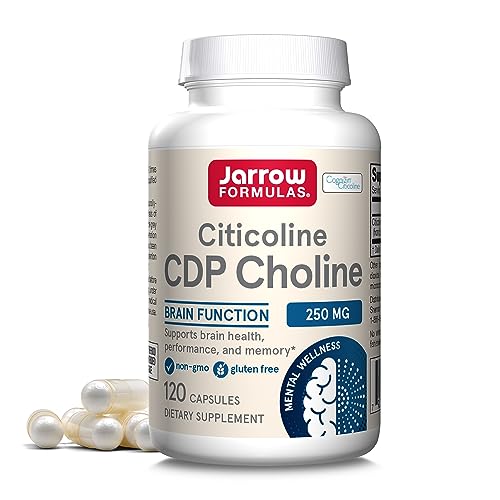
The dose in the trial was 2500 mg per day, five times a standard capsule, added to prescribed risperidone and monitored for eight weeks. Nothing about that regimen translates into a self-directed purchase, and our dosage guide explains the ranges that are actually sold and studied.
A 2026 systematic review of citicoline across mental disorders noted that its single schizophrenia study reported improvements in verbal free recall but no global cognitive gains, and concluded across all diagnostic groups that the current evidence does not support citicoline as an effective cognitive enhancer, placing it as adjunctive or investigational[4].
The reasonable reading is that this is one of the more interesting augmentation candidates in a field that badly needs one, that the effect is supported for overall symptoms rather than negative symptoms specifically, that it applies to stable patients rather than acute episodes, and that the underlying evidence is graded low to very low quality by the people who reviewed it most carefully. Anyone considering it should be doing so with the psychiatrist who prescribes the antipsychotic it would be added to.
Frequently Asked Questions
Does citicoline help schizophrenia?
A 2025 network meta-analysis found citicoline outperformed placebo for total symptomatology when added to usual treatment in clinically stable patients, with a standardized mean difference of -1.05. The authors rated the quality of the evidence as low to very low and called for further trials.
What did the negative-symptom trial find?
Patients with stable schizophrenia were randomized to citicoline 2500 mg daily or placebo added to risperidone for eight weeks. The citicoline group had significantly greater improvement in PANSS negative symptom scores and in total PANSS scores, with no difference in extrapyramidal side effects.
Is the negative-symptom result confirmed by the network meta-analysis?
No. The network meta-analysis places citicoline’s significant effect on total symptomatology. The compounds it lists as improving the negative-symptom outcome specifically are sarcosine and N-acetylcysteine, not citicoline.
What dose was studied?
2500 mg per day, which is five times a standard 500 mg capsule, given as an addition to prescribed antipsychotic medication under clinical supervision.
Did it work in acute episodes?
No compound improved total symptomatology in the acute-phase analysis of the network meta-analysis. Citicoline’s significant results came from clinically stable participants.
Was it well tolerated?
In the risperidone add-on trial, depression scores, extrapyramidal symptom ratings and the frequency of other side effects did not differ from placebo. In the network meta-analysis, dropout due to any cause or to adverse events did not differ from placebo plus treatment as usual.
References
- Ghajar A, et al. Citicoline (CDP-choline) add-on therapy to risperidone for treatment of negative symptoms in patients with stable schizophrenia: A double-blind, randomized placebo-controlled trial. Hum Psychopharmacol (2018). PMID 29901250
- Fornaro M, et al. Nutraceuticals and phytoceuticals in the treatment of schizophrenia: a systematic review and network meta-analysis Nutra NMA SCZ. Mol Psychiatry (2025). PMID 39026098
- Aidelbaum R, et al. Assessing the acute effects of CDP-choline on sensory gating in schizophrenia: A pilot study. J Psychopharmacol (2018). PMID 29338621
- Kucuksahin NG, et al. The Impact of Citicoline/Phosphatidylserine Supplementation on Cognitive Performance and Executive Functions in Mental Disorders: A Systematic Review of Controlled Trials. Hum Psychopharmacol (2026). PMID 42538853
These statements have not been evaluated by the FDA. This product is not intended to diagnose, treat, cure, or prevent any disease. This article is for informational purposes only and is not a substitute for professional medical advice. As an Amazon Associate we earn from qualifying purchases.
These statements have not been evaluated by the Food and Drug Administration. This information is not intended to diagnose, treat, cure, or prevent any disease. Content is for informational purposes only and is not medical advice; consult a qualified healthcare provider before starting any supplement. As an Amazon Associate we earn from qualifying purchases.
