Ischemic stroke remains one of the leading causes of long-term disability worldwide. In the hours after blood flow is cut off, the brain undergoes a cascade of biochemical damage — membrane breakdown, excitotoxicity, and oxidative stress — that extends well beyond the initial injury. Researchers have long searched for neuroprotective agents that might limit this secondary damage, and citicoline (cytidine 5′-diphosphocholine, or CDP-choline) has been studied for this purpose for several decades across multiple countries and trial designs.
Citicoline is a naturally occurring compound present in all human cells. When taken orally or intravenously, it is rapidly metabolized into choline and cytidine. Choline contributes to the synthesis of acetylcholine and phosphatidylcholine — a key structural phospholipid in neuronal membranes — while cytidine converts to uridine in the body. These downstream products give citicoline several proposed mechanisms relevant to stroke injury. This article reviews the clinical evidence honestly, including where it falls short, and does not constitute medical advice.
Key Takeaways
- Citicoline supplies substrates for neuronal membrane phospholipid resynthesis and has multiple proposed neuroprotective mechanisms relevant to ischemic stroke injury, established in preclinical and mechanistic research [1].
- Early clinical trials produced mixed results: a 1999 RCT reported positive neurological outcomes [2], while a larger 2001 Phase III trial at 2,000 mg/day did not meet its primary endpoint [3].
- A pooled individual patient data analysis suggested greater benefit in moderate-to-severe stroke and with early administration within 24 hours, but these findings are exploratory and have not been confirmed in prospective trials designed around those subgroups [4].
- The 2020 Cochrane systematic review found the overall evidence base insufficient to recommend citicoline for routine clinical use in acute ischemic stroke, citing variable trial quality and methodological limitations [5].
- Citicoline has a well-documented safety and tolerability profile across stroke trial populations, but it is not FDA-approved to treat stroke and must not replace established emergency interventions such as thrombolysis or thrombectomy.
Proposed Mechanisms in Cerebral Ischemia
During ischemic stroke, the loss of blood flow triggers rapid degradation of neuronal membrane phospholipids, generating cytotoxic free fatty acids and contributing to cell death. Citicoline’s proposed neuroprotective role centers on its ability to supply substrates for membrane phospholipid resynthesis — specifically phosphatidylcholine — thereby supporting membrane integrity at a critical window of vulnerability [1].
Beyond membrane repair, citicoline has been proposed to enhance choline acetyltransferase activity, supporting cholinergic neurotransmission, and to upregulate dopamine receptor density in the striatum. Preclinical models also suggest it may reduce glutamate-induced excitotoxicity and attenuate oxidative stress [1]. These overlapping properties led researchers to classify citicoline among candidate neuroprotective agents with a broad, multifunctional mechanistic profile [6]. It is important to note, however, that mechanisms demonstrated in laboratory settings do not automatically translate into clinical benefit in humans — a lesson stroke neuroprotection research has learned repeatedly.
Early Randomized Controlled Trials: Mixed Signals
Several randomized controlled trials investigated citicoline in patients with acute ischemic stroke during the 1990s and early 2000s. A 1999 trial published in Stroke assessed citicoline against placebo and reported improvements in neurological and functional outcomes at three months in the treatment group [2]. These early results generated significant interest in citicoline as a candidate acute stroke treatment.
However, a subsequent Phase III randomized efficacy trial using 2,000 mg of citicoline daily, published in Neurology in 2001, did not demonstrate a statistically significant benefit over placebo on its primary functional outcome measure [3]. This negative finding from a larger, more rigorously powered trial tempered earlier optimism. The divergence between early and later trial results is a familiar pattern in stroke neuroprotection research and underscores why replication in adequately powered studies is essential before drawing clinical conclusions.


Pooled Analyses: Exploring Subgroup Signals
Because individual trials produced inconsistent findings, researchers conducted a pooled analysis of individual patient data from multiple clinical trials of oral citicoline in acute ischemic stroke, published in Stroke in 2002. This analysis suggested that patients with moderate-to-severe strokes may derive greater benefit from citicoline than those with milder deficits, and that earlier administration — within the first 24 hours of onset — was associated with more favorable outcomes [4].
Pooled analyses can generate useful hypotheses and help identify subgroups who might respond better to treatment, but they carry important limitations. Combining heterogeneous trials can mask methodological differences between studies, and subgroup findings are generally considered exploratory rather than confirmatory evidence. The authors of the 2002 analysis acknowledged these constraints, and the subgroup hypotheses they identified have not yet been definitively tested in prospective trials designed specifically around those criteria.
Systematic Reviews and the Cochrane Assessment
Multiple systematic reviews have attempted to synthesize the accumulated evidence. A 2016 systematic review and formal meta-analysis of randomized, double-blind, placebo-controlled trials found that citicoline may improve neurological and functional recovery after acute ischemic stroke, though the authors noted heterogeneity among included studies and called for further high-quality trials before drawing firm clinical conclusions [7]. A 2020 systematic review covering citicoline across multiple neurological disorders similarly highlighted promising signals alongside methodological limitations that limited the strength of any recommendation [8].
The most methodologically rigorous assessment in this literature is a 2020 Cochrane systematic review of citicoline for acute ischemic stroke [5]. Cochrane reviews apply strict criteria for bias assessment and evidence grading. The review’s conclusions reflected the genuine uncertainty in the evidence base: while some trials reported positive findings, the overall body of evidence is limited by small sample sizes, variable dosing protocols, differing outcome measures, and elevated risk of bias across studies. The Cochrane review did not support a recommendation for routine clinical use on the basis of current data. A more recent 2022 randomized controlled trial added further data to the literature but similarly concluded that larger, adequately powered confirmatory trials are needed [9].
An expert pharmacotherapy review from 2009 also characterized citicoline’s efficacy in acute stroke as supported by mechanistic rationale and early clinical data, while acknowledging that the evidence for definitive clinical benefit remained under evaluation at that time [10].
Dosing, Safety, and Tolerability in Stroke Populations
Clinical trials investigating citicoline in stroke have employed a wide range of doses — most commonly between 500 mg and 2,000 mg per day — administered orally or intravenously, generally beginning within 24 hours of stroke onset and continuing for several weeks. Across this range, citicoline has consistently demonstrated a favorable tolerability profile in stroke trial populations [10].

Mild gastrointestinal discomfort or transient headache may occur, particularly at higher doses or in individuals with sensitivity to cholinergic stimulation. No serious drug-related adverse events have been consistently attributed to citicoline in stroke trial populations, which is notable given that stroke patients frequently present with multiple comorbidities and receive concurrent medications. That said, stroke management is medically complex, and any supplement use — including citicoline — should be discussed with a qualified healthcare provider to assess potential interactions with prescribed therapies.
Where the Evidence Stands Today
Citicoline occupies an unresolved position in clinical stroke research. It has a plausible and well-characterized mechanistic rationale for use in ischemic brain injury [1], has accumulated decades of clinical trial data, and carries a consistent safety record across populations. Some pooled analyses and meta-analyses have identified favorable signals [4] [7], while the most rigorous evidence assessment available — the Cochrane review — stopped short of endorsing it for routine clinical use given current methodological limitations [5].
In the United States, citicoline is sold as a dietary supplement and has not been approved by the FDA to diagnose, treat, cure, or prevent any disease, including stroke. Its regulatory classification differs internationally; in some European and Asian countries it has historically been used as a prescription medicine for neurological and cognitive indications. The research landscape suggests that a well-designed, adequately powered prospective trial targeting the patient subgroups most likely to respond — those with moderate-to-severe strokes treated early — would help resolve the current uncertainty [9]. Until such evidence exists, the clinical research to date should be understood as scientifically interesting but inconclusive.
🛒 Where to Buy Citicoline
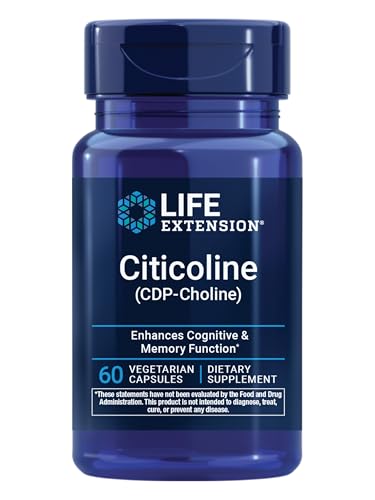
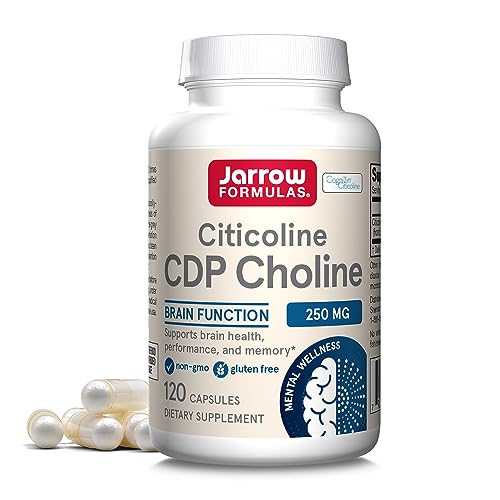
- Jarrow Formulas Cognizin CDP-Choline 250mgLab-tested / studied
capsules, 250 mg citicoline (Cognizin) per capsule, 60 capsules — The benchmark Cognizin-branded product; widely stocked, non-GMO, third-party tested; the go-to reference for price comparisons across the category. - NOW Foods CDP-Choline 300mg
capsules, 300 mg CDP-choline per vegetarian capsule, 60 capsules — 300mg per capsule at a competitive price; GMP-certified, non-GMO; consistently passes independent lab tests; ideal entry point for first-time buyers. - Nutricost Citicoline (CDP-Choline) 500mg
capsules, 500 mg citicoline per capsule, 60 capsules — High-dose option suited to experienced users; GMP-certified facility; budget-friendly; third-party tested; allows easy split-dose regimen at 250mg twice daily. - Double Wood Supplements Citicoline (CDP-Choline) 300mg
capsules, 300 mg CDP-choline per capsule, 60 capsules — Certificates of analysis available; US-manufactured; well-regarded in nootropics forums for consistent potency and transparent testing practices.
As an Amazon Associate we earn from qualifying purchases. Citicoline quality comes down to label accuracy and independent verification. Choose a product that states the exact milligrams of citicoline per serving rather than hiding it inside a proprietary blend, and prefer finished-product certification from NSF, USP or Informed Sport — Cognizin is the branded form named in most published trials, but an independently certified generic carries the same active molecule.
A Note on the Evidence
The clinical evidence for citicoline in stroke recovery is scientifically interesting but remains inconclusive — the most rigorous systematic review found insufficient evidence to support routine use, and no supplement should substitute for emergency stroke care or physician-prescribed secondary prevention therapies [5]. Anyone with a personal or family history of stroke, or who takes anticoagulants or other prescription medications, should consult a neurologist or physician before using citicoline.
Frequently Asked Questions
Why is citicoline studied specifically in stroke recovery?
During ischemic stroke, neuronal membranes degrade rapidly as phospholipids break down. Citicoline provides choline and cytidine — precursors that the brain can use to resynthesize phosphatidylcholine and restore membrane integrity. This mechanistic rationale, characterized in neurochemical research, positions citicoline as a candidate agent for limiting secondary ischemic injury [1] [6].
What did individual randomized trials find?
Findings have been inconsistent. A 1999 randomized trial reported improved neurological outcomes with citicoline versus placebo at three months [2], while a Phase III trial in 2001 using 2,000 mg/day did not achieve statistical significance on its primary functional outcome [3]. A 2022 RCT also explored citicoline in acute ischemic stroke and called for further confirmatory research [9].
Do pooled analyses support citicoline's use?
A 2002 pooled analysis of individual patient data from oral citicoline trials found that patients with moderate-to-severe strokes treated within 24 hours showed more favorable outcomes [4]. These are encouraging signals, but pooled subgroup findings are hypothesis-generating rather than definitive, and no subsequent prospective trial has been specifically designed to confirm them.
What do systematic reviews and the Cochrane review conclude?
A 2016 meta-analysis of double-blind placebo-controlled trials reported positive findings for neurological and functional recovery [7], and a 2020 review across neurological indications noted similar signals [8]. However, the 2020 Cochrane review — the most methodologically stringent assessment — found that existing evidence does not yet support a recommendation for routine clinical use, largely due to risk of bias and heterogeneity across trials [5].
Is citicoline safe at the doses used in stroke trials?
Across multiple clinical trials in stroke populations, citicoline has consistently shown a favorable safety and tolerability profile, with an expert review characterizing its safety record at studied doses [10]. Mild GI discomfort or transient headache may occur at higher doses or with cholinergic sensitivity. Stroke patients should always consult their medical team before adding any supplement, given the complexity of post-stroke care and polypharmacy risk.
Is citicoline approved by the FDA as a stroke treatment?
No. In the United States, citicoline is classified and sold as a dietary supplement and has not been approved by the FDA to diagnose, treat, cure, or prevent any disease, including stroke. Stroke is a medical emergency requiring immediate 911 response; established acute treatments such as tPA and mechanical thrombectomy should never be delayed or substituted for any supplement.
References
- Adibhatla RM et al. Citicoline: neuroprotective mechanisms in cerebral ischemia. Journal of neurochemistry (2002). PMID 11796739
- Clark WM et al. A randomized efficacy trial of citicoline in patients with acute ischemic stroke. Stroke (1999). PMID 10582983
- Clark WM et al. A phase III randomized efficacy trial of 2000 mg citicoline in acute ischemic stroke patients. Neurology (2001). PMID 11706098
- Dávalos A et al. Oral citicoline in acute ischemic stroke: an individual patient data pooling analysis of clinical trials. Stroke (2002). PMID 12468781
- Martí-Carvajal AJ et al. Citicoline for treating people with acute ischemic stroke. The Cochrane database of systematic reviews (2020). PMID 32860632
- Minnerup J et al. Multifunctional actions of approved and candidate stroke drugs. Neurotherapeutics : the journal of the American Society for Experimental NeuroTherapeutics (2009). PMID 19110198
- Secades JJ et al. Citicoline for Acute Ischemic Stroke: A Systematic Review and Formal Meta-analysis of Randomized, Double-Blind, and Placebo-Controlled Trials. Journal of stroke and cerebrovascular diseases : the official journal of National Stroke Association (2016). PMID 27234918
- Jasielski P et al. Application of Citicoline in Neurological Disorders: A Systematic Review. Nutrients (2020). PMID 33053828
- Agarwal A et al. Citicoline in acute ischemic stroke: A randomized controlled trial. PloS one (2022). PMID 35639720
- Clark WM et al. Efficacy of citicoline as an acute stroke treatment. Expert opinion on pharmacotherapy (2009). PMID 19351232
These statements have not been evaluated by the Food and Drug Administration. This information is not intended to diagnose, treat, cure, or prevent any disease. Content is for informational purposes only and is not medical advice; consult a qualified healthcare provider before starting any supplement. As an Amazon Associate we earn from qualifying purchases.
