Citicoline is prescribed as a drug for cerebrovascular disorders in several European countries, and vascular cognitive impairment is the indication most often attached to it. That reputation is real, but it rests on a body of evidence that is far less uniform than the marketing suggests. Sort those studies by design rather than by conclusion and a pattern appears immediately: the open-label studies are positive, and the one trial that was randomized, placebo-controlled, and blinded is not.
Nothing here constitutes medical advice. Citicoline has not been approved by the FDA to diagnose, treat, cure, or prevent vascular dementia or any other condition. Vascular dementia is a diagnosis that requires a clinician, and its most important management is control of the vascular risk factors driving it.
Key Takeaways
- A randomized, double-blind, placebo-controlled trial gave 1,000 mg/day of citicoline to patients with diagnosed vascular dementia for 12 months and found no difference from placebo on cognitive testing or on brain MRI [1].
- That trial enrolled only 30 patients, which is small enough that it cannot rule out a modest effect. It is the best-designed trial in this indication and it is also underpowered [1].
- The most-cited positive study, IDEALE, was open-label and non-randomized, and its treated group did not actually improve. Mean cognitive score went 22.4 to 22.7 to 22.9, which is flat; the between-group difference came from the control group declining [2].
- IDEALE also enrolled people with mild impairment and no measurable deficit on cognitive screening, so it was not a study of dementia at all [2].
- In the only trial pitting citicoline against an active comparator, 216 patients, citicoline came second to acupuncture at both 3 and 6 months [3]. The citicoline dose there was only 300 mg/day.
- A 2023 meta-analysis found a positive pooled effect but stated that study quality was poor, with significant risk of bias in favor of the intervention [4].
- A review of vascular cognitive impairment pharmacotherapy places citicoline among agents whose benefits are not well established [5].
The Distinction That Decides This Question
Most confusion about citicoline and vascular cognition comes from collapsing three different populations into one word. They are not interchangeable, and the evidence looks different in each.
Subjective complaints. Someone notices their memory is not what it was, but formal testing finds nothing wrong. Vascular changes may be visible on a scan.
Vascular cognitive impairment without dementia. Testing shows a measurable deficit, but the person still manages daily life independently. This is often abbreviated VCIND.
Vascular dementia. The deficits are severe enough to impair independent function and meet formal diagnostic criteria such as NINDS-AIREN.
The positive citicoline literature clusters heavily in the first two groups. The single blinded trial sits in the third. That is the whole argument in one sentence, and it is why an article about vascular dementia has to be written separately from our reviews of citicoline for mild cognitive impairment and age-related cognitive decline, which cover the milder end.
The Double-Blind Trial in Vascular Dementia
Published in Cerebrovascular Diseases in 2003, this was a randomized, double-blind clinical trial in patients diagnosed with vascular dementia by both NINDS-AIREN and DSM-IV criteria. Thirty patients were randomized to 500 mg of citicoline or matching placebo twice a day, for a total of 1,000 mg daily, and followed for 12 months [1].
The design is notable for going beyond questionnaires. Patients were assessed at baseline, 6 months, and 12 months on a battery of neurocognitive tests, and MRI was used to measure total brain volume and the volume of subcortical and periventricular hyperintensities, the white-matter changes characteristic of small-vessel disease [1].

The result was flatly negative on every axis. The citicoline and placebo groups did not differ in neuropsychological performance at baseline or at 12 months. Both groups declined significantly on cognitive testing. Both groups showed increased hyperintensity volume and reduced total brain volume on MRI. The authors concluded that the efficacy of long-term citicoline for cognitive impairment and neuropathological decline in patients already meeting criteria for vascular dementia does not appear to be substantiated by the study [1].
Two things follow from that, and honesty requires both. The first is that this is the highest-quality design anyone has applied to this specific question, and it failed. The second is that 30 patients is a small trial. A study that size can miss a real but modest benefit, and a negative result in 30 people is not the same as proof that nothing is there. The correct reading is not that citicoline has been disproven for vascular dementia. It is that the one time it was tested properly in that population, it did not show up, and no larger blinded trial has been run since to overturn or confirm that.
The Open Study That Points the Other Way
IDEALE is the study most often cited when citicoline is described as effective for vascular cognitive problems, and it is worth reading closely rather than by its abstract conclusion.
It was an open multicenter Italian study of 349 patients across six regions. The active group of 265 received oral citicoline 500 mg twice a day; 84 patients formed the control group. Entry required age 65 or over, a cognitive screening score of 21 or above, subjective memory complaints, and evidence of vascular lesions on neuroimaging. Probable Alzheimer disease was excluded. Assessments ran at baseline, 3 months, and 9 months [2].
The headline finding is that a significant difference was found between the study and control groups at both follow-up points. The detail that changes its meaning is what happened inside the treated group: cognitive screening scores were 22.4 at baseline, 22.7 at 3 months, and 22.9 at 9 months [2]. That is stability, not improvement, and a fraction of a point on a 30-point scale is well inside test-retest noise. The between-group significance is therefore driven by the control group getting worse.
In a progressive condition, holding steady while a comparison group declines is a legitimate and meaningful kind of result. But it only means something if the two groups were comparable to begin with, and IDEALE was open and non-randomized, with a control group less than a third the size of the treated group. Nobody was assigned by chance. If clinicians offered citicoline to the patients they judged more likely to engage with treatment, the treated group was different before anything was prescribed.
The study also found no difference between groups on either daily living scale, and the difference in mood scores did not reach significance [2]. And the entry criteria are decisive for our purposes: participants had subjective complaints but no evidence of deficits on cognitive screening. Whatever IDEALE demonstrates, it is not a finding about people who have vascular dementia.
What Happened in the Only Head-to-Head Comparison
Nearly every citicoline trial compares it against placebo or against nothing. One compared it against a different active treatment, which makes it unusually informative.
Published in Clinical Rehabilitation in 2019, this randomized multicenter trial across three Beijing hospitals enrolled 216 patients with vascular cognitive impairment no dementia, mean age 65.4. They received either acupuncture twice weekly or oral citicoline at 100 mg three times daily, over three months. The primary outcome was change in ADAS-cog, a standard cognitive scale [3].

At three months, the acupuncture group improved by 2.33 points and the citicoline group by 1.38, a difference of 0.95 points favoring acupuncture (p = 0.035). At six months the gap widened: 2.61 versus 1.25, a difference of 1.36 points (p = 0.002). Neither group differed on clock drawing or daily living scores [3].
Three caveats keep this from being a simple verdict. First, the citicoline arm did improve, by 1.38 points at three months. Without a placebo arm there is no way to know how much of that was the drug rather than practice effects on repeated testing or regression to the mean. Second, the citicoline dose was 300 mg per day, which is at or below the low end of what cognitive research typically uses and well under the 1,000 mg/day used in the studies above. A losing performance at 300 mg is not a fair test of 1,000 mg. Third, the trial could not be blinded. One arm received 24 sessions of hands-on treatment from a practitioner; the other took a pill. The difference in attention, expectation, and contact time is large, and on a rater-administered cognitive scale that matters.
What the trial does establish is narrower but still useful: when citicoline is measured against something rather than against nothing, it does not dominate.
What the Systematic Reviews Concluded
A 2023 systematic review and meta-analysis in Nutrients searched the literature from 2010 to 2022 and selected seven studies covering mild cognitive impairment, Alzheimer disease, and post-stroke dementia. All seven reported a positive effect, and six could be pooled, giving standardized mean differences ranging from 0.56 to 1.57 across sensitivity analyses. Those are respectable numbers [4].
The same paper then states that the overall quality of the included studies was poor, with significant risk of bias in favor of the intervention [4]. When every available study is positive and the reviewers themselves flag systematic bias toward the treatment, the pooled estimate inherits that bias. Meta-analysis combines studies; it does not repair them.
The older Cochrane review is more granular and, in one respect, more encouraging. Restricted to double-blind placebo-controlled randomized trials in elderly patients with chronic cerebral disorders, it found no significant evidence of benefit on attention, but did find significant beneficial effects on memory function and behavior, with good tolerability [6]. The limitation is duration. Seven of the included studies observed patients for 20 to 30 days, one for six weeks, and the rest for two to three months [6]. Vascular dementia unfolds over years. A 30-day trial can detect a short-term effect on test scores; it cannot say anything about whether a disease course is altered.
A 2017 review of pharmacotherapy for vascular cognitive impairment in CNS Drugs reaches the summary judgment. It notes that donepezil, galantamine, and memantine have shown modest but inconsistent benefits in vascular dementia, and lists citicoline among supplements and herbal therapies studied in this population whose beneficial effects are not well established. It emphasizes that diet, exercise, and vascular risk factor control are central to management and should not be ignored [5].
How to Read This If Someone in Your Family Has Vascular Dementia
The honest summary is that citicoline is well tolerated, has a plausible mechanism, has a genuinely encouraging record in milder vascular cognitive complaints from studies that were mostly not blinded, and has one blinded trial in actual vascular dementia that found nothing.
Tolerability is the most solid part. Across these studies, including IDEALE with 265 treated patients, no adverse events were recorded and the compound was consistently described as well tolerated [2][6]. Our full safety review covers that in detail. Low risk is a real advantage when someone is deciding whether a long-shot addition is worth trying.
What low risk does not do is substitute for the interventions that have stronger evidence in this disease. Blood pressure control, diabetes management, lipid management, smoking cessation, and physical activity are the levers with the best support for slowing vascular cognitive decline, and they are the ones a supplement can quietly displace attention from. The reviews make that point directly [5].
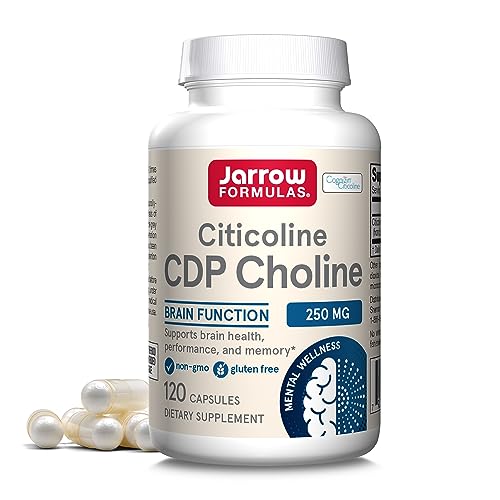
If citicoline is going to be tried, the dose used in the vascular studies was 1,000 mg per day, usually split as 500 mg twice daily [1][2], and the prescribing clinician should know about it. Someone with vascular dementia is typically on antihypertensives, antiplatelet or anticoagulant therapy, and often a cholinesterase inhibitor, and that is a conversation to have rather than a decision to make quietly.
Frequently Asked Questions
Does citicoline work for vascular dementia?
The one randomized, double-blind, placebo-controlled trial in diagnosed vascular dementia gave 1,000 mg/day for 12 months and found no difference from placebo on cognitive testing or brain MRI. That trial enrolled only 30 patients, so it cannot exclude a modest benefit, but it is the best-designed evidence available and it was negative.
Why do some studies say citicoline helps vascular cognition?
Because most of them studied a milder population and used open-label designs. The largest positive study, IDEALE, enrolled people with subjective memory complaints and no measurable deficit on cognitive screening, was not randomized, and had a control group less than a third the size of the treated group.
Did citicoline improve scores in the IDEALE study?
Not really. The treated group went from 22.4 at baseline to 22.7 at three months to 22.9 at nine months, which is flat. The reported between-group significance came from the untreated comparison group declining, not from the treated group improving.
How did citicoline compare against acupuncture?
In a 216-patient randomized trial in vascular cognitive impairment without dementia, acupuncture produced a larger cognitive improvement than citicoline at both three and six months. The citicoline dose was only 300 mg/day and the trial could not be blinded, so it is not a clean defeat, but citicoline did not come out ahead.
What dose was used in the vascular dementia research?
The blinded trial and IDEALE both used 1,000 mg per day, given as 500 mg twice daily. The head-to-head acupuncture trial used a much lower 300 mg per day. Anyone considering it alongside prescription medication should raise it with the prescribing clinician first.
Is citicoline safe for older adults with vascular disease?
Tolerability is the strongest finding in this literature. IDEALE recorded no adverse events across 265 treated patients, and the Cochrane review described the compound as well tolerated. Good tolerability is not evidence of benefit, and it does not replace blood pressure, diabetes, and lipid control, which have far stronger evidence in vascular cognitive decline.
References
- Cohen RA, Browndyke JN, Moser DJ, Paul RH, Gordon N, Sweet L. Long-term citicoline (cytidine diphosphate choline) use in patients with vascular dementia: neuroimaging and neuropsychological outcomes. Cerebrovasc Dis (2003). PMID 12865605
- Cotroneo AM, Castagna A, Putignano S, Lacava R, Fanto F, Monteleone F, Rocca F, Malara A, Gareri P. Effectiveness and safety of citicoline in mild vascular cognitive impairment: the IDEALE study. Clin Interv Aging (2013). PMID 23403474
- Yang JW, Wang XR, Zhang M, Xiao LY, Zhu W, Ji CS, Liu CZ, et al. Effectiveness of acupuncture for vascular cognitive impairment no dementia: a randomized controlled trial. Clin Rehabil (2019). PMID 30672317
- Bonvicini M, Travaglini S, Lelli D, Antonelli Incalzi R, Pedone C. Is Citicoline Effective in Preventing and Slowing Down Dementia? A Systematic Review and a Meta-Analysis. Nutrients (2023). PMID 36678257
- Farooq MU, Min J, Goshgarian C, Gorelick PB. Pharmacotherapy for Vascular Cognitive Impairment. CNS Drugs (2017). PMID 28786085
- Fioravanti M, Yanagi M. Cytidinediphosphocholine (CDP choline) for cognitive and behavioural disturbances associated with chronic cerebral disorders in the elderly. Cochrane Database Syst Rev (2004). PMID 15106147
These statements have not been evaluated by the FDA. This product is not intended to diagnose, treat, cure, or prevent any disease. This article is for informational purposes only and is not a substitute for professional medical advice. As an Amazon Associate we earn from qualifying purchases.
These statements have not been evaluated by the Food and Drug Administration. This information is not intended to diagnose, treat, cure, or prevent any disease. Content is for informational purposes only and is not medical advice; consult a qualified healthcare provider before starting any supplement. As an Amazon Associate we earn from qualifying purchases.
