Citicoline (CDP-choline) is a well-studied supplement that supplies choline and cytidine to the brain, supporting the synthesis of acetylcholine and the phospholipids that make up neuronal membranes. Most people take it for cognitive support, and the question that quickly follows a first purchase is a practical one: when is the best time to take it?
Unlike some supplements where timing is largely irrelevant, citicoline’s mechanism—and the way it raises circulating choline and uridine after an oral dose—gives genuine reasons to think about when you take it. This article lays out those reasons honestly, acknowledges where the evidence is thin, and helps you make a sensible default choice.
Key Takeaways
- Oral citicoline raises plasma choline and uridine within roughly one to two hours of a dose [1], making timing relative to cognitive tasks a reasonable consideration.
- Morning dosing is the most practical default for most people: it aligns peak plasma levels with peak cognitive demand and avoids potential sleep disruption from late-day cholinergic activity.
- Taking citicoline with a light meal or snack reduces the risk of mild GI discomfort without significantly impairing absorption.
- Consistent daily use over days to weeks is likely more important than precise single-dose timing, given the slower, structural mechanisms by which citicoline may support brain function.
- Splitting a 500 mg daily dose into two 250 mg doses (morning and midday) can sustain plasma choline levels across more of the day and may improve tolerability for sensitive individuals.
How Citicoline Is Absorbed and Metabolized
When you swallow a citicoline capsule or tablet, the compound is not absorbed intact in meaningful quantities. Instead, intestinal enzymes hydrolyze it into choline and cytidine. Both enter general circulation, and cytidine is subsequently converted to uridine in peripheral tissues. Research in human volunteers confirmed that a single oral dose raises measurable plasma levels of both choline and uridine within roughly one to two hours [1]. Separate work established that these elevated plasma levels are sufficient to influence brain phospholipid composition, as the brain draws on circulating choline and cytidine as substrates for synthesizing phosphatidylcholine [2].
Understanding this metabolic pathway matters for timing because it means the active substrates—choline and uridine—need time to reach the brain after you take the dose. A supplement that peaks in plasma within one to two hours [1] is one you may want to time deliberately relative to when you want to feel its effects, rather than taking it at a random moment.
The Case for Taking Citicoline in the Morning
The most common recommendation you will encounter is to take citicoline in the morning, and there is straightforward logic behind it. Cognitive demands for most people are front-loaded: meetings, focused writing, analytical tasks, and decision-making tend to cluster in the first half of the day. If plasma choline and uridine rise within one to two hours of an oral dose [1], taking citicoline shortly after waking positions those elevated levels during the hours when you are likely to need them.
There is also a practical tolerability argument. Citicoline increases cholinergic activity, and some individuals who are sensitive to cholinergic stimulation report mild difficulty sleeping if they take it too late in the day. This is not universal—clinical trials at 250–500 mg per day report an excellent overall safety profile—but it is a reason to default to morning dosing unless you have a specific reason to do otherwise.


It is important to note that there are no controlled trials directly comparing morning versus afternoon versus evening dosing of citicoline in healthy adults and measuring cognitive outcomes by time of day. The morning recommendation is logical inference from what is known about absorption timing [1] and tolerability, not a finding established in a head-to-head study.
With Food or on an Empty Stomach?
Clinical studies on citicoline have used both fed and fasted conditions without reporting dramatically different outcomes, and the published absorption data [1] did not identify food as a major confounding variable for the choline and uridine rise seen after an oral dose. That said, individual experience matters here.
Citicoline is generally well tolerated, but mild gastrointestinal discomfort—nausea, loose stools, or stomach cramping—can occur, particularly at higher doses or in people with sensitive digestive systems. Taking citicoline with a light meal or snack tends to reduce the likelihood of GI upset without meaningfully impairing absorption for most people. A small amount of fat in the meal is unlikely to block absorption the way it might with some fat-soluble compounds, since choline itself is water-soluble.
If you consistently feel fine taking it on an empty stomach, that approach is also reasonable. The practical rule is: start with food until you know how your body responds, then adjust based on experience.
Timing Citicoline Before Cognitive Work
Because oral citicoline raises plasma choline and uridine levels within roughly one to two hours [1], and because the brain depends on circulating choline and cytidine as precursors for the phospholipids involved in membrane maintenance [2], taking citicoline approximately thirty to sixty minutes before a cognitively demanding session is a reasonable practical strategy. This gives the absorbed substrates time to reach meaningful plasma concentrations before you begin working.
This does not mean citicoline functions like caffeine—a stimulant with a sharp, rapid onset you can feel clearly within minutes. The proposed mechanisms (enhanced phosphatidylcholine synthesis, increased choline acetyltransferase activity, potential influence on dopamine receptor density) are slower and more structural in nature. Many users report that consistent daily use over days to weeks is more noticeable than any single-dose effect. Timing relative to a work session is therefore a secondary consideration compared to taking it regularly at all.
Single Dose or Split Dose?
Common citicoline doses in clinical research range from 250 mg to 500 mg per day, and some protocols have used twice-daily dosing. Splitting a 500 mg daily dose into two 250 mg doses—one in the morning and one at midday—is a strategy some users prefer because it produces a more sustained elevation of plasma choline across the day [1] rather than a single peak and trough.
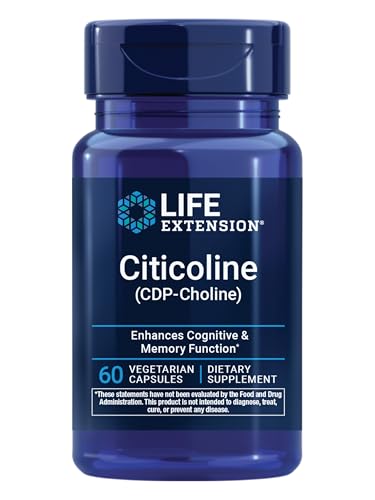

Whether split dosing produces meaningfully better cognitive outcomes compared to a single morning dose has not been established in well-powered comparative trials. From a tolerability standpoint, smaller divided doses are often better tolerated by people who experience any GI sensitivity. If you are starting with citicoline for the first time, beginning at 250 mg once daily in the morning is a sensible approach before considering dose adjustments.
What the Evidence Does and Does Not Tell Us
The research base for citicoline is more substantial than for many dietary supplements. Human pharmacokinetic work has confirmed that oral dosing reliably raises plasma choline and uridine [1], and mechanistic research supports the idea that these elevated levels translate into changes in brain phospholipid composition [2]. Clinical trials in specific populations—including older adults with memory concerns and people recovering from stroke—have generated supportive findings for citicoline’s safety and tolerability.
However, research specifically on dosing timing in healthy adults performing cognitive tasks is limited. The practical timing recommendations in this article are grounded in what is known about absorption kinetics and tolerability rather than in direct comparative trials on timing. Individual variation in metabolism, cholinergic sensitivity, and cognitive demands means that the best timing for you may differ from a general default. Treat the morning-with-food recommendation as a well-reasoned starting point, not a precision protocol.
🛒 Where to Buy Citicoline
- Jarrow Formulas Cognizin CDP-Choline 250mgLab-tested / studied
capsules, 250 mg citicoline (Cognizin) per capsule, 60 capsules — The benchmark Cognizin-branded product; widely stocked, non-GMO, third-party tested; the go-to reference for price comparisons across the category. - NOW Foods CDP-Choline 300mg
capsules, 300 mg CDP-choline per vegetarian capsule, 60 capsules — 300mg per capsule at a competitive price; GMP-certified, non-GMO; consistently passes independent lab tests; ideal entry point for first-time buyers. - Nutricost Citicoline (CDP-Choline) 500mg
capsules, 500 mg citicoline per capsule, 60 capsules — High-dose option suited to experienced users; GMP-certified facility; budget-friendly; third-party tested; allows easy split-dose regimen at 250mg twice daily. - Double Wood Supplements Citicoline (CDP-Choline) 300mg
capsules, 300 mg CDP-choline per capsule, 60 capsules — Certificates of analysis available; US-manufactured; well-regarded in nootropics forums for consistent potency and transparent testing practices.
As an Amazon Associate we earn from qualifying purchases. Citicoline quality comes down to label accuracy and independent verification. Choose a product that states the exact milligrams of citicoline per serving rather than hiding it inside a proprietary blend, and prefer finished-product certification from NSF, USP or Informed Sport — Cognizin is the branded form named in most published trials, but an independently certified generic carries the same active molecule.
A Note on the Evidence
Citicoline is sold as a dietary supplement and has not been approved by the FDA to diagnose, treat, cure, or prevent any disease; the timing guidance in this article is based on pharmacokinetic data and tolerability considerations, not on clinical trials comparing dosing schedules head-to-head in healthy adults. Individuals with neurological conditions, those taking medications that affect acetylcholine levels or the cholinergic system (such as certain Alzheimer’s medications or anticholinergic drugs), and pregnant or breastfeeding individuals should consult a qualified healthcare provider before using citicoline.
Frequently Asked Questions
Should I take citicoline in the morning or at night?
Morning is the practical default for most people. Oral citicoline raises plasma choline and uridine within roughly one to two hours [1], which aligns well with cognitive demands that are typically highest earlier in the day. Some individuals also find late-day cholinergic supplements interfere with sleep, though this is not universal.

Can I take citicoline on an empty stomach?
Many people tolerate it fine on an empty stomach, and absorption appears effective regardless of fed state [1]. However, mild gastrointestinal discomfort—nausea or stomach cramping—is the most commonly reported side effect, and taking citicoline with a light meal tends to reduce this risk without meaningfully affecting how well it is absorbed.

How long before work or study should I take citicoline?
Taking it thirty to sixty minutes beforehand is a reasonable approach, since plasma choline levels begin rising within about one to two hours of an oral dose [1]. Keep in mind that citicoline is not a rapid-onset stimulant; consistent daily use over several weeks may matter more than precise pre-task timing.
Can I take citicoline at the same time as coffee or caffeine?
There is no established pharmacokinetic interaction between citicoline and caffeine. Some users combine them intentionally for cognitive support. If you are sensitive to cholinergic stimulation or to stimulants generally, starting with one at a time and assessing your response before combining them is a reasonable precaution.
Does it matter whether I take 250 mg or 500 mg, and does the dose affect timing?
Clinical trials have used both doses with acceptable tolerability. A 250 mg dose once daily in the morning is a sensible starting point; a 500 mg dose can be taken as a single morning dose or split into two 250 mg doses (morning and midday) to sustain elevated plasma choline levels longer across the day [1]. Higher doses increase the chance of mild GI side effects.
How long does it take to notice effects from citicoline?
This varies by individual. Some people report subjective changes within a few days; others notice little acutely but find cognitive function feels more consistent after several weeks of daily use. The proposed mechanisms—including phospholipid membrane support [2] and increased choline acetyltransferase activity—are structural and cumulative rather than immediate, so patience with consistent dosing is warranted.
References
- Wurtman RJ et al. Effect of oral CDP-choline on plasma choline and uridine levels in humans. Biochemical pharmacology (2000). PMID 10974208
- López-Coviella I et al. Evidence that 5'-cytidinediphosphocholine can affect brain phospholipid composition by increasing choline and cytidine plasma levels. Journal of neurochemistry (1995). PMID 7616250
These statements have not been evaluated by the Food and Drug Administration. This information is not intended to diagnose, treat, cure, or prevent any disease. Content is for informational purposes only and is not medical advice; consult a qualified healthcare provider before starting any supplement. As an Amazon Associate we earn from qualifying purchases.
