Citicoline (CDP-choline) and uridine are two dietary supplements that frequently appear in the same nootropic conversations—and there is a biochemical reason for that. Both interact with the CDP-choline pathway, the principal route for synthesizing phosphatidylcholine, a phospholipid critical to neuronal membrane structure and synaptic function. Yet they enter that pathway at different points and arrive in the body through distinct metabolic routes.
Understanding the overlap and the differences requires a short look at how each compound is processed after ingestion. This article walks through the proposed mechanisms, summarizes what human and animal research has found, and offers a plain-language comparison. It is informational only and does not constitute medical advice; neither supplement has been approved by the FDA to diagnose, treat, cure, or prevent any disease.
Key Takeaways
- Citicoline and uridine both feed the CDP-choline (Kennedy) pathway but enter it at different points—citicoline supplies both choline and pyrimidine components simultaneously, while uridine provides only the pyrimidine side.
- Oral citicoline raises plasma levels of both choline and uridine [1], meaning it effectively acts as a dual precursor after ingestion.
- Oral uridine can raise brain CDP-choline and phospholipid precursor levels in animals [2] and humans [3], without suppressing acetylcholine synthesis [4].
- Citicoline has a more established clinical evidence base in aging humans [5]; uridine’s human data are promising but fewer in number and largely mechanistic.
- Neither supplement is FDA-approved to diagnose, treat, cure, or prevent any disease; consult a healthcare provider before use.
What Is Citicoline and How Does the Body Process It?
Citicoline—also called cytidine 5′-diphosphocholine—is a naturally occurring intermediate in the biosynthesis of phosphatidylcholine. When taken orally, it is hydrolyzed in the intestine and liver into two components: choline and cytidine. Cytidine is subsequently converted in peripheral tissues and, to some extent, the brain into uridine, the biologically active pyrimidine that readily crosses the blood-brain barrier.
A human pharmacokinetic study confirmed this dual release: oral CDP-choline raises plasma levels of both choline and uridine within hours of ingestion [1]. This is a central finding for understanding citicoline’s effects—it does not simply deliver choline. The choline fraction feeds acetylcholine synthesis and re-enters the CDP-choline (Kennedy) cycle, while the uridine fraction supplies the pyrimidine component needed further along the same cycle. Proposed mechanisms include enhanced neuronal membrane phospholipid synthesis, increased choline acetyltransferase activity, and upregulation of striatal dopamine receptor density.
Clinical trials at 250–500 mg per day consistently report an excellent tolerability profile. Mild GI discomfort or transient headache are the most noted side effects, particularly at higher doses or in individuals sensitive to cholinergic stimulation.
What Is Uridine and Where Does It Act?
Uridine is a pyrimidine nucleoside present in small amounts in foods such as brewer’s yeast, liver, and tomatoes. As a supplement it is sold in several forms, most commonly uridine monophosphate (UMP). Once absorbed from the gut, uridine circulates in plasma and crosses into the central nervous system via specific nucleoside transporters. The transport and utilization of uridine in the brain are distinct from those of cytidine, despite both being pyrimidines [6].
Inside neurons, uridine participates directly in the CDP-choline pathway. Animal research showed that oral UMP administration raised brain CDP-choline levels in gerbils [2], and cell-culture work in PC12 neurons demonstrated that both uridine and cytidine can stimulate CDP-choline synthesis [7]. Importantly, this stimulation of the Kennedy pathway does not appear to reduce acetylcholine synthesis or release [4], suggesting the two downstream uses of choline—membrane building and neurotransmitter production—are not in direct competition under these conditions.


Human evidence for uridine is more limited than for citicoline but is developing. A 31-phosphorus magnetic resonance spectroscopy study in healthy adults found that short-term uridine supplementation increased brain phosphatidylcholine precursors [3], providing direct in-human confirmation that orally administered uridine can reach the brain and influence membrane phospholipid metabolism.
The CDP-Choline Pathway: Where They Converge
Both supplements ultimately converge on the Kennedy pathway. In simplified form: choline is phosphorylated to phosphocholine, which reacts with cytidine triphosphate (derived from uridine or cytidine) to form CDP-choline, which then combines with diacylglycerol to yield phosphatidylcholine. Phosphatidylcholine is a structural phospholipid of synaptic membranes, and increasing its synthesis is associated with greater synaptic density in preclinical models [8].
The non-enzymatic synthesis of CDP-choline under prebiotic conditions has been documented [9], suggesting these molecules have deep evolutionary origins—though this observation has no direct practical supplement implication. More relevant to supplementation is the finding that the Kennedy pathway can be rate-limited by the availability of its pyrimidine and choline substrates, which is precisely the bottleneck that both citicoline and uridine aim to address, from different starting points.
A broader review on nutrition and Alzheimer’s disease preclinical research highlighted the potential of phospholipid precursors—including uridine—to support synaptic membrane synthesis, framing these compounds as nutritional modulators of synaptic structure rather than pharmacological agents [10].
Key Differences: Entry Points, Choline Supply, and Clinical Evidence
The most important practical difference is what each supplement actually delivers. Citicoline is CDP-choline itself—the pathway intermediate—and releases both the choline component and the pyrimidine component (as cytidine, which converts to uridine) simultaneously. Uridine supplements supply only the pyrimidine side of the equation; they do not directly provide choline. This means that uridine, to fully drive phosphatidylcholine synthesis, likely benefits from adequate dietary or supplemental choline intake alongside it.
Citicoline carries a stronger clinical evidence base in humans. A 2023 review examined its role in supporting memory in aging adults and found evidence consistent with cognitive benefit at standard supplemental doses [5]. Uridine’s human evidence, while promising—particularly the MRS study showing phospholipid precursor increases [3]—includes fewer large randomized controlled trials. Much of the uridine literature is preclinical or mechanistic.
Pyrimidine metabolism more broadly—the enzymatic network that processes uridine, cytidine, and related compounds—has been examined in the context of neurodegeneration. Disruptions in pyrimidine salvage enzymes are associated with altered membrane composition and neuronal vulnerability [11]. Both supplements can be understood as supplying substrate to this network from the outside, at different nodes.
Emerging Directions: Gut-Brain Axis and Neuroprotection
Uridine’s research profile is expanding beyond membrane phospholipid synthesis. A 2025 pharmacological review discussed its involvement in brain and gut health, exploring neuroprotective potential mediated in part via gut-brain axis signaling [12]. This is an early investigational area, and clinical translation has not been established; the findings should be regarded as hypothesis-generating rather than conclusive.

Citicoline’s mechanistic story, by contrast, is more settled: the dual release of choline and uridine upon oral ingestion [1], convergence on CDP-choline synthesis [7], and downstream effects on membrane phospholipids [8] form a relatively coherent mechanistic chain. Whether that chain translates into meaningful cognitive outcomes in healthy younger adults remains an open question, as most positive human trials have focused on aging or cognitively impaired populations.
Which Supplement to Consider, and When
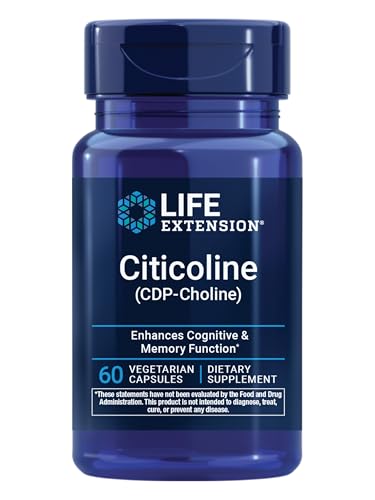
For individuals interested in simultaneously supporting choline status and the pyrimidine component of the Kennedy pathway, citicoline offers a single compound that releases both. Its tolerability at 250–500 mg/day is well-documented, and it has the stronger clinical track record of the two.
Uridine monophosphate may appeal to those who already consume adequate choline through diet or supplementation and want to target specifically the pyrimidine side of the pathway, or who are interested in the emerging gut-brain and mood-related research lines. Some researchers have explored uridine as part of a multi-nutrient approach—combined with choline sources and DHA—based on preclinical Alzheimer’s models [10], but human evidence for this combination at specific doses remains preliminary and should not be interpreted as a recommended protocol.
Neither compound is a substitute for medical care, and neither has been approved by the FDA to treat or prevent any disease. Both should be treated as potentially bioactive compounds and discussed with a healthcare provider before use, especially for individuals on medications affecting cholinergic or pyrimidine metabolic pathways, or those with hepatic or renal conditions.
🛒 Where to Buy Citicoline
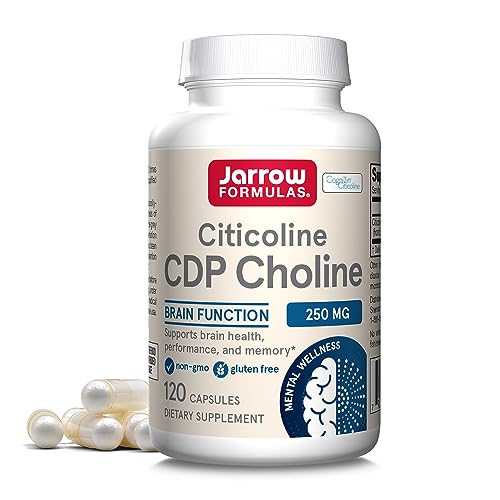
- Jarrow Formulas Cognizin CDP-Choline 250mgLab-tested / studied
capsules, 250 mg citicoline (Cognizin) per capsule, 60 capsules — The benchmark Cognizin-branded product; widely stocked, non-GMO, third-party tested; the go-to reference for price comparisons across the category. - NOW Foods CDP-Choline 300mg
capsules, 300 mg CDP-choline per vegetarian capsule, 60 capsules — 300mg per capsule at a competitive price; GMP-certified, non-GMO; consistently passes independent lab tests; ideal entry point for first-time buyers. - Nutricost Citicoline (CDP-Choline) 500mg
capsules, 500 mg citicoline per capsule, 60 capsules — High-dose option suited to experienced users; GMP-certified facility; budget-friendly; third-party tested; allows easy split-dose regimen at 250mg twice daily. - Double Wood Supplements Citicoline (CDP-Choline) 300mg
capsules, 300 mg CDP-choline per capsule, 60 capsules — Certificates of analysis available; US-manufactured; well-regarded in nootropics forums for consistent potency and transparent testing practices.
As an Amazon Associate we earn from qualifying purchases. Citicoline quality comes down to label accuracy and independent verification. Choose a product that states the exact milligrams of citicoline per serving rather than hiding it inside a proprietary blend, and prefer finished-product certification from NSF, USP or Informed Sport — Cognizin is the branded form named in most published trials, but an independently certified generic carries the same active molecule.
A Note on the Evidence
Much of the mechanistic evidence for both citicoline and uridine comes from animal models and small or short-duration human studies; large, long-term randomized controlled trials remain limited for both compounds. Individuals taking medications that affect cholinergic signaling, pyrimidine metabolism, or those with kidney, liver, or neurological conditions should consult a qualified healthcare provider before supplementing with either.
Frequently Asked Questions
Does taking citicoline give you uridine?
Metabolically, yes. Oral citicoline is hydrolyzed into choline and cytidine; cytidine is converted in peripheral tissues to uridine. A human pharmacokinetic study confirmed that oral CDP-choline raises plasma uridine levels within hours [1]. So citicoline serves as an indirect uridine source alongside its choline contribution.
Can citicoline and uridine be taken together?
There is no established safety concern with combining them, but evidence for additive or synergistic effects in humans is limited. Since citicoline already releases uridine upon metabolism [1], the incremental benefit of adding supplemental uridine is unclear. Combined precursor protocols have been explored in preclinical Alzheimer’s research [10] but have not been validated in large human trials.

Does uridine supplementation reduce acetylcholine?
Preclinical work found that uridine and cytidine increase striatal CDP-choline levels without decreasing acetylcholine synthesis or release [4], suggesting these compounds primarily support membrane phospholipid production rather than diverting substrate away from neurotransmitter synthesis. This finding is from animal tissue and should not be extrapolated directly to clinical outcomes.
What is the human evidence for citicoline and memory?
A 2023 review found evidence supporting citicoline’s role in memory and cognitive function in aging adults [5]. Most trials used doses in the 250–500 mg/day range and reported good tolerability. Citicoline is not FDA-approved for memory treatment or cognitive disease prevention, and individual results vary.
Can uridine directly affect brain phospholipids?
Yes, according to human MRS data. A 31-phosphorus magnetic resonance spectroscopy study in healthy adults found that short-term uridine administration increased brain phosphatidylcholine precursors [3], confirming that orally administered uridine can reach the brain and influence membrane phospholipid metabolism in living humans. Longer-term and larger trials are needed to understand clinical significance.
Is uridine being studied for neuroprotection?
Yes, though this is an early research area. Disruptions in pyrimidine metabolism have been linked to neuronal vulnerability [11], and a 2025 review explored uridine’s neuroprotective potential via the gut-brain axis [12]. These findings are preliminary and hypothesis-generating; they do not constitute clinical evidence of neuroprotection in humans and should not be used to inform treatment decisions.
References
- Wurtman RJ et al. Effect of oral CDP-choline on plasma choline and uridine levels in humans. Biochemical pharmacology (2000). PMID 10974208
- Cansev M et al. Oral uridine-5'-monophosphate (UMP) increases brain CDP-choline levels in gerbils. Brain research (2005). PMID 16126180
- Agarwal N et al. Short-term administration of uridine increases brain membrane phospholipid precursors in healthy adults: a 31-phosphorus magnetic resonance spectroscopy study at 4T. Bipolar disorders (2010). PMID 21176029
- Ulus IH et al. Cytidine and uridine increase striatal CDP-choline levels without decreasing acetylcholine synthesis or release. Cellular and molecular neurobiology (2006). PMID 16636900
- Świątkiewicz M et al. Citicoline for Supporting Memory in Aging Humans. Aging and disease (2023). PMID 37196134
- Cansev M et al. Uridine and cytidine in the brain: their transport and utilization. Brain research reviews (2006). PMID 16769123
- Richardson UI et al. Stimulation of CDP-choline synthesis by uridine or cytidine in PC12 rat pheochromocytoma cells. Brain research (2003). PMID 12706232
- Cansev M et al. Oral administration of circulating precursors for membrane phosphatides can promote the synthesis of new brain synapses. Alzheimer's & dementia : the journal of the Alzheimer's Association (2008). PMID 18631994
- Mar A et al. Non-enzymatic synthesis of the coenzymes, uridine diphosphate glucose and cytidine diphosphate choline, and other phosphorylated metabolic intermediates. Origins of life and evolution of the biosphere : the journal of the International Society for the Study of the Origin of Life (1987). PMID 2819807
- Kamphuis PJ et al. Nutrition and Alzheimer's disease: pre-clinical concepts. European journal of neurology (2009). PMID 19703215
- Vincenzetti S et al. Enzymology of Pyrimidine Metabolism and Neurodegeneration. Current medicinal chemistry (2016). PMID 27063261
- Aydin B et al. Involvement of uridine in brain and gut health: insights into its neuroprotective potential via the gut-brain axis. Pharmacological reports : PR (2025). PMID 41071476
These statements have not been evaluated by the Food and Drug Administration. This information is not intended to diagnose, treat, cure, or prevent any disease. Content is for informational purposes only and is not medical advice; consult a qualified healthcare provider before starting any supplement. As an Amazon Associate we earn from qualifying purchases.
