Mild cognitive impairment (MCI) describes a detectable decline in memory, language, or executive function that goes beyond normal aging but does not yet meet criteria for dementia. It affects an estimated 15–20% of adults over 65 and represents a critical window during which interventions may have the greatest impact. Because no drug is currently approved specifically for MCI, researchers and clinicians have been examining compounds that support neuronal health—including citicoline, a naturally occurring molecule present in every cell of the body.
Citicoline (cytidine 5′-diphosphocholine, or CDP-choline) is broken down in the body into choline and cytidine. Choline feeds into the synthesis of acetylcholine, a neurotransmitter central to memory and attention, as well as phosphatidylcholine, a key structural component of neuronal membranes. Cytidine converts to uridine, which plays a role in membrane repair. These properties have made citicoline a subject of ongoing research in age-related cognitive decline and vascular brain disease. This article summarizes what the current evidence says—and where it still falls short.
Key Takeaways
- Citicoline provides choline and cytidine precursors that support acetylcholine synthesis and neuronal membrane integrity—two pathways relevant to age-related cognitive decline.
- Early clinical trials and a 2023 meta-analysis suggest citicoline may help preserve cognitive function in MCI and vascular cognitive impairment, but trial sizes and durations are generally small.
- Evidence is strongest in populations with a vascular component to their cognitive impairment; generalizability to other MCI subtypes is less established.
- Citicoline is generally well tolerated at 250–500 mg/day; mild GI discomfort or headache are the most commonly reported side effects.
- Citicoline is a dietary supplement, not an FDA-approved treatment for MCI; it should not replace evaluation and care by a qualified healthcare provider.
Proposed Mechanisms: How Citicoline May Affect the Brain
Citicoline’s proposed benefits in cognitive impairment rest on several biological pathways. First, it supplies the choline needed to produce acetylcholine via choline acetyltransferase—an enzyme that tends to decline with age and in neurodegenerative conditions [1]. Second, as a phosphatidylcholine precursor, citicoline may help maintain the structural integrity of neuronal cell membranes, which are vulnerable to oxidative stress and ischemic damage [2]. Third, research suggests citicoline may upregulate dopamine receptor density in the striatum, a finding relevant to both motivation and motor-cognitive coordination [3].
A fourth proposed mechanism involves neuroprotection in the context of reduced cerebral blood flow. In vascular cognitive impairment, small vessel disease and recurrent ischemic events can damage white matter and impair signal transmission between brain regions. Citicoline has been studied for its potential to limit neuronal membrane breakdown and support repair processes following such injury [2]. It is important to note that these mechanisms are proposed based on preclinical work and early-phase human trials; they do not confirm that citicoline treats, cures, or prevents any disease.
Clinical Research in Mild Cognitive Impairment
A 2023 review published in Neuroscience Insights examined citicoline’s role specifically in patients with MCI, concluding that the compound appears to support cognitive function through its membrane-stabilizing and cholinergic effects, and noting a favorable tolerability profile at doses studied in trials [3]. An earlier Spanish trial from 2002 reported improvements in memory and attention measures in MCI patients treated with citicoline compared to placebo, though that study was small and of limited duration [4].


A Russian clinical study published in 2011 assessed citicoline (marketed as Ceraxon) in patients diagnosed with MCI syndrome and found improvements in neuropsychological testing scores alongside good tolerability [5]. While these findings are encouraging, both studies are relatively small, and the field lacks the large, long-duration randomized controlled trials needed to confirm efficacy with high confidence. A 2025 narrative review on pharmacological management of MCI acknowledged citicoline among compounds with a plausible mechanism and early supportive data, while noting the overall evidence base remains insufficient to make strong clinical recommendations [6].
A 2026 Italian Delphi consensus on the diagnosis and management of MCI in clinical practice recognized citicoline as one of the agents considered by neurologists in routine care, reflecting its real-world use even in the absence of regulatory approval for this indication [7]. This gap between clinical use and formal approval is common in MCI management, where few interventions have passed the evidentiary bar required by regulatory agencies.
Citicoline and Vascular Cognitive Impairment
A meaningful portion of MCI cases have a vascular component—meaning that damage from reduced blood flow to the brain contributes to cognitive decline. This subtype, sometimes called vascular cognitive impairment (VCI), has been a focus of citicoline research. A 2011 analysis in Stroke reviewed the evidence for citicoline in vascular cognitive impairment and vascular dementia following stroke, concluding that it showed potential in stabilizing or modestly improving cognition in this population, with a good safety record across trials [2].
A 2023 clinical interventions in aging study examined whether citicoline could prevent cognitive decline in patients with cerebrovascular disease—a group at elevated risk of progressing from MCI to dementia. The authors found evidence suggesting citicoline may help preserve cognitive function in this population over time, though they noted the need for larger confirmatory studies [8]. Researchers interested in the ApoE genotype—a genetic risk factor for Alzheimer’s disease—also examined citicoline in first-degree relatives of Alzheimer’s patients. That 2021 study found some cognitive benefits but observed that outcomes may differ based on ApoE status, underscoring the likelihood that individual responses to citicoline are not uniform [9].
Systematic Review and Meta-Analysis Evidence
The broadest synthesis of citicoline’s effects on cognitive decline and dementia comes from a 2023 systematic review and meta-analysis published in Nutrients. The authors examined multiple trials and concluded that citicoline may have a role in preventing cognitive decline and slowing progression toward dementia, but they emphasized that the quality and size of the included studies varied considerably, limiting the strength of any conclusions [10].

Meta-analyses in this space are constrained by heterogeneity: studies use different doses, durations, populations, and outcome measures. Until standardized, adequately powered trials are conducted, a meta-analysis can point toward a direction of effect but cannot confirm a definitive benefit. This is an honest limitation of the current literature and should be weighed by anyone considering citicoline for cognitive support.
Dosing and Tolerability in Research Settings
Clinical trials have most commonly studied citicoline in the range of 500–2000 mg per day, typically administered orally. At doses of 250–500 mg per day, citicoline has demonstrated an excellent tolerability profile in published trials, with adverse events generally mild and transient [3]. The most commonly reported side effects include mild gastrointestinal discomfort and, in some cases, transient headache—particularly in individuals sensitive to cholinergic stimulation or when higher doses are used [4].
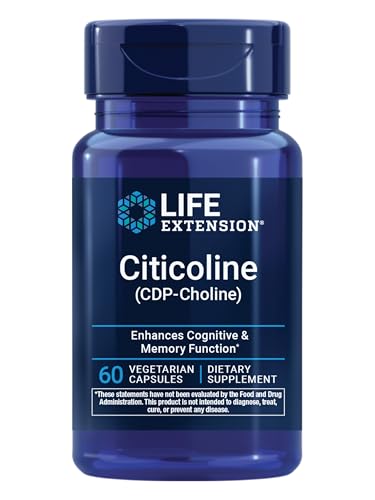
Citicoline is sold as a dietary supplement in the United States and many other countries. It has not been approved by the FDA to diagnose, treat, cure, or prevent any disease, including mild cognitive impairment. Supplement formulations are not subject to the same pre-market efficacy review as prescription drugs, meaning that quality and dosing accuracy can vary between products.
Where the Evidence Still Falls Short
Despite more than two decades of research, citicoline’s evidence base in MCI has notable gaps. Most trials are small, short in duration (weeks to a few months rather than years), and conducted in specific populations—often patients with vascular risk factors or post-stroke cognitive impairment rather than typical amnestic MCI. The 2025 narrative review in NeuroSci noted that the field still lacks phase III trials with MCI as a primary endpoint using modern diagnostic criteria [6].
Long-term safety data beyond a year are also limited. While short-term tolerability appears favorable, whether chronic supplementation over many years carries any risks has not been rigorously studied. Additionally, the degree to which benefits observed in vascular or post-stroke populations generalize to MCI caused by early Alzheimer’s pathology remains an open question. Researchers continue to investigate whether specific subgroups—such as those with ApoE4 genotype or defined vascular risk profiles—respond differently [9].
🛒 Where to Buy Citicoline
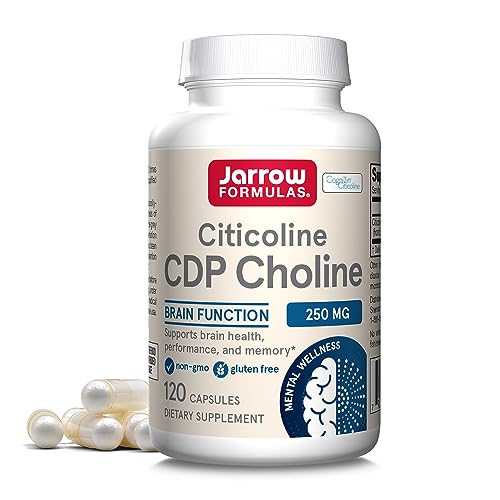
- Jarrow Formulas Cognizin CDP-Choline 250mgLab-tested / studied
capsules, 250 mg citicoline (Cognizin) per capsule, 60 capsules — The benchmark Cognizin-branded product; widely stocked, non-GMO, third-party tested; the go-to reference for price comparisons across the category. - NOW Foods CDP-Choline 300mg
capsules, 300 mg CDP-choline per vegetarian capsule, 60 capsules — 300mg per capsule at a competitive price; GMP-certified, non-GMO; consistently passes independent lab tests; ideal entry point for first-time buyers. - Nutricost Citicoline (CDP-Choline) 500mg
capsules, 500 mg citicoline per capsule, 60 capsules — High-dose option suited to experienced users; GMP-certified facility; budget-friendly; third-party tested; allows easy split-dose regimen at 250mg twice daily. - Double Wood Supplements Citicoline (CDP-Choline) 300mg
capsules, 300 mg CDP-choline per capsule, 60 capsules — Certificates of analysis available; US-manufactured; well-regarded in nootropics forums for consistent potency and transparent testing practices.
As an Amazon Associate we earn from qualifying purchases. Citicoline quality comes down to label accuracy and independent verification. Choose a product that states the exact milligrams of citicoline per serving rather than hiding it inside a proprietary blend, and prefer finished-product certification from NSF, USP or Informed Sport — Cognizin is the branded form named in most published trials, but an independently certified generic carries the same active molecule.
A Note on the Evidence
The clinical evidence supporting citicoline for mild cognitive impairment consists primarily of small, short-duration trials and one meta-analysis—robust enough to justify further research but not sufficient to recommend citicoline as a proven treatment. Anyone experiencing cognitive changes should seek evaluation from a qualified healthcare provider, particularly because MCI can have multiple causes requiring specific management; individuals with cardiovascular disease, those taking cholinesterase inhibitors, or those who are pregnant or breastfeeding should consult a physician before using citicoline supplements.

Frequently Asked Questions
What is citicoline and why is it studied for mild cognitive impairment?
Citicoline (CDP-choline) is a naturally occurring compound that the body metabolizes into choline and cytidine. Choline supports acetylcholine production and neuronal membrane synthesis, making it relevant to memory and attention. Researchers have studied it for MCI because of these proposed neuroprotective mechanisms [3].
What do clinical trials show about citicoline in MCI patients?
Small trials have reported improvements in memory and attention measures in MCI patients treated with citicoline compared to placebo or baseline [4][5]. A 2023 systematic review and meta-analysis also found a signal toward benefit in preventing cognitive decline, though it noted that study quality varied and larger confirmatory trials are needed [10].
Is citicoline useful for vascular cognitive impairment specifically?
Research suggests citicoline may be particularly relevant to vascular cognitive impairment, where ischemic damage and reduced blood flow contribute to decline. A 2011 review in Stroke found supportive evidence for its use after stroke-related cognitive impairment [2], and a 2023 study found it may help prevent further decline in patients with cerebrovascular disease [8].
What dose of citicoline has been studied in cognitive trials?
Trials have used a wide range of doses, but 250–500 mg per day is a commonly studied range with a favorable tolerability profile [3]. Higher doses have also been studied, particularly in vascular and post-stroke populations. Dose selection should be discussed with a healthcare provider.
Does citicoline slow the progression from MCI to dementia?
This is an active area of research but not yet established. A 2023 systematic review found preliminary evidence suggesting citicoline may slow cognitive decline, but the authors cautioned that available trials are not large or long enough to confirm a disease-modifying effect [10]. The 2025 pharmacological management review similarly noted that stronger evidence is still needed [6].
Is citicoline FDA-approved for MCI?
No. Citicoline is sold as a dietary supplement in the United States and has not been approved by the FDA to diagnose, treat, cure, or prevent mild cognitive impairment or any other disease. Its use in MCI reflects off-label clinical interest and supplement availability rather than regulatory approval [7].
References
- Shen ZX et al. Brain cholinesterases: III. Future perspectives of AD research and clinical practice. Medical hypotheses (2004). PMID 15236794
- Alvarez-Sabín J et al. Citicoline in vascular cognitive impairment and vascular dementia after stroke. Stroke (2011). PMID 21164117
- Bermejo PE et al. Role of Citicoline in Patients With Mild Cognitive Impairment. Neuroscience insights (2023). PMID 36818199
- Abad-Santos F et al. [Treatment of mild cognitive impairment: value of citicoline]. Revista de neurologia (2002). PMID 12389156
- Gavrilova SI et al. [Ceraxon (citicoline) in the treatment of the mild cognitive impairment syndrome]. Zhurnal nevrologii i psikhiatrii imeni S.S. Korsakova (2011). PMID 22433803
- Mangalagiu AG et al. Pharmacological Management of Mild Cognitive Impairment: From Symptomatic Treatment to Disease Modification-A Narrative Review. NeuroSci (2025). PMID 41562827
- Rainero I et al. Diagnosis and management of subjects with mild cognitive impairment in clinical practice: an Italian delphi consensus study. Neurological sciences : official journal of the Italian Neurological Society and of the Italian Society of Clinical Neurophysiology (2026). PMID 42002684
- Almeria M et al. Citicoline May Prevent Cognitive Decline in Patients with Cerebrovascular Disease. Clinical interventions in aging (2023). PMID 37489128
- Selezneva ND et al. [Citicoline in the treatment of cognitive impairment in first-degree relatives of AD patients: the influence of the ApoE genotype]. Zhurnal nevrologii i psikhiatrii imeni S.S. Korsakova (2021). PMID 34870911
- Bonvicini M et al. Is Citicoline Effective in Preventing and Slowing Down Dementia?-A Systematic Review and a Meta-Analysis. Nutrients (2023). PMID 36678257
These statements have not been evaluated by the Food and Drug Administration. This information is not intended to diagnose, treat, cure, or prevent any disease. Content is for informational purposes only and is not medical advice; consult a qualified healthcare provider before starting any supplement. As an Amazon Associate we earn from qualifying purchases.
