Citicoline—also called CDP-choline or cytidine 5′-diphosphocholine—is a naturally occurring compound found in every cell of the human body. When you take it as a supplement, the body breaks it down into two active components: choline and cytidine. Choline feeds into the production of acetylcholine, a neurotransmitter involved in memory and attention, and into phosphatidylcholine, a key structural building block of neuronal membranes. Cytidine converts to uridine, which plays its own role in brain metabolism and membrane repair.
Because citicoline touches multiple pathways at once—cholinergic signaling, membrane integrity, and even dopamine receptor regulation—it has attracted genuine scientific interest. Clinical and research doses have typically ranged from 250 mg to 2,000 mg per day depending on the population and goal studied. This guide walks through what the evidence actually supports, where uncertainty remains, and how to think about a starting dose if you are considering citicoline for everyday cognitive support.
Key Takeaways
- A starting dose of 250–500 mg per day is the most commonly studied and cited range for healthy adults, with clinical trials in neurological populations often using 1,000–2,000 mg under physician supervision.
- Citicoline works through multiple overlapping pathways—boosting choline for acetylcholine synthesis, supporting phosphatidylcholine membrane repair, and potentially influencing dopamine receptor density—which is why timing and consistency matter more than a single acute dose.
- Research has found it well-tolerated at clinical doses [1], but mild GI discomfort or headache can occur, especially at higher doses or when combined with other cholinergic supplements.
- The evidence base is strongest in older adults and clinical populations; rigorous dose-finding data in healthy young adults is limited, so individual response monitoring is important.
- Citicoline is a dietary supplement, not an FDA-approved treatment for any condition. Consult a healthcare provider before starting, especially if you take medications or have an existing health condition.
What Citicoline Does in the Brain: A Plain-Language Mechanism
Understanding why dosage matters starts with understanding what citicoline is doing. After oral ingestion, citicoline is hydrolyzed in the gut and liver into choline and cytidine. These two molecules are absorbed separately and then recombine inside brain cells to regenerate CDP-choline, which the body uses to synthesize phosphatidylcholine—a phospholipid that makes up a large portion of neuronal membrane walls.
At the same time, the choline released from citicoline can increase choline acetyltransferase activity, the enzyme that converts choline into acetylcholine. This is why citicoline is often discussed alongside other cholinergic compounds. Researchers have also proposed that citicoline may upregulate dopamine receptor density in the striatum, the brain region involved in motivation, movement, and reward processing—though much of this work remains in early or animal-model stages.
The cytidine component converts to uridine in the bloodstream, and uridine has its own proposed roles in membrane synthesis and synaptic plasticity. Together, these overlapping mechanisms suggest that citicoline may support brain cell maintenance and neurotransmitter signaling through more than one route—which is part of why it has been studied across a fairly wide range of conditions and dose levels.
Common Dosage Ranges Found in Research
Clinical studies have used a broad range of citicoline doses, which can make straightforward recommendations difficult. The lowest doses studied in human trials tend to cluster around 250 to 500 mg per day, while higher-end protocols—particularly those in neurological or psychiatric research—have used 1,000 to 2,000 mg daily, often split into two doses.
A systematic review examining citicoline as an adjunct treatment in Alzheimer’s disease research found evidence of cognitive benefits across multiple trials, with dosing in that literature often falling between 1,000 and 2,000 mg per day [1]. It is important to note this research was conducted in clinical populations with diagnosed cognitive decline, meaning the doses and findings do not automatically transfer to healthy adults seeking general cognitive support.

A separate pilot study in healthy volunteers exploring CDP-choline’s effects on neural deviance detection—a measure of auditory processing linked to acetylcholine signaling—used lower doses in combination with another agent, illustrating that meaningful pharmacological effects on cholinergic pathways can be observed at more conservative dose levels [2]. For general supplementation in healthy adults, most practitioners and product labels reference the 250 to 500 mg per day range as a starting point, often citing tolerability data at this level.
Healthy Adults: A Reasonable Starting Point
For healthy adults using citicoline as a cognitive supplement rather than a clinical intervention, a dose of 250 to 500 mg per day is the most commonly referenced starting range. This reflects both the doses used in tolerability studies and the threshold at which cholinergic activity is meaningfully supported without high risk of overstimulation in most people.
Some individuals begin at 250 mg once daily, assess how they feel over two to four weeks, and then increase to 500 mg if they experience no adverse effects and feel they want more support. Others go straight to 500 mg. There is no rigorous head-to-head dose-finding trial in healthy adults that definitively establishes one number as optimal—the field simply lacks that data. Listening to your own response matters as much as reading a number off a label.
Higher doses—in the 1,000 to 2,000 mg range—are occasionally used by healthy adults who have read clinical trial protocols and want to match those parameters. While citicoline has demonstrated an excellent tolerability profile in trials up to these levels [1], there is no established evidence that higher doses produce proportionally greater benefit in neurologically healthy people. Cost and the risk of mild side effects both increase without a clear upside.
How to Time Your Doses
Citicoline has a half-life of roughly 56 to 71 hours for the choline component and somewhat shorter for cytidine, but daily oral supplementation is common and practical. Many users take citicoline once in the morning, often with or without food—absorption does not appear to be meaningfully impaired either way, though taking it with a small meal may reduce any mild gastric discomfort.
If you are taking 500 mg or more, splitting the dose into two administrations—morning and early afternoon—may smooth out the cholinergic effect and reduce the likelihood of headache or GI sensitivity in susceptible individuals. Taking citicoline late in the day is sometimes cautioned against by practitioners on the grounds that increased acetylcholine activity could theoretically affect sleep in sensitive individuals, though this has not been robustly studied.

Consistency matters more than perfect timing. Taking citicoline at the same time each day builds a stable baseline of the compound in circulation, which aligns with how its proposed membrane-supportive mechanisms work—these are thought to be cumulative effects over weeks of supplementation rather than acute hits.
Special Populations: What the Research Addresses
Most of the human clinical literature on citicoline has been conducted in older adults or people with diagnosed neurological conditions. A systematic review of citicoline as an adjunct for Alzheimer’s disease found that it was well-tolerated and associated with some improvements in cognitive outcomes across the trials reviewed, though the authors noted limitations in study quality and called for more rigorous trials [1]. The doses in this population were generally 1,000 mg per day or higher.

Research in younger, healthy adults is comparatively limited. A pilot study using CDP-choline in healthy volunteers did observe effects on mismatch negativity—an EEG marker of auditory cortex function linked to cholinergic tone—suggesting that the compound is pharmacologically active at relevant doses even in people without clinical impairment [2]. This is notable because it provides some mechanistic plausibility for cognitive effects in healthy users, even though the study was not designed to measure subjective cognition or perform.
Pregnant and breastfeeding individuals, children, and people with significant liver or kidney conditions should not use citicoline without direct guidance from a physician. The evidence base simply does not cover these groups sufficiently to make any recommendation.
Tolerability and Side Effects by Dose
Clinical trials at 250 to 500 mg per day report an excellent tolerability profile for most adults. The most commonly noted adverse effects—mild gastrointestinal discomfort, loose stool, or transient headache—tend to appear at higher doses or in individuals who are particularly sensitive to cholinergic stimulation. If you already take other cholinergic compounds such as alpha-GPC, huperzine A, or acetylcholinesterase inhibitors, adding citicoline on top significantly increases your total cholinergic load and raises the risk of side effects like nausea, increased salivation, or headache.
Headache is worth calling out specifically. It can result from either too little choline (if you are depleted) or too much cholinergic tone (if you are sensitive or stacking multiple sources). If you develop a persistent headache after starting citicoline, reducing the dose is the first step before discontinuing entirely. Most people who experience this find it resolves within a day or two of lowering their intake.
Citicoline is not a stimulant in the classic sense, but some users report noticing increased mental alertness that can feel activating. This is usually mild at typical doses and tends to attenuate after a week or two of consistent use as the body adjusts.

🛒 Where to Buy Citicoline
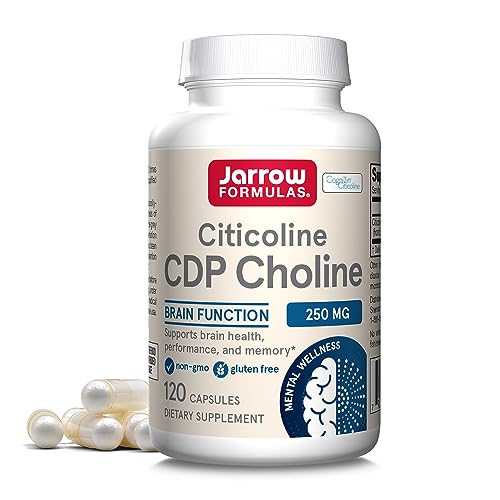
- Jarrow Formulas Cognizin CDP-Choline 250mgLab-tested / studied
capsules, 250 mg citicoline (Cognizin) per capsule, 60 capsules — The benchmark Cognizin-branded product; widely stocked, non-GMO, third-party tested; the go-to reference for price comparisons across the category. - NOW Foods CDP-Choline 300mg
capsules, 300 mg CDP-choline per vegetarian capsule, 60 capsules — 300mg per capsule at a competitive price; GMP-certified, non-GMO; consistently passes independent lab tests; ideal entry point for first-time buyers. - Nutricost Citicoline (CDP-Choline) 500mg
capsules, 500 mg citicoline per capsule, 60 capsules — High-dose option suited to experienced users; GMP-certified facility; budget-friendly; third-party tested; allows easy split-dose regimen at 250mg twice daily. - Double Wood Supplements Citicoline (CDP-Choline) 300mg
capsules, 300 mg CDP-choline per capsule, 60 capsules — Certificates of analysis available; US-manufactured; well-regarded in nootropics forums for consistent potency and transparent testing practices.
As an Amazon Associate we earn from qualifying purchases. Citicoline quality comes down to label accuracy and independent verification. Choose a product that states the exact milligrams of citicoline per serving rather than hiding it inside a proprietary blend, and prefer finished-product certification from NSF, USP or Informed Sport — Cognizin is the branded form named in most published trials, but an independently certified generic carries the same active molecule.

A Note on the Evidence
The research supporting citicoline for cognitive outcomes in healthy adults remains limited in scale and rigor; most robust clinical data comes from older adults or individuals with diagnosed neurological conditions [1], and findings from those populations should not be assumed to apply equally to healthy younger adults. Citicoline is sold as a dietary supplement and has not been evaluated or approved by the FDA to diagnose, treat, cure, or prevent any disease—speak with a qualified healthcare provider before starting citicoline, particularly if you take prescription medications, have an existing health condition, or are considering doses above 500 mg per day.
Frequently Asked Questions
What is the most common citicoline dosage for cognitive support?
Most general supplement protocols reference 250 to 500 mg per day for healthy adults seeking cognitive support. Clinical trials studying citicoline in people with Alzheimer’s disease have used higher doses of 1,000 to 2,000 mg per day [1], but those findings apply to a clinical population and do not directly translate to recommendations for healthy individuals.
Should I take citicoline with food or on an empty stomach?
Citicoline can be taken either way—absorption is not significantly affected by food intake. Taking it with a small meal may reduce the chance of mild gastric discomfort, which is the most commonly reported side effect, particularly at higher doses or in sensitive individuals.
How long does it take for citicoline to work?
Proposed membrane-supportive effects are thought to be cumulative, building over weeks of consistent supplementation rather than producing an immediate acute effect. Some users report noticing subtle changes in focus or mental clarity within one to two weeks, but expectations for rapid or dramatic effects are not well-supported by the current evidence base.
Is it safe to take citicoline every day?
Clinical trials have used daily citicoline supplementation over extended periods with an excellent tolerability profile at 250 to 500 mg per day [1]. Long-term safety data beyond the trial periods studied is more limited. As with any supplement taken continuously, periodic reassessment of whether you still need it and at what dose is sensible.
Can citicoline be stacked with other nootropics or supplements?
Citicoline is often combined with other compounds, but caution is warranted if you are stacking it with other cholinergic agents such as alpha-GPC, huperzine A, or any acetylcholinesterase inhibitor, since the combined cholinergic load increases the risk of side effects like headache or nausea. Research on combination effects in healthy adults, such as the pilot study examining CDP-choline alongside galantamine, highlights that these compounds act on overlapping pathways [2]. Discuss combinations with a healthcare provider.

Who should avoid citicoline?
People who are pregnant, breastfeeding, under 18, or who have significant liver or kidney conditions should avoid citicoline unless a physician has specifically recommended it, as these populations are not well-represented in the existing clinical literature. Individuals already taking prescription cholinergic medications should also consult their doctor before adding citicoline.
References
- Piamonte BLC et al. Effects of Citicoline as an Adjunct Treatment for Alzheimer's Disease: A Systematic Review. Journal of Alzheimer's disease : JAD (2020). PMID 32538854
- Choueiry J et al. CDP-choline and galantamine, a personalized α7 nicotinic acetylcholine receptor targeted treatment for the modulation of speech MMN indexed deviance detection in healthy volunteers: a pilot study. Psychopharmacology (2020). PMID 32851421
These statements have not been evaluated by the Food and Drug Administration. This information is not intended to diagnose, treat, cure, or prevent any disease. Content is for informational purposes only and is not medical advice; consult a qualified healthcare provider before starting any supplement. As an Amazon Associate we earn from qualifying purchases.
