Citicoline — chemically known as cytidine 5′-diphosphocholine, or CDP-choline — is a compound the body produces as part of normal phospholipid metabolism. It sits at a metabolic crossroads, acting as an intermediate in the pathway that builds phosphatidylcholine, a key structural component of every cell membrane in the body. Because the compound is produced endogenously, many people assume it must also arrive in meaningful quantities through food. The reality is more nuanced.
Discrete CDP-choline does appear in certain foods, almost exclusively animal-derived ones, but it represents only a small fraction of the total choline found in a typical diet. Most dietary choline travels in other chemical forms — phosphatidylcholine, glycerophosphocholine, sphingomyelin, and free choline — and the body interconverts these forms as needed.[2] Understanding where citicoline fits within the broader landscape of dietary choline helps set realistic expectations about what food can and cannot deliver, and why concentrated supplements exist as a separate category.
Key Takeaways
- Citicoline (CDP-choline) occurs naturally in food primarily as a transient metabolic intermediate, concentrated most in organ meats and egg yolks among commonly consumed foods.
- Most dietary choline arrives in forms other than CDP-choline (phosphatidylcholine, glycerophosphocholine, free choline), and food databases do not yet track CDP-choline separately with precision.
- Plant-based diets provide meaningful choline from soy, cruciferous vegetables, and legumes, but at lower concentrations and without meaningful CDP-choline as a distinct fraction.
- The doses studied in clinical research (250–500 mg/day of isolated citicoline) cannot be replicated through normal dietary intake; food and supplements occupy different categories.
- Overall choline adequacy from food is a realistic dietary goal; obtaining citicoline specifically at research-level doses requires a concentrated supplement.
What Citicoline Actually Is in a Biological Context
Citicoline is not a static nutrient that sits passively in food the way vitamin C does in an orange. It is a metabolic intermediate, a short-lived molecule that the body synthesizes, uses, and breaks down continuously. The CDP-choline pathway, sometimes called the Kennedy pathway, is the primary route through which cells manufacture phosphatidylcholine for membrane construction and repair.[1] In this pathway, choline is phosphorylated to phosphocholine, then combined with CTP (cytidine triphosphate) to form CDP-choline, and finally converted to phosphatidylcholine by the addition of diacylglycerol.
When citicoline is consumed — whether from food or a supplement — it is rapidly hydrolyzed in the gut into choline and cytidine. Choline enters the portal circulation and eventually reaches the brain, where it can be re-synthesized into CDP-choline. Cytidine converts in plasma to uridine, a pyrimidine nucleoside with its own neurological roles. This means that eating a food containing CDP-choline is, in metabolic terms, very similar to eating a food rich in choline plus a small amount of cytidine: both ultimately supply the same precursor pool. The distinction between food-derived citicoline and supplemental citicoline lies mainly in dose and concentration, not in the downstream biochemistry.
Animal Organs: The Most Concentrated Natural Sources
Among whole foods, organ meats contain the highest measurable concentrations of CDP-choline and choline-containing phospholipids in general. Liver — particularly beef liver and chicken liver — is routinely cited in nutrition literature as one of the most choline-dense foods available. Brain tissue, once a common dietary item in many cultures and still consumed in some cuisines, contains exceptionally high levels of CDP-choline relative to other tissues, which makes biological sense given the brain’s heavy reliance on phosphatidylcholine for membrane integrity and neurotransmitter synthesis.
Heart and kidney tissue also supply meaningful amounts of choline compounds, including some CDP-choline, though at lower concentrations than liver or brain. For practical dietary purposes, a 3-ounce (85-gram) serving of beef liver provides roughly 356 milligrams of total choline in all its forms combined — a figure that exceeds the Adequate Intake (AI) established by health authorities for most adults. However, the specific fraction existing as CDP-choline within that total is considerably smaller, as phosphatidylcholine dominates the choline profile of most animal tissues.
It is worth noting that organ meat consumption has declined substantially in many Western countries over the past several decades. This shift has prompted renewed interest in choline adequacy at the population level, since muscle meats — the dominant animal protein source in modern diets — contain significantly less choline than organ meats.
Eggs, Muscle Meats, and Fish
Eggs are widely regarded as the most practical everyday source of dietary choline. A large whole egg provides approximately 147 milligrams of total choline, with the vast majority concentrated in the yolk. The choline in eggs is present primarily as phosphatidylcholine and lesser amounts of lysophosphatidylcholine, sphingomyelin, glycerophosphocholine, and free choline. Like organ meats, eggs contain measurable but small amounts of CDP-choline as part of their overall phospholipid profile.
Muscle meats — beef, pork, chicken, and turkey — contribute moderate amounts of choline to the diet, typically in the range of 60–110 milligrams per 3-ounce cooked serving depending on the cut and species. Fish and shellfish are also notable sources. Cod, salmon, and shrimp rank among the better seafood options for choline intake. Certain shellfish, particularly clams and scallops, supply substantial choline alongside other nutrients such as vitamin B12 and zinc.
Across all these animal sources, the pattern is consistent: total choline is meaningful and well-documented in food composition databases, but citicoline as a distinct chemical entity represents only a minor portion of that total. No food composition database currently tracks CDP-choline separately from other choline forms with the granularity needed to give precise per-food figures.
Plant-Based Sources: Limited but Present
For those following vegetarian or vegan diets, the citicoline picture is considerably thinner. Plant foods contain choline primarily as phosphatidylcholine, free choline, and glycerophosphocholine, with organ-level concentrations simply not achievable from plant matter. Soybeans and soy-derived products (tofu, tempeh, edamame) are among the richest plant sources of choline, providing roughly 100–115 milligrams per cooked cup.
Cruciferous vegetables such as broccoli, Brussels sprouts, and cauliflower contribute moderate amounts of choline — in the 50–65 milligram range per cooked cup — and represent one of the better plant-based options. Certain legumes including kidney beans and lentils, as well as nuts such as peanuts, offer smaller but non-negligible contributions. Wheat germ is sometimes highlighted as a plant source, providing around 50–60 milligrams of total choline per ounce.
The critical caveat for plant-based eaters is bioavailability and form: plants simply do not synthesize CDP-choline in the way animal tissues do as part of active membrane turnover. Whether small amounts are present in plant cell membranes as a transient intermediate is a biochemical possibility, but this has not been characterized in food composition research to the degree that would allow meaningful dietary planning around it. Individuals relying exclusively on plant sources for choline should pay careful attention to overall intake levels.
Typical Dietary Intake vs. Supplement Doses
The Adequate Intake for choline (across all chemical forms) set by the U.S. National Academies is 425 milligrams per day for adult women and 550 milligrams per day for adult men. Surveys consistently show that a significant portion of the population falls short of these targets, with estimates suggesting that fewer than 10% of Americans meet the AI from diet alone. The gap widens substantially for those avoiding animal products.

Even for individuals who do meet or exceed the choline AI through food, the amount arriving specifically as CDP-choline is far below what clinical trials have explored with supplements. Supplemental citicoline is typically studied at doses of 250–500 milligrams per day as a standalone compound. To obtain 500 milligrams of CDP-choline from food alone would be essentially impossible under normal eating patterns, since the fraction of total dietary choline existing as CDP-choline in any food is a small minority of the whole.
This gap between dietary reality and experimental doses is not unique to citicoline; it reflects a broader pattern in nutritional research where the effects seen in trials with isolated compounds at concentrated doses cannot be directly extrapolated to what would be achieved by eating more choline-rich foods. Food delivers a matrix of interacting nutrients, but it cannot replicate the pharmacological concentration of a purified supplement.
Cooking, Storage, and Choline Stability
Choline compounds in food are generally stable under ordinary cooking conditions. Water-soluble choline can leach into cooking liquids — boiling vegetables or poaching eggs, for instance, transfers some choline to the water — so methods that retain cooking liquids (braising, steaming, stir-frying) tend to preserve more total choline than methods that discard them. High heat and prolonged cooking times have a modest degradative effect on some phospholipid-bound choline forms, though the losses are not dramatic by culinary standards.
For CDP-choline specifically, which exists in food as a transient metabolic intermediate rather than a stable storage form, freshness and minimal processing likely matter more than cooking method. Organ meats consumed relatively fresh and cooked gently would theoretically preserve more of the native phospholipid pool than the same organ meat that has been frozen, thawed, and extensively heat-processed. That said, practical quantitative data on CDP-choline losses during food preparation is not available in standard food science literature, and these distinctions are unlikely to matter significantly given how small the CDP-choline fraction is to begin with.
🛒 Where to Buy Citicoline
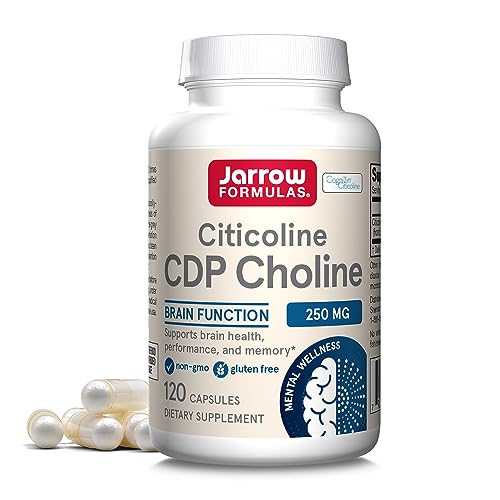
- Jarrow Formulas Cognizin CDP-Choline 250mgLab-tested / studied
capsules, 250 mg citicoline (Cognizin) per capsule, 60 capsules — The benchmark Cognizin-branded product; widely stocked, non-GMO, third-party tested; the go-to reference for price comparisons across the category. - NOW Foods CDP-Choline 300mg
capsules, 300 mg CDP-choline per vegetarian capsule, 60 capsules — 300mg per capsule at a competitive price; GMP-certified, non-GMO; consistently passes independent lab tests; ideal entry point for first-time buyers. - Nutricost Citicoline (CDP-Choline) 500mg
capsules, 500 mg citicoline per capsule, 60 capsules — High-dose option suited to experienced users; GMP-certified facility; budget-friendly; third-party tested; allows easy split-dose regimen at 250mg twice daily. - Double Wood Supplements Citicoline (CDP-Choline) 300mg
capsules, 300 mg CDP-choline per capsule, 60 capsules — Certificates of analysis available; US-manufactured; well-regarded in nootropics forums for consistent potency and transparent testing practices.
As an Amazon Associate we earn from qualifying purchases. Citicoline quality comes down to label accuracy and independent verification. Choose a product that states the exact milligrams of citicoline per serving rather than hiding it inside a proprietary blend, and prefer finished-product certification from NSF, USP or Informed Sport — Cognizin is the branded form named in most published trials, but an independently certified generic carries the same active molecule.
A Note on the Evidence
The evidence base for citicoline supplements, while promising in certain areas, largely consists of small or preliminary trials, and no food source can replicate supplemental doses; individuals with conditions affecting choline metabolism, those on medications that interact with cholinergic pathways, pregnant or breastfeeding individuals, and anyone with a specific health concern should consult a qualified healthcare provider before making significant changes to diet or adding any supplement.

Frequently Asked Questions
Which single food has the most citicoline?
Brain tissue — historically from beef, pork, or lamb — contains the highest concentration of phospholipids including CDP-choline of any commonly consumed food, followed closely by liver. However, brain is rarely eaten in modern Western diets, and precise CDP-choline figures for any food are not available in standard nutrition databases. Liver is the most practical everyday option.
Can I get enough citicoline from eggs alone?
Eggs are an excellent source of total choline and are a practical daily food, but they cannot supply citicoline in the quantities used in research settings. A large egg provides roughly 147 mg of total choline across all forms; the CDP-choline fraction is a small subset of that. For most people, eggs meaningfully support overall choline status rather than delivering citicoline specifically.
Is the citicoline in food the same molecule as in supplements?
Yes, the chemical compound is identical — cytidine 5′-diphosphocholine. However, in food it exists as a minor intermediate within a complex phospholipid matrix and in very small amounts, while supplements deliver it as a concentrated, purified compound. Both forms are broken down into choline and cytidine upon absorption.
Do vegan diets lack citicoline entirely?
Plant foods contain choline in various forms, but the specific concentration of CDP-choline in plant matter is not well characterized and is likely very small. Vegans are not necessarily deficient in the downstream effects of the choline pathway, but they may find overall choline intake harder to optimize and would be furthest from obtaining meaningful dietary CDP-choline without a supplement.
Does cooking destroy citicoline in food?
Choline compounds are relatively heat-stable, though water-soluble forms can leach into cooking liquid. CDP-choline as a metabolic intermediate is not a shelf-stable storage molecule in the same way that vitamins are, so very fresh, minimally processed organ meats likely preserve the broadest phospholipid profile. However, since the CDP-choline fraction in food is small regardless, cooking method is unlikely to be a practically significant variable.
Why do people take citicoline supplements if it is found in food?
The doses explored in clinical research — typically 250–500 mg per day of isolated citicoline — are not achievable through diet. Supplementation is used to deliver a specific, concentrated dose of the compound to investigate effects on cognition, memory, and neurological function. Eating choline-rich foods supports general choline status and phospholipid metabolism, but it operates on a fundamentally different scale.
References
- Phosphatidylcholine and the CDP-choline cycle. Biochimica et Biophysica Acta (2013). PMID 23010477
- Choline supplements: An update. Frontiers in Endocrinology (2023). PMID 36950691
These statements have not been evaluated by the Food and Drug Administration. This information is not intended to diagnose, treat, cure, or prevent any disease. Content is for informational purposes only and is not medical advice; consult a qualified healthcare provider before starting any supplement. As an Amazon Associate we earn from qualifying purchases.
