Citicoline, also called CDP-choline or cytidine 5′-diphosphocholine, is a naturally occurring compound found in every cell of the human body. It sits at a metabolic crossroads: once ingested, the body breaks it down into choline and cytidine, two building blocks that feed separate but intersecting pathways involved in brain signaling and neuronal membrane structure.
Interest in citicoline as a dietary supplement has grown steadily over the past two decades, driven by research into cognitive aging, attention, and neurological recovery. It is sold over the counter in many countries and is sometimes marketed as a nootropic. This guide explains what citicoline is, how researchers think it works, what the clinical evidence actually says, and what limitations honest consumers should keep in mind.
Key Takeaways
- Citicoline is metabolized into choline and cytidine, supplying precursors for acetylcholine synthesis and neuronal membrane phospholipids via two separate but complementary pathways.
- Proposed mechanisms include supporting cholinergic neurotransmission, maintaining membrane integrity, and potentially influencing dopaminergic signaling — though human mechanistic confirmation at standard doses is limited.
- Clinical trials at 250–500 mg/day report a good tolerability profile; mild GI discomfort or headache are the most commonly noted side effects.
- Evidence is most consistent in older adults with memory concerns; research in healthy younger adults is mixed and the practical significance of observed effects is unclear.
- Citicoline is not FDA-approved to treat any condition and should be regarded as a supplement with promising but still-developing evidence, not a proven medical intervention.
The Chemistry: What Citicoline Actually Is
CDP-choline is an intermediate in the Kennedy pathway, the biochemical route cells use to build phosphatidylcholine — one of the most abundant phospholipids in neuronal membranes.[1] When you swallow a citicoline supplement, intestinal phosphatases cleave it into choline and cytidine before absorption, and a radiolabelled tracer study in healthy adults found that oral absorption is virtually complete.[2] What reaches the circulation in people, however, is not what the rodent literature predicts. When plasma is sampled repeatedly over twelve hours after oral doses of 500 to 4,000 mg, choline and uridine both rise in a dose-related way while cytidine stays below the limit of reliable detection, so the circulating substrates that reach the human brain are choline and uridine rather than choline and cytidine.[3]
Choline is a precursor to acetylcholine, the neurotransmitter most closely associated with memory consolidation and attention. It is also re-incorporated into phosphatidylcholine, which gives neuronal cell membranes their structural integrity and fluidity. The cytidine released from citicoline is converted to uridine, and in humans that conversion is largely complete before the nucleoside reaches the bloodstream, so uridine is the form that enters the brain, participates in phospholipid synthesis and may influence synaptic plasticity.[3] The combination means a single citicoline molecule feeds two distinct and complementary processes simultaneously.
Proposed Mechanisms of Action
Researchers have proposed several mechanisms by which citicoline might influence brain function. First, by supplying choline, it supports the synthesis of acetylcholine, which is central to cholinergic neurotransmission. Reduced cholinergic tone is a hallmark of normal cognitive aging and is more pronounced in conditions like Alzheimer’s disease, which is partly why choline precursors have attracted research attention.
Second, the phosphatidylcholine produced via citicoline’s choline arm is a critical structural component of neuronal membranes. Adequate membrane phospholipid levels are thought to support repair after injury and may slow age-related membrane degradation. Third, animal and some human research suggests citicoline may upregulate dopamine receptor density in the striatum and enhance choline acetyltransferase activity — the enzyme that assembles acetylcholine from choline and acetyl-CoA.[1] These dopaminergic effects have made citicoline of interest in research on attention and motivation, though mechanistic work in humans remains limited.
It is important to note that while these mechanisms are biologically plausible and supported by preclinical data, demonstrating the same effects at standard supplement doses in healthy humans is a higher bar that research is still working to clear. A critical review of citicoline’s clinical pharmacology goes further, concluding that there is at present no adequate description of the mechanism or mechanisms behind its pharmacological actions.[4]
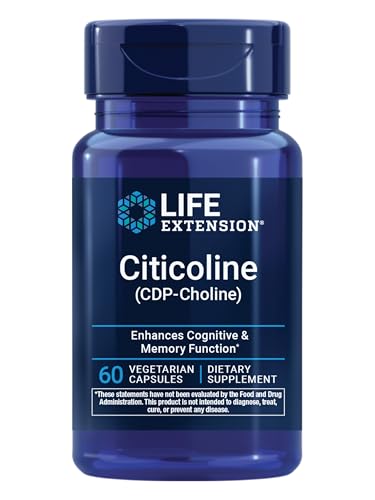

What Clinical Research Has Explored
Clinical investigation of citicoline has spanned several decades and focused on three main areas: cognitive aging and memory, attention and executive function in younger adults, and neurological recovery after brain injury or stroke. The compound has an unusually long research history for a dietary supplement, with early pharmaceutical-grade studies conducted in Europe and Japan where it was used as a prescription medicine.
In studies examining older adults experiencing age-associated memory impairment, citicoline has generally been associated with modest improvements on memory and attention tasks compared to placebo. Doses in these trials have typically ranged from 250 mg to 1,000 mg per day, with study durations from a few weeks to several months. Results are promising but inconsistent across trials, and many studies are small or have methodological limitations that make firm conclusions difficult. The most formal synthesis available, a Cochrane review of fourteen double-blind placebo-controlled trials, found evidence of benefit on memory and behaviour but no evidence of benefit on attention, and described the included trials as heterogeneous in dose, administration, inclusion criteria and outcome measures.[5] One reason age keeps appearing as a variable is that the brain’s handling of a single oral dose appears to differ with it: in a proton magnetic resonance spectroscopy study, brain choline rose about 18 percent in younger subjects after dosing but fell by roughly 6 percent in older ones, which the authors read as greater incorporation of choline into membrane phosphatidylcholine in the older group.[6]
Research in younger, healthy adults is more limited. Some trials have explored whether citicoline influences sustained attention, working memory speed, or motor speed in non-impaired populations. Findings have been mixed, and the practical significance of any observed differences remains debated. Two controlled trials are cited most often: a 28-day trial of 250 or 500 mg in 75 healthy adolescent males reported improved attention and psychomotor speed against placebo,[7] and a 12-week trial of 500 mg per day in 100 healthy adults aged 50 to 85 with age-associated memory impairment reported greater improvement in episodic and composite memory, both of which were secondary rather than primary outcomes.[8] No citation-free claim can responsibly state that citicoline definitively improves cognition in healthy young people.
Dosage and Safety Profile
Clinical trials have most commonly used doses between 250 mg and 500 mg per day, often taken as a single dose in the morning. Some neurological studies, particularly those involving stroke recovery, have used higher doses — up to 2,000 mg per day — but these were conducted under medical supervision and are not representative of typical over-the-counter supplement use. The phase III trial that used 1,000 mg twice daily in 899 acute ischemic stroke patients found citicoline safe but no different from placebo on its planned primary endpoint.[9]
Citicoline has a well-documented tolerability profile. Adverse events in clinical trials at standard doses are infrequent and typically mild.[8] The most commonly reported side effects are transient gastrointestinal discomfort — including nausea or stomach upset — and occasional headache, particularly in individuals who may be sensitive to cholinergic stimulation. Excess choline activity can, in theory, produce symptoms like nausea, diarrhea, or a lowered heart rate, though these effects are not commonly reported at doses in the 250–500 mg range.
No serious safety signals have emerged from the clinical trial literature at standard supplement doses. However, long-term safety data from large, well-controlled trials are not available for the general population, and citicoline has not been approved by the FDA to diagnose, treat, cure, or prevent any disease. The largest formal harms synthesis available, a Cochrane review pooling ten randomised trials and 4,281 participants in acute ischemic stroke, judged every included trial to be at high risk of bias and concluded that adverse events were poorly reported and that harms may have been underestimated.[10] People with underlying health conditions or those taking medications affecting cholinergic or dopaminergic systems should discuss supplementation with a healthcare provider before starting.
Citicoline vs. Other Choline Sources
The supplement market contains several forms of choline: choline bitartrate, alpha-GPC (alpha-glycerophosphocholine), and citicoline are the most common. They differ in how efficiently they raise brain choline levels and in what additional compounds they deliver alongside choline.


Alpha-GPC is sometimes described as the most bioavailable choline precursor for raising acetylcholine in the brain. Citicoline is distinguished by also delivering cytidine (and therefore uridine), which some researchers argue provides additive benefits through the phospholipid synthesis pathway. Choline bitartrate is the lower-cost option but is also considered the least efficient at raising brain choline levels. Whether these differences translate into meaningfully different cognitive outcomes at real-world doses is not definitively established by the current body of human research.
Dietary choline from whole foods — eggs, liver, fish, and legumes — remains an important baseline, and many people do not meet the adequate intake established by nutrition authorities. An analysis of NHANES 2009 to 2014 found that only about 8 percent of US adults reach the Adequate Intake for choline from food alone.[11] Supplementing with any choline form should be considered in the context of overall dietary intake.
Honest Limitations of the Evidence
It would be misleading to present the citicoline literature as settled science. A significant portion of supportive research comes from studies that are small, of short duration, or conducted in populations with existing cognitive impairment — findings from these groups do not automatically apply to healthy adults. Publication bias, where positive results are more likely to be published than null results, is a concern across the nootropic supplement literature.
Mechanistic research in cell and animal models, while valuable for generating hypotheses, frequently does not replicate cleanly in human trials at doses achievable through supplementation. The proposed mechanisms involving dopamine receptor upregulation and choline acetyltransferase enhancement, for example, are well-supported in preclinical work but have not been directly confirmed by neuroimaging or enzyme assay studies in human supplement users at standard doses.[4]
Consumers should approach marketing language claiming citicoline ‘boosts’ cognition, ‘protects’ the brain, or ‘reverses’ mental decline with appropriate skepticism. The honest summary is that citicoline is a well-tolerated compound with plausible mechanisms and a body of suggestive evidence, not a proven cognitive enhancer with guaranteed effects.
🛒 Where to Buy Citicoline
- Jarrow Formulas Cognizin CDP-Choline 250mgLab-tested / studied
capsules, 250 mg citicoline (Cognizin) per capsule, 60 capsules — The benchmark Cognizin-branded product; widely stocked, non-GMO, third-party tested; the go-to reference for price comparisons across the category. - NOW Foods CDP-Choline 300mg
capsules, 300 mg CDP-choline per vegetarian capsule, 60 capsules — 300mg per capsule at a competitive price; GMP-certified, non-GMO; consistently passes independent lab tests; ideal entry point for first-time buyers. - Nutricost Citicoline (CDP-Choline) 500mg
capsules, 500 mg citicoline per capsule, 60 capsules — High-dose option suited to experienced users; GMP-certified facility; budget-friendly; third-party tested; allows easy split-dose regimen at 250mg twice daily. - Double Wood Supplements Citicoline (CDP-Choline) 300mg
capsules, 300 mg CDP-choline per capsule, 60 capsules — Certificates of analysis available; US-manufactured; well-regarded in nootropics forums for consistent potency and transparent testing practices.
As an Amazon Associate we earn from qualifying purchases. Citicoline quality comes down to label accuracy and independent verification. Choose a product that states the exact milligrams of citicoline per serving rather than hiding it inside a proprietary blend, and prefer finished-product certification from NSF, USP or Informed Sport — Cognizin is the branded form named in most published trials, but an independently certified generic carries the same active molecule.
A Note on the Evidence
The citicoline research base, while broader than many supplements, still includes many small or short-duration trials, and evidence in healthy adults is less consistent than in populations with existing cognitive concerns. Individuals who are pregnant, breastfeeding, taking medications that affect cholinergic or dopaminergic neurotransmission, or managing any neurological or psychiatric condition should consult a physician before using citicoline. This article is informational only and does not constitute medical advice.


Frequently Asked Questions
What does citicoline do in the body?
After ingestion, citicoline is cleaved into choline and cytidine. Choline is used to synthesize acetylcholine and to build phosphatidylcholine, a structural phospholipid in neuronal membranes. Cytidine is converted to uridine, and in humans that conversion is largely complete before the nucleoside reaches the bloodstream, so uridine is the form that contributes to phospholipid synthesis in the brain and may play a role in synaptic function.
Is citicoline the same as CDP-choline?
Yes. Citicoline and CDP-choline are two names for the same compound, cytidine 5′-diphosphocholine. The name citicoline is more commonly used in supplement marketing, while CDP-choline appears more frequently in clinical and pharmaceutical literature.
What is the typical dosage used in research?
Most human trials examining cognitive effects have used doses between 250 mg and 500 mg per day, often taken as a single morning dose. Higher doses up to 2,000 mg per day have been studied in medical contexts such as stroke recovery, but those studies were conducted under clinical supervision and are not representative of standard supplement use.
Are there side effects from taking citicoline?
Clinical trials at standard doses report citicoline is generally well tolerated. The most commonly noted adverse effects are mild gastrointestinal discomfort, such as nausea or stomach upset, and occasional headache, particularly in people sensitive to cholinergic stimulation. Serious adverse events have not been a feature of the published trial literature at supplement-range doses.
How is citicoline different from alpha-GPC?
Both are choline-containing supplements, but they differ in structure and what else they deliver. Alpha-GPC is considered highly efficient at raising brain choline levels. Citicoline additionally provides cytidine, which becomes uridine in the body and may contribute to membrane phospholipid synthesis independently of the choline arm. Whether this translates into meaningfully different outcomes in healthy people has not been definitively established.
Can citicoline treat or prevent Alzheimer's disease?
No. Citicoline is a dietary supplement and has not been approved by the FDA to diagnose, treat, cure, or prevent Alzheimer’s disease or any other condition. Some research has examined it in the context of cognitive aging and memory impairment, and results have been mixed. Anyone concerned about cognitive decline should consult a qualified healthcare provider rather than relying on supplementation.
References
- Secades JJ, Lorenzo JL. Citicoline: pharmacological and clinical review, 2006 update. Methods Find Exp Clin Pharmacol (2006). PMID 17171187
- Dinsdale JR, Griffiths GK, Rowlands C, et al. Pharmacokinetics of 14C CDP-choline. Arzneimittelforschung (1983). PMID 6412727
- Wurtman RJ, Regan M, Ulus I, Yu L. Effect of oral CDP-choline on plasma choline and uridine levels in humans. Biochem Pharmacol (2000). PMID 10974208
- Grieb P. Neuroprotective properties of citicoline: facts, doubts and unresolved issues. CNS Drugs (2014). PMID 24504829
- Fioravanti M, Yanagi M. Cytidinediphosphocholine (CDP-choline) for cognitive and behavioural disturbances associated with chronic cerebral disorders in the elderly. Cochrane Database Syst Rev (2005). PMID 15846601
- Babb SM, Appelmans KE, Renshaw PF, Wurtman RJ, Cohen BM. Differential effect of CDP-choline on brain cytosolic choline levels in younger and older subjects as measured by proton magnetic resonance spectroscopy. Psychopharmacology (Berl) (1996). PMID 8888372
- McGlade E, Agoston AM, DiMuzio J, et al. The Effect of Citicoline Supplementation on Motor Speed and Attention in Adolescent Males. J Atten Disord (2019). PMID 26179181
- Nakazaki E, Mah E, Sanoshy K, Citrolo D, Watanabe F. Citicoline and Memory Function in Healthy Older Adults: A Randomized, Double-Blind, Placebo-Controlled Clinical Trial. J Nutr (2021). PMID 33978188
- Clark WM, Wechsler LR, Sabounjian LA, Schwiderski UE. A phase III randomized efficacy trial of 2000 mg citicoline in acute ischemic stroke patients. Neurology (2001). PMID 11706098
- Martí-Carvajal AJ, Valli C, Martí-Amarista CE, et al. Citicoline for treating people with acute ischemic stroke. Cochrane Database Syst Rev (2020). PMID 32860632
- Wallace TC, Fulgoni VL. Usual Choline Intakes Are Associated with Egg and Protein Food Consumption in the United States. Nutrients (2017). PMID 28783055
These statements have not been evaluated by the Food and Drug Administration. This information is not intended to diagnose, treat, cure, or prevent any disease. Content is for informational purposes only and is not medical advice; consult a qualified healthcare provider before starting any supplement. As an Amazon Associate we earn from qualifying purchases.
