There is exactly one placebo-controlled trial of citicoline in people with methamphetamine dependence, and its result is easy to misreport in either direction. It found a real, statistically significant effect. That effect was not on methamphetamine use.
Nothing here is medical advice. Citicoline is not approved by the FDA to diagnose, treat, cure, or prevent methamphetamine dependence, depression, or any other condition. Methamphetamine dependence and depression both require professional treatment.
Key Takeaways
- Sixty adults with bipolar depression or major depressive disorder and methamphetamine dependence were randomized to citicoline 2000 mg/day or placebo for 12 weeks[1]
- Depression scores on the clinician-rated IDS improved significantly more on citicoline than placebo in the intent-to-treat analysis[1]
- Methamphetamine use did not differ between groups, and neither did memory[1]
- Participants on citicoline stayed in the study significantly longer and completed it at a significantly higher rate[1]
- The authors describe this as the first placebo-controlled trial in a dual-diagnosis methamphetamine sample, and list sample heterogeneity and small size as limitations[1]
- A 2026 systematic review of citicoline in mental disorders concluded the overall evidence is heterogeneous and does not support it as an effective cognitive enhancer, positioning it as investigational[2]
Why this trial was built the way it was
Mood disorders and stimulant use disorders travel together. Bipolar disorder in particular carries the highest rates of substance use of any psychiatric diagnosis, which means a very large share of patients need both problems addressed at once and most trials study only one[3].
The same research group had already reported that citicoline reduced cocaine-positive urine tests in patients with a history of mania[3], so extending the question to methamphetamine and to unipolar as well as bipolar depression was a reasonable next step.
What the trial did
Sixty adults meeting criteria for bipolar depression or major depressive disorder, with concurrent methamphetamine dependence, were randomized to citicoline at 2000 mg per day or placebo for twelve weeks[1]. Mood was rated with the clinician-administered Inventory of Depressive Symptomatology, cognition with the Hopkins Auditory Verbal Learning Test, and drug use with urine screens.
Two design points deserve credit. It was double-blind and placebo-controlled, which a great deal of supplement research in this space is not. And it recruited a dual-diagnosis population that trials usually exclude precisely because they are hard to study.
The result: mood moved, drug use did not
An intent-to-treat analysis of covariance showed that participants receiving citicoline, 28 of them, had a statistically significantly greater improvement in depression scores than the 20 receiving placebo[1].

No significant differences were observed in memory or in methamphetamine use[1].
That combination is the whole story of this trial. A supplement chosen for its membrane and cholinergic effects, tested in a population defined by stimulant use, moved the mood outcome and left the drug outcome untouched. The authors’ own conclusion is that citicoline may have antidepressant properties in this population, and that larger trials targeting depressive symptoms and treatment retention seem warranted[1].
The retention finding is more interesting than it looks
Survival in the study was significantly longer with citicoline than with placebo, and completion rates were significantly greater[1]. In most trials that would be a footnote. Here it is not.
Attrition is a defining problem in stimulant use disorder research and in stimulant use disorder treatment. People stop showing up. Any intervention that keeps someone engaged with a clinic for twelve weeks instead of six has created the conditions under which every other treatment can work, whether or not it directly changes drug use.
The obvious mechanistic explanation is not mysterious either: people whose depression is improving are more likely to keep attending. That reading makes the retention finding a consequence of the mood finding rather than an independent effect, and the trial cannot distinguish between the two.
Where this contradicts the cocaine trials
This is the part most summaries skip. The 2015 Am J Psychiatry trial, which is larger at 130 patients, found significantly reduced cocaine use and explicitly reported no between-group differences in mood symptoms[4]. The 2007 trial found the same thing: reduced cocaine-positive urine tests, no mood difference[3].
So across three trials from overlapping research groups in overlapping populations, citicoline reduced stimulant use twice without touching mood, and improved mood once without touching stimulant use. Those results are not compatible with a single clean story about what the compound does.
Three explanations are plausible and the published record does not choose between them. The drugs differ, and cocaine and methamphetamine have different pharmacology and different withdrawal courses. The doses differ, at 2000 mg here against lower doses elsewhere. Or some of these findings are chance, which is exactly what small proof-of-concept trials are prone to producing. Our page on citicoline and mood covers the wider depression literature that this sits inside.
What a 2026 review made of all of it
A systematic review published in 2026 examined controlled trials of citicoline and phosphatidylserine on cognition in people with mental disorders, covering eleven studies, ten of them randomized, across ADHD, mood disorders, alcohol and substance use disorders, and schizophrenia[2].
Its verdict on the substance use and mood categories was that results were mixed, with two studies showing selective benefits and the others showing none. Overall the review found the evidence heterogeneous and inconsistent, judged the risk of bias high, and concluded that these compounds should be positioned as adjunctive or investigational rather than evidence-based treatments[2].
That is the appropriate frame for the trial described above. It is real evidence. It is not settled evidence.
What this means outside a trial
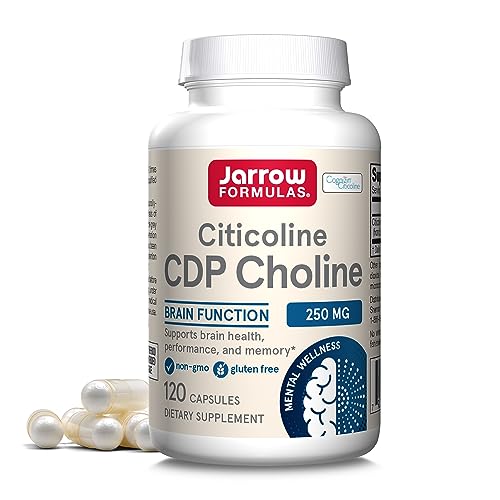
The dose used was 2000 mg per day, four times a standard capsule, given to people already receiving psychiatric care. That is not a regimen to reproduce from an article, and our dosage guide explains why the commonly sold amounts are what they are. Citicoline also has documented interaction considerations that matter more, not less, when someone is already taking psychiatric medication.
Most importantly: nobody in this trial replaced their treatment with a supplement. Citicoline was added on top. If depression and stimulant use are both in play, that combination needs a clinician, and it needs one regardless of what any supplement does.
Frequently Asked Questions
Does citicoline reduce methamphetamine use?
Not in the only trial that tested it. Sixty adults with bipolar or unipolar depression and methamphetamine dependence received citicoline 2000 mg daily or placebo for twelve weeks, and no significant difference in methamphetamine use was observed.

What did improve?
Depression ratings on the clinician-rated Inventory of Depressive Symptomatology improved significantly more on citicoline than on placebo, and participants on citicoline stayed in the study significantly longer with higher completion rates.
Why does staying in the study matter?
Dropout is one of the largest practical problems in treating substance use disorders. A treatment that keeps people engaged is doing something useful even if it does not change the drug use itself, because engagement is what makes any other treatment possible.
What dose was used?
2000 mg per day, which is four times a standard 500 mg capsule. It was given as add-on therapy to people already under psychiatric care, not as a self-directed supplement.
Does this trial agree with the cocaine research?
Only partly, and the disagreement is about mood. This trial found a significant antidepressant advantage. The two larger cocaine trials in patients with bipolar disorder found no between-group difference in mood at all. That inconsistency is unresolved.
Is this enough evidence to try citicoline for methamphetamine use?
No. It is a single proof-of-concept trial with sixty participants, acknowledged sample heterogeneity, and no replication. The authors themselves called for larger trials. Methamphetamine dependence requires professional treatment.
References
- Brown ES, Gorman AR. A randomized, double-blind, placebo-controlled trial of citicoline for bipolar and unipolar depression and methamphetamine dependence. J Affect Disord (2012). PMID 22974472
- Kucuksahin NG, et al. The Impact of Citicoline/Phosphatidylserine Supplementation on Cognitive Performance and Executive Functions in Mental Disorders: A Systematic Review of Controlled Trials. Hum Psychopharmacol (2026). PMID 42538853
- Brown ES, et al. A randomized, placebo-controlled trial of citicoline add-on therapy in outpatients with bipolar disorder and cocaine dependence. J Clin Psychopharmacol (2007). PMID 17873684
- Brown ES, et al. A Randomized, Double-Blind, Placebo-Controlled Trial of Citicoline for Cocaine Dependence in Bipolar I Disorder. Am J Psychiatry (2015). PMID 25998279
These statements have not been evaluated by the FDA. This product is not intended to diagnose, treat, cure, or prevent any disease. This article is for informational purposes only and is not a substitute for professional medical advice. As an Amazon Associate we earn from qualifying purchases.
These statements have not been evaluated by the Food and Drug Administration. This information is not intended to diagnose, treat, cure, or prevent any disease. Content is for informational purposes only and is not medical advice; consult a qualified healthcare provider before starting any supplement. As an Amazon Associate we earn from qualifying purchases.
