Adding citicoline to a prescription dementia drug is one of the few citicoline questions with real patient numbers behind it. Two studies, run in Italian memory clinics, tested exactly that: citicoline on top of a cholinesterase inhibitor such as donepezil, and citicoline on top of memantine. Together they cover 574 patients, which is a larger evidence base than most citicoline indications have. The design of those studies is where the caution lives.
Nothing here constitutes medical advice. Citicoline has not been approved by the FDA to diagnose, treat, cure, or prevent Alzheimer disease, dementia, or any other condition. Donepezil, rivastigmine, galantamine, and memantine are prescription medications, and nothing should be added to them without the prescribing clinician deciding so.
Key Takeaways
- The larger study, Citicholinage, followed 448 patients aged 65 and over with Alzheimer disease across seven Italian centers, comparing a cholinesterase inhibitor alone against the same drug plus 1,000 mg/day oral citicoline [1].
- The second study, CITIMEM, followed 126 patients on memantine alone versus memantine plus 1,000 mg/day citicoline, and reported a significant between-group difference in cognitive score at both 6 and 12 months [2].
- Both studies were retrospective, not randomized. Patients were not assigned to combination therapy by chance [1][2].
- The reported cognitive changes are small in absolute terms, roughly 0.7 to 1.1 points on a 30-point scale [1][2].
- All of this work shares overlapping authorship from one Italian research group [1][2][3][4], and has not been independently replicated.
- A review by that same group acknowledges that some studies found no evidence of efficacy for citicoline at all [4].
The Rationale Behind Combining Them
The pharmacological argument is specific rather than vague, which is worth crediting. Cholinesterase inhibitors work by blocking the breakdown of acetylcholine already present in the synapse. They do not create more of it. If the underlying limitation is a shortage of the raw material for acetylcholine synthesis, then blocking degradation has a ceiling.
Citicoline is a choline donor. Supplying a precursor while simultaneously slowing breakdown is a coherent two-sided strategy, and the researchers state it plainly: when a cholinergic precursor is co-administered with a cholinesterase inhibitor, intrasynaptic acetylcholine can rise more than with either drug alone [1]. Memantine works differently, as an NMDA receptor antagonist, so pairing it with citicoline is a case for complementary mechanisms rather than a shared one [2].
What the Citicholinage Study Did
Citicholinage, published in the Journal of Alzheimer’s Disease in 2017, was a retrospective multicentric case-control study across seven Italian centers for cognitive impairment and dementia. It covered 448 consecutive patients aged 65 or older with Alzheimer disease: 197 treated with a cholinesterase inhibitor alone and 251 treated with a cholinesterase inhibitor plus 1,000 mg/day of oral citicoline [1].
Cognition was assessed with the Mini-Mental State Examination, alongside daily living scales, a neuropsychiatric inventory, a comorbidity index, and a depression scale, at baseline, three months, and nine months [1].

The reported result is that patients on the combination showed a statistically significant increase in MMSE from baseline to three months, from 16.88 to 17.62, and again from three to nine months, from 17.62 to 17.89 [1].
Read that carefully, because it describes change within the combination group over time. In a progressive disease where the untreated expectation is decline, a group that holds steady or edges upward is a meaningful observation. But a within-group improvement is a weaker form of evidence than a between-group difference, and the total movement is about one point on a 30-point scale across nine months.
What the CITIMEM Study Did
CITIMEM, published in Archives of Gerontology and Geriatrics in 2020, applied the same approach to memantine. It was retrospective, covering 126 patients aged 65 or older with Alzheimer disease or mixed dementia, mean age 80.7 years, drawn from four Italian dementia centers. Fifty-eight received memantine alone at 10 to 20 mg/day; 68 received memantine plus 1,000 mg/day oral citicoline. Mixed dementia accounted for 24 patients in the memantine group and 29 in the combination group [2].
Combination patients went from an MMSE of 16.6 at baseline to 17.4 at six months and 17.7 at twelve months. The difference between the two groups was reported as significant at both six months and twelve months [2]. A 2021 commentary from the same authors restated those findings and concluded that combined memantine plus citicoline is safe and more effective than memantine alone on cognition in Alzheimer disease and mixed dementia [3].
CITIMEM does report a between-group comparison, which makes it the stronger of the two designs on that axis, even though it is the smaller study.
The Three Limitations That Matter Most
Retrospective allocation. This is the central issue. In both studies, researchers looked back at patients whose treatment had already been chosen by their clinicians. Nobody was randomized. If Italian geriatricians were more inclined to add citicoline for patients who were doing relatively well, were more engaged, had fewer comorbidities, or had more attentive caregivers, then the combination group was healthier before citicoline entered the picture. That is channeling bias, and no statistical adjustment removes it. A randomized trial is what would settle this, and it has not been run.

Effect size. The MMSE runs from 0 to 30. The changes reported are roughly 0.7 to 1.1 points over 9 to 12 months. Discussions of what counts as a clinically meaningful MMSE change typically place the threshold somewhat higher than that, and a difference under a point is within the range where test-retest variation, time of day, and rater differences contribute. A statistically significant result in a few hundred patients can still be small enough that no family would notice it.
Single research group. All four references here share authors, principally Gareri, Cotroneo, and Putignano [1][2][3][4]. Consistent findings from one team in one country, on a compound marketed as a prescription drug in that country, is not the same as independent replication. To their credit, the group’s own 2015 review states directly that some studies did not point to any evidence of efficacy for citicoline, and calls for large clinical trials to confirm its benefits [4].
The Safety Signal Is the More Solid Part
Efficacy and tolerability are separate questions, and the tolerability finding here is the more dependable one. Across 574 patients on combination regimens, the studies reported the combinations as safe, and the CITIMEM commentary states the combined administration is safe and more effective than memantine alone on cognition [2][3]. Retrospective designs are weak for detecting benefit but reasonably informative about obvious harm, since serious adverse events tend to appear in the records regardless of how patients were selected.
That still is not a green light to self-add. Elderly patients on dementia medication are typically on several other drugs, cholinesterase inhibitors carry their own cholinergic side effect burden including bradycardia and gastrointestinal effects, and adding a choline donor to a cholinergic drug is a pharmacologically active decision rather than a nutritional one. The dose used in both studies was 1,000 mg/day, at the upper end of typical supplement dosing.
How to Weigh This
If someone is asking whether there is any evidence for adding citicoline to a dementia drug, the honest answer is yes, more than for most citicoline uses, and it is consistently positive, and it is not strong enough to act on independently. Two retrospective studies from one group showing sub-point MMSE differences is the kind of finding that justifies a randomized trial, not the kind that justifies a purchase.
The realistic path is to bring these two studies to the prescribing clinician. They are specific, citable, and use a defined dose. A geriatrician can weigh them against the patient’s other medications in a way that no article can. Citicoline is available over the counter in the United States, which makes it easy to add without telling anyone, and that is precisely the reason to tell someone.
Frequently Asked Questions
Can you take citicoline with donepezil?
A retrospective study of 448 patients with Alzheimer disease compared a cholinesterase inhibitor alone against the same drug plus 1,000 mg/day citicoline and reported the combination as safe with a small cognitive improvement over nine months [1]. It was not randomized, and the decision belongs to the prescribing clinician.
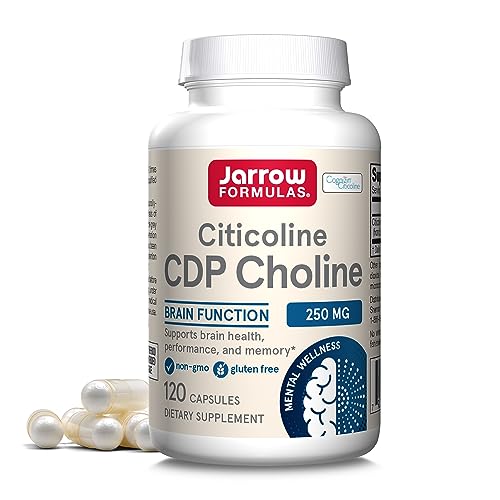
Can you take citicoline with memantine?
The CITIMEM study compared memantine alone against memantine plus 1,000 mg/day citicoline in 126 patients and reported a significant between-group difference in MMSE at both 6 and 12 months, with the combination described as safe [2][3]. It was also retrospective rather than randomized.
How much did cognition actually improve?
The reported MMSE changes are roughly 0.7 to 1.1 points on a 30-point scale over 9 to 12 months [1][2]. In a progressive disease, stability itself is meaningful, but a change under a point is small enough that a family would be unlikely to notice it directly.
Why does it matter that the studies were retrospective?
Because patients were not randomly assigned. Clinicians chose who received citicoline, so the combination group may have differed systematically before treatment, for example by being less impaired or better supported. That is channeling bias, and only a randomized trial removes it. None has been published for these combinations.
What dose was used in these studies?
Both used 1,000 mg per day of oral citicoline alongside the prescription drug [1][2]. That sits at the upper end of common supplement dosing, and it is a pharmacologically active addition to a cholinergic medication rather than a nutritional top-up.
References
- Gareri P, Castagna A, Cotroneo AM, Putignano D, Conforti R, Santamaria F, Marino S, Putignano S. The Citicholinage Study: Citicoline Plus Cholinesterase Inhibitors in Aged Patients Affected with Alzheimer Disease Study. J Alzheimers Dis (2017). PMID 28035929
- Gareri P, Cotroneo AM, Orsitto G, Putignano S. The CITIMEM study: A pilot study. Optimizing pharmacological treatment in dementia. Arch Gerontol Geriatr (2020). PMID 32447126
- Gareri P, Cotroneo AM, Orsitto G, Putignano S. The Importance of Citicoline in Combined Treatment in Dementia: What did the Citimem Study Teach us? Rev Recent Clin Trials (2021). PMID 33243132
- Gareri P, Castagna A, Cotroneo AM, Putignano S, De Sarro G, Bruni AC. The role of citicoline in cognitive impairment: pharmacological characteristics, possible advantages, and doubts for an old drug with new perspectives. Clin Interv Aging (2015). PMID 26366063
These statements have not been evaluated by the FDA. This product is not intended to diagnose, treat, cure, or prevent any disease. This article is for informational purposes only and is not a substitute for professional medical advice. As an Amazon Associate we earn from qualifying purchases.
These statements have not been evaluated by the Food and Drug Administration. This information is not intended to diagnose, treat, cure, or prevent any disease. Content is for informational purposes only and is not medical advice; consult a qualified healthcare provider before starting any supplement. As an Amazon Associate we earn from qualifying purchases.
